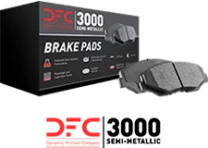
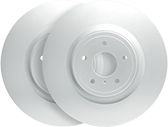
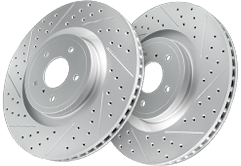
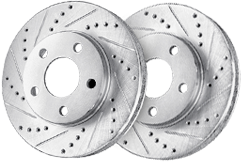
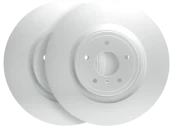
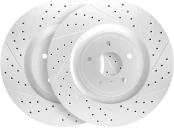
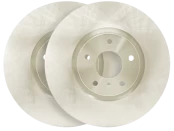
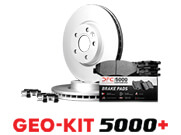
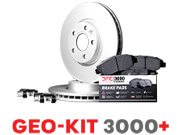
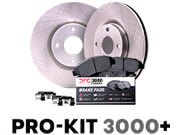
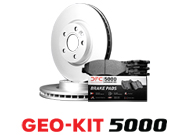
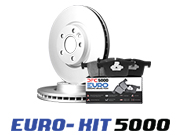
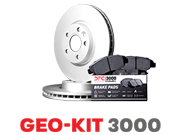
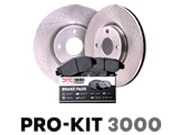
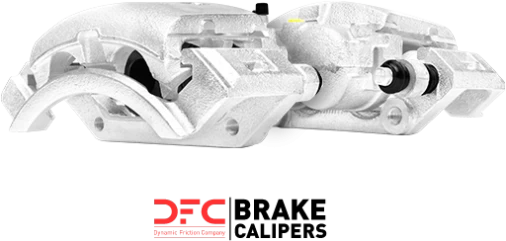
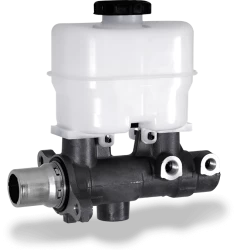
The 2025 Nissan Murano combines bold design with everyday comfort, giving drivers a refined experience on the road. And when it comes to braking, performance and reliability are key. That is why this week’s Must-Have Monday highlight is the DFC 5000 Brake Kit with GeoSpec Rotors, built to deliver OE-level precision, smooth stops, and long-lasting durability.
Why the DFC 5000 Brake Kit is the Right Choice
Dynamic Friction Company engineers every braking solution to meet or exceed OEM standards. For the 2025 Nissan Murano, our DFC 5000 Series brake pads and GeoSpec Rotors work together to provide the performance, consistency, and dependability that drivers need.
Kit Highlights
OEM-level fit and feel for seamless installation and factory-like performance
Rust-resistant GeoSpec coating for long-lasting protection against corrosion
Mill-balanced rotors designed for smooth, vibration-free braking
Low-dust, quiet ceramic pads that reduce noise and keep wheels cleaner
All-in-one convenience with pads, rotors, and hardware included in one complete kit
Performance You Can Count On
Whether your customers are commuting, taking a family road trip, or simply enjoying the open highway, the DFC 5000 Brake Kit with GeoSpec Rotors delivers reliable stopping power in every condition. For shops and distributors, these all-in-one kits save time on the shelf and in the bay, with each component precision-engineered for fit, performance, and long-term reliability.
As one of the first aftermarket brake manufacturers to release a complete solution for the 2025 Nissan Murano, DFC helps technicians, shop owners, and distributors stay ahead of the market with premium parts supported by top-tier fill rates and service.
Upgrade the 2025 Nissan Murano with DFC
Replace factory brakes with proven performance. The DFC 5000 Brake Kit with GeoSpec Rotors gives you and your customers confidence with every stop.
Visit dynamicfriction.com or connect with your local DFC sales representative to download the full application sheet organized by make and model.
At Dynamic Friction Company, quality is more than a step in the process. It is the foundation of everything we do. In the second episode of our Did You Know? video series, we give you an inside look at how DFC ensures every brake part that leaves our facility is ready to perform with OE-level precision. This time, we are shining the spotlight on our Quality Control team, led by Eric Romero, QC Supervisor.
A Closer Look at DFC Quality Control
Every day, our QC engineers inspect 30 parts per shift. Each of those parts is verified against a minimum of five key specifications. That means more than 70,000 brake parts and over 350,000 specifications are inspected and verified by our team every year. This level of detail allows us to provide aftermarket brake components that meet or exceed OEM standards and give shops and distributors complete confidence in every order.
What Sets Our QC Process Apart
Many aftermarket brands focus only on production volume, but at DFC, we focus on performance and reliability. Our inspection process covers critical areas such as rotor runout, thickness, chamfer angles, coating adhesion, and packaging integrity. If a part does not meet our strict requirements, it does not move forward. We do not recycle or reuse parts that fail inspection. They are discarded so only the best reaches your shelves.
Why It Matters to Shops and Distributors
Your reputation depends on every part you install or sell. With DFC quality control, you know the brakes you provide are backed by a rigorous inspection process. For technicians, this means fewer comebacks and greater confidence at the lift. For shop owners and distributors, it means consistent quality, fewer returns, and a reliable supply of OE-matched brake solutions. Every step we take in quality control is designed to support your success in the bay, at the counter, and in the warehouse.
Our Commitment to Reliability
At DFC, we understand that you need more than just parts. You need assurance that those parts will perform right out of the box. Our QC team ensures that each component is tested, verified, and ready to meet the demands of today’s vehicles. From daily drivers to high-performance builds, you can trust DFC to deliver the consistency, safety, and reliability your customers expect.
More Episodes Coming Soon
This is just the second episode in our Did You Know? video series. We are committed to taking you behind the scenes to show the people, processes, and expertise that make DFC a leader in aftermarket braking solutions. Be sure to catch Episode 1 if you missed it, where we explored how our Research and Development team brings new applications to market faster than anyone else in the industry.
With every episode, we want to show you why DFC is the trusted choice for OE-quality brake pads, rotors, and complete brake solutions. Quality begins here, and it begins with people like Eric Romero and his team making sure every part earns the DFC name.
When law enforcement vehicles hit the streets, performance is not optional. It is mission critical. The 2021–2025 Chevy Tahoe Police Pursuit Vehicle is purpose built for high speed and high stress duty, with enhanced cooling, upgraded suspension, and a braking system engineered for emergency response. Every stop must be precise, controlled, and reliable.
DFC is proud to be among the first aftermarket manufacturers to deliver complete braking solutions for the new Chevy Tahoe Police Pursuit Vehicle. Our lineup is designed to meet the demands of police fleets, providing the same precision and reliability trusted by law enforcement nationwide.
To simplify fleet maintenance, DFC also offers all in one brake kits that bundle pads, rotors, and hardware. These ready to go solutions save time on the shelf and in the shop. This efficiency is critical for agencies where every hour of vehicle downtime counts.
Innovation and Support
At DFC, we stay ahead of the market by expanding our catalog quickly, investing in innovation, and supporting our partners with industry leading fill rates and customer service. For police fleets, that means faster access to the parts you need, when you need them.
Meet Us at the Police Fleet Expo
If you met us at Police Fleet Expo, thank you for stopping by. Visit us at Booth #542 to see our solutions in person. For the full sales sheet on the Chevy Tahoe Police Pursuit Vehicle and other law enforcement applications, connect with your DFC sales rep or visit dynamicfriction.com. You can also explore more vehicle options on our full product page here.
When it comes to modern SUVs, braking performance is just as important as power and comfort. That’s why DFC now offers a complete line of high-performance brake parts for the 2023 and 2025 Honda Pilot. Designed for vehicles equipped with advanced safety and performance systems, these components meet original equipment standards and serve as direct replacements for factory-installed parts.
Engineered for the Versatile SUV Driver
The Honda Pilot is built for drivers who expect confidence on every road, from daily commutes to off-road adventures. With features like advanced brake force distribution and hill descent control, it demands replacement parts that match OEM performance. That’s where the DFC 5000 Advanced Series Brake Pads and GeoSpec Coated Rotors deliver.
Manufactured using positive mold technology, these brake pads ensure consistent performance and quality. Built to original equipment specifications with enhanced thermal stability and reliable bite, this combination results in:
Consistent pedal feel
Resistance to brake fade
Longer rotor life with pad-friendly formulations
Each component is matched to the specific demands of the Honda Pilot’s braking system. Friction materials and hardware are selected to deliver both performance and safety. Components are also tailored per axle to maintain balance and control during braking.
Complete Brake Solution for Honda Pilot
DFC is among the first aftermarket suppliers to offer a complete braking solution for the 2023 and 2025 Honda Pilot. Available parts include:
Rear brake pad and rotor options are also available to ensure complete axle coverage. All components are stocked and ready for immediate installation, helping distributors and shops minimize downtime.
Each part is tested for exact fitment, long-term durability, and consistent performance. DFC components meet or exceed industry standards for safety and reliability.
For added convenience, these parts are also available in all-in-one brake kits, which reduce inventory clutter and save time during installation.
Confirmed Vehicle Compatibility
DFC brake parts are engineered to integrate seamlessly with the Pilot’s advanced safety and driver assistance systems. Correct fitment and the proper friction profile are critical for maintaining braking performance and control.
Our brake pads are developed to deliver reduced noise, low vibration, and extended pad life. The result is a smoother, quieter ride and confident stopping in every driving condition.
Upgrading the brakes on your Pilot is about more than just replacing worn components. It’s about choosing parts that protect passengers, preserve vehicle value, and provide lasting performance. DFC parts help drivers get the most from every mile and give the Pilot the braking capability it was built to handle.
Ready to Ship
DFC leads the market with fast catalog expansion and strong partner support. We maintain high fill rates and responsive customer service so you can stay ahead of demand. Whether managing warehouse inventory or working in the shop, our Honda Pilot brake parts are ready when you are.
We also value customer feedback. Ordering through DFC is secure, and we encourage customers to share their experiences after installation.
How to Order
If you missed this week’s Must Have Monday announcement, connect with your DFC sales rep or visit dynamicfriction.com to download the full application sheet. It is organized by make and model for easy reference and includes the latest Honda Pilot coverage. When ordering brake kits, always confirm wheel fitment if aftermarket wheels are installed.
Be sure to check back every Monday for new product launches and expanded coverage from the DFC team.
When you’re pushing heavy loads at speed, braking power becomes just as important as horsepower. That’s why DFC now offers a complete line of high-performance brake parts for the 2024 and 2025 Chevy Tahoe RST. Designed for modern vehicles equipped with advanced safety and performance systems, these components meet original equipment standards and serve as direct replacements for factory-installed parts.
Engineered for the Performance SUV Driver
The Chevy Tahoe RST is built for drivers who demand more from their SUV, whether towing, cruising, or taking sharp corners with confidence. Braking performance is critical to that experience. That’s where the DFC 5000 Advanced Series Brake Pads and GeoSpec Coated Rotors come in.
Manufactured using positive mold technology, these brake pads ensure consistent performance and quality. The pads and rotors are built to original equipment specifications with enhanced thermal stability and reliable bite. This results in:
Consistent pedal feel
Resistance to brake fade
Longer rotor life with pad-friendly formulations
Each component is matched to the specific demands of the Tahoe RST’s braking system. Friction materials and hardware are selected to meet the needs of both performance and safety. Components are also tailored per axle to maintain balance and control during braking.
Complete Brake Solution for Chevy Tahoe RST
DFC is one of the first aftermarket suppliers to offer a complete braking solution for the 2024 and 2025 Tahoe RST. Available parts include:
Rear brake pad and rotor options are also available to ensure full axle coverage. All components are stocked and ready for immediate installation, minimizing downtime for both distributors and shops.
Each part is tested for exact fitment, long-term durability, and consistent performance. DFC components meet or exceed industry standards for safety and reliability.
For added convenience, these parts are available in all-in-one brake kits. These kits help reduce inventory clutter and save time during the installation process.
Confirmed Vehicle Compatibility
DFC brake parts are engineered to integrate seamlessly with the Tahoe’s advanced safety and driver assistance systems. Proper fitment and the correct friction profile are critical for maintaining performance and control.
Our brake pads are developed to deliver reduced noise, low vibration, and extended pad life. The result is a smoother, quieter ride and confident stopping in every driving condition.
Upgrading the brakes on your Tahoe is about more than just replacing worn parts. It’s about choosing components that protect passengers, preserve vehicle value, and provide lasting performance. DFC parts help you get the most from every mile and give your Tahoe the braking capability it was built to handle.
Ready to Ship
DFC continues to lead the market by offering fast catalog expansion and excellent partner support. We maintain high fill rates and responsive customer service to help you stay ahead of demand. Whether you are managing warehouse stock or turning wrenches in the shop, our Tahoe RST parts are ready when you are.
We also take customer trust seriously. Ordering through DFC is secure, and we encourage customers to leave reviews of their experience after installation.
How to Order
If you missed this week’s Must Have Monday announcement, connect with your DFC sales rep or visit dynamicfriction.com to download the full application sheet. It is organized by make and model for easy reference and includes the latest Tahoe RST coverage. When ordering brake kits, always confirm wheel fitment if aftermarket wheels are installed.
Be sure to check back every Monday for new product launches and expanded coverage from the DFC team.
The future of braking is electric, and DFC is already there.
This week on DFC’s Must Have Monday, we are featuring the 2024–2025 GMC Sierra EV, a full-size electric pickup equipped with advanced systems like Electronic Brake Force Distribution (EBD) and Brake Assist to deliver assertive stopping power under various load conditions and during sudden stops.
To match this level of control and performance, Dynamic Friction Company has engineered a full line of brake components tailored specifically for this platform. From installation in the shop to inventory on the shelf, DFC delivers dependable, OE-quality brake solutions built for today’s electric vehicles.
Complete Brake Coverage for the GMC Sierra EV
DFC’s offering includes everything needed to service this new application:
DFC 5000 Advanced Brake Pads – Engineered to replicate OE performance with strong initial bite and consistent pedal feel
All of these components are also available in an all-in-one DFC Brake Kit, making inventory management easier for distributors and simplifying installation for technicians.
First to Market Advantage
DFC is proud to be one of the first aftermarket manufacturers to offer a complete brake solution for the GMC Sierra EV. Our commitment to innovation and speed-to-market ensures you always have access to parts for the latest vehicles hitting the road.
Whether you’re outfitting a high-volume shop or sourcing parts for electric vehicle coverage, DFC delivers precision-engineered components ready for today’s demands.
Why Choose DFC?
Fast-expanding catalog with up-to-date vehicle coverage
Top-tier fill rates and dependable service
Brake products trusted by professionals across North America
When performance, fit, and reliability matter, DFC leads the way.
Download the Full Sales Sheet
If you missed this week’s DFC’s Must Have Monday email, visit dynamicfriction.com or contact your local sales rep to download the full sales sheet, organized by make and model.
Check back next week to see what’s new from the team that is helping you move braking forward, one part at a time.
At Dynamic Friction Company, we know innovation doesn’t happen by accident. It happens by design. That’s why we’re launching Did You Know?, a brand-new video series that gives you an exclusive look at the departments powering the performance, precision, and product leadership DFC is known for.
Taking important steps toward sustainability, DFC is committed to integrating eco-friendly materials and innovative processes while maintaining high performance in all our brake solutions.
Whether you’re turning wrenches in the bay or managing a fast-moving warehouse, this series is designed to show you how we keep your shelves stocked with the most current, OE-matched brake parts. Designed for both performance and sustainability, and delivered with precision.
Overview of the Video Series
The Did You Know? video series takes you behind the scenes to explore how DFC brings new braking solutions to life. Each episode highlights a different department’s role in shaping the future of braking, from research and development to manufacturing and beyond.
You’ll get an insider’s view of how DFC stays ahead of industry trends, adapts to evolving vehicle technologies, and maintains its commitment to OE-quality standards. Whether you’re interested in technical insights or simply want to understand how premium brake parts are made, this series gives you a rare look inside one of the industry’s most trusted brake manufacturers.
Episode 1: Research & Development Process with Jesus Villalobos
In our premiere episode, Jesus Villalobos, DFC’s Research and Development Manager, takes you inside the data-driven process behind our brake product development.
Here’s what you’ll learn:
We research every vehicle. In 2024 alone, our R&D team studied over 40 makes, 650 models, and 4,000 submodels, covering a wide range of applications to ensure our brake parts meet the latest OE specs.
We invest where it counts. This year, DFC spent over $150,000 acquiring OEM samples to reverse-engineer new applications. This investment helps us build the most accurate, OE-quality replacements on the market.
We’re first to market so you can be first to install. By doing the research upfront, DFC ensures you have access to the most up-to-date aftermarket brake solutions available, right when new models hit the road.
DFC is also committed to offering high-quality brake pads as part of our comprehensive product lineup, supporting both vehicle safety and performance.
“If you want to ensure you’re getting the most updated aftermarket brakes… then DFC is your brand.” — Jesus Villalobos, R&D Manager
With years of experience in the industry, DFC has developed a reputation for excellence. We lead the market in first to market brake solutions. That standard for innovation and reliability is something we continue to build on every day.
Braking System Expertise
At DFC, we understand that a reliable braking system is essential for every vehicle. Our expertise spans every aspect of brake component design, development, and manufacturing. This ensures our products deliver the quality, efficiency, and performance the market demands.
We work closely with leading manufacturers to create OEM components and custom kits that fit a wide range of vehicles, from daily drivers to high-performance builds. Our team is dedicated to developing innovative solutions that meet, and often exceed, industry standards. This helps reduce environmental impact while enhancing vehicle performance and safety. If you’re looking for expertise you can trust, DFC is here to support your needs, no matter the scale or complexity of your project.
Why It Matters in the Automotive Industry
Being first to market isn’t just a tagline. It’s a promise. At DFC, we believe technicians, shop owners, and distributors deserve brake components that are ready when customers need them. Our efficient processes enable fast delivery of brake solutions, helping you stay ahead of the competition.
With our R&D team leading the charge, you get:
• OE-level fitment accuracy • Shorter turnaround times on new applications, because timing is critical • Fewer returns and more confidence with every install
DFC is committed to understanding customer needs and evolving market trends. We hold ourselves to the highest standards in the industry.
More Episodes Coming Soon
This is just the beginning. Future episodes will feature departments across DFC, giving you a closer look at the people and processes behind every brake pad, brake kit, rotor, and hardware component we manufacture.
When upgrading to larger brake components, such as big calipers and rotors, it’s important to check wheel and caliper clearances. DFC provides printable templates to help ensure new components fit properly and avoid interference. Need technical drawings, fitment data, or expert support? We’ve got you covered.
With fast logistics and rapid development cycles, DFC helps shops, distributors, and enthusiasts get the brake solutions they need faster. Our simplified process supports customization from selection to installation.
Stay tuned for more Did You Know? videos from DFC, bringing you closer to the people, processes, and innovation behind every part we make.
Fleet maintenance is all about efficiency. Whether you’re managing a municipal fleet, a commercial delivery operation, or a repair shop servicing fleet accounts, minimizing downtime and maintenance costs is essential. One of the most effective—yet often overlooked—ways to streamline operations is by standardizing brake components.
Here’s how choosing consistent, high-quality brake parts across your fleet can help reduce costs, simplify inventory, and improve long-term performance. These advantages are especially valuable for fleet owners seeking to control expenses.
1. Introduction to Fleet Management
Fleet management is the backbone of any business that depends on commercial vehicles, trucks, or company cars to deliver goods and services. It involves more than keeping vehicles roadworthy—it’s about optimizing every facet of operations to reduce costs, minimize downtime, and boost efficiency.
Modern fleet management leverages technology such as fleet management software to track vehicles, monitor fuel use, and schedule preventive maintenance. This proactive approach helps businesses avoid costly repairs and unplanned downtime, ultimately improving profitability and safety.
2. Lower Inventory Overhead
When vehicles across a fleet require different brake parts, inventory management becomes a challenge. Standardizing brake components allows you to:
Reduce the number of SKUs in stock
Minimize overstocking and obsolescence
Free up valuable warehouse space
With fewer part numbers to manage, restocking becomes more efficient. DFC supports this approach by offering extensive coverage for high-VIO and fleet-dominant vehicle platforms.
3. Simplified Maintenance Procedures
Standardized brake systems lead to streamlined service protocols, resulting in:
Faster turnaround times
Reduced training requirements
Lower risk of installation errors
Whether technicians are rotating between vehicles or working across locations, a standardized setup ensures consistent, reliable workflows—reducing maintenance variability and boosting productivity.
4. Reduced Downtime for Fleet Vehicles
Every hour a vehicle is out of commission costs your business. Standardizing parts helps reduce downtime by eliminating common repair delays caused by:
Misidentified parts
Inconsistent component performance
Waiting on hard-to-source items
Unplanned breakdowns
DFC’s reliable inventory and high fill rates ensure that standardized parts are readily available and quickly shipped—keeping your fleet moving.
5. Improved Cost Control and Forecasting
Using uniform brake parts makes it easier to:
Track performance and wear rates
Predict replacement intervals
Secure bulk pricing agreements
This predictability simplifies budgeting and improves cost forecasting, particularly for high-utilization fleets where brake maintenance is a significant expense.
6. Enhanced Safety and Performance
Consistency in brake components supports safer, more reliable vehicle operation by:
Ensuring uniform braking performance
Streamlining diagnostics and troubleshooting
Reducing performance-related service calls
DFC’s brake pads, rotors, and hardware are engineered for fit and durability, helping fleets maintain safety without sacrificing quality or fuel efficiency.
7. The Role of Fleet Managers in Standardization
Fleet managers are central to successful standardization. Their responsibilities include overseeing maintenance schedules, monitoring driver behavior, and ensuring compliance with safety protocols.
By using fleet management software, they can implement standardized maintenance workflows, optimize route planning, and promote safe driving practices. This leads to fewer surprises, lower costs, and more reliable fleet performance.
8. Implementing Standardization Across Fleets
To roll out standardization successfully, fleet managers should:
Develop clear maintenance policies and procedures
Communicate expectations to drivers, technicians, and stakeholders
Use data and analytics tools to monitor compliance and outcomes
Standardizing essential tasks—such as brake inspections and replacements—reduces wear and tear, extends vehicle lifespan, and increases overall fleet efficiency.
9. Monitoring Progress and Evaluating Effectiveness
Ongoing evaluation is key to long-term success. Fleet managers should track KPIs such as:
Vehicle downtime
Fuel consumption
Maintenance and repair costs
By leveraging real-time data, managers can identify trends, adjust strategies, and optimize resource allocation. This data-driven approach ensures that standardization efforts deliver measurable, sustained value.
Conclusion
Standardizing brake parts across your fleet—whether for a dozen vehicles or a thousand—isn’t just smart maintenance; it’s a strategic advantage. From simplifying inventory to reducing service time and costs, the benefits compound across every vehicle and repair cycle.
Partner with DFC to streamline your fleet’s brake systems and start driving down maintenance costs with confidence.
In today’s competitive automotive aftermarket, purchasing groups face mounting pressure to deliver value without compromising quality. One of the most effective ways to maximize margins is by partnering with a brake supplier that aligns with your operational goals. Here’s how the right brake supplier—like Dynamic Friction Company (DFC)—can transform your bottom line.
1. Consolidate Sourcing for Greater Volume Leverage
Purchasing groups often span multiple locations or businesses. By consolidating brake product sourcing with a single, trusted supplier, purchasing groups can negotiate better volume pricing. DFC offers a full suite of braking solutions—from premium rotors and pads to calipers and hardware kits—allowing groups to streamline procurement and unlock bulk discounts.
2. Leverage OE-Grade Quality for Fewer Returns
Margins are quickly eroded by returns, warranty claims, and technician callbacks. DFC minimizes these risks by manufacturing products to exact OE standards. With stringent quality control and testing, DFC ensures every brake pad, rotor, and caliper delivers consistent performance—helping you avoid the hidden costs of substandard parts.
3. Reduce Operational Costs with Full-Line Coverage
Time is money, especially in logistics and inventory management. DFC simplifies inventory planning with full-line coverage for domestic, Asian, and European vehicles. Our part number consistency and deep vehicle coverage reduce the need for secondary suppliers, lower SKU complexity, and cut down fulfillment time.
4. Tap into Private Label Opportunities
Branding matters—even for internal distribution. DFC offers private label solutions so purchasing groups can build brand equity while maintaining control over their product line. Whether you’re outfitting fleet partners or retail channels, private labeling with DFC enhances brand presence and trust.
5. Partner with a Supplier Who Understands Market Trends
DFC doesn’t just supply brake parts—we partner with you to stay ahead of industry shifts. From electric vehicle coverage to data-driven inventory recommendations, we help purchasing groups adapt, compete, and grow in evolving markets.
Maximizing Margins Starts with the Right Brake Partner
DFC is built around helping purchasing groups optimize profitability without sacrificing quality. If your group is looking to increase efficiency, reduce costs, and elevate product consistency, DFC is the supplier you can count on.
Contact us today to learn how we can support your purchasing strategy and maximize your margins in 2025 and beyond.
Maximize Every Brake Job with Purposeful, Value-Driven Upsells
Every brake service is more than just a chance to replace worn parts—it’s an opportunity to enhance vehicle safety, improve performance, and increase shop revenue. The key is offering relevant, trusted recommendations based on the customer’s driving habits, inspection findings, and long-term vehicle needs.
Here are the top brake service upsells that deliver real benefits for your customers—and measurable gains for your shop.
1. Complete Brake Kits (Pads + Rotors + Hardware)
Rather than replacing pads or rotors individually, upsell a matched brake kit for consistent performance and easier installation.
Customer Benefits:
Matched components improve fitment and brake feel
Reduced noise and more even wear
Long-term savings with fewer future service needs
Shop Benefits:
Higher average repair order (ARO)
Fewer comebacks due to part mismatches
Time savings with pre-packed kits
DFC offers OE-quality brake kits engineered for reliability, performance, and smooth installations.
2. Caliper Service or Replacement
Calipers play a critical role in braking efficiency. Issues like seized slide pins or uneven piston movement lead to drag, pull, and premature wear.
Upsell When You Spot:
Heat discoloration or sticking pistons
Uneven pad wear across the axle
Boot damage or corrosion
Recommend caliper cleaning, lubrication, or replacement as part of a full-service solution.
3. Brake Fluid Exchange
Brake fluid absorbs moisture over time, compromising hydraulic pressure and responsiveness.
Recommend a Fluid Exchange If:
It’s been 2+ years or 24,000+ miles
Fluid appears dark or contaminated
The customer is upgrading to performance components
Benefits:
Improved pedal feel and braking consistency
Longer lifespan for calipers, valves, and ABS systems
For customers who tow, commute heavily, or prefer sportier handling, performance upgrades are a powerful, high-value upsell.
Key Performance Enhancements:
Scorched pads for better bite and fade resistance
Slotted or drilled rotors for improved heat dissipation
High-torque, low-dust friction materials for daily or spirited driving
DFC offers application-specific upgrades that are easy to match to vehicle use cases—giving drivers better stopping power and shops a high-trust upsell opportunity.
Old hardware leads to brake noise, misalignment, and uneven wear. Including fresh hardware with every brake job ensures a complete, long-lasting service.
Why It Matters:
Prevents pad drag and rattle
Improves caliper and pad alignment
Low-cost, high-impact add-on for every brake service
Best Practice: Make hardware kits standard with every pad or rotor replacement.
6. Full Brake System Inspection
Offering a comprehensive brake inspection builds credibility and identifies additional service opportunities.
Include Checks For:
Booster and master cylinder condition
Brake hoses and lines for cracks or leaks
Pedal response and fluid level analysis
ABS warning lights or system faults
A full inspection demonstrates your commitment to safety while uncovering upsell potential based on real issues.
Educate Customers on Stock vs. Upgrade Options
Factory stock components meet basic performance standards—but for customers with specific driving needs, upgrades make a difference.
Benefits of Upgraded Brakes:
Shorter stopping distances
Greater fade resistance under load
Improved safety and peace of mind
Position performance products as a way to match the brake system to the driver’s demands.
Upsell with Integrity: Build Trust, Not Pressure
Successful upsells:
Solve specific problems (noise, pulling, wear)
Extend part life and reduce future repairs
Match the customer’s driving style and goals
Use clear visuals and inspection results to explain the “why”
When recommendations are based on need—not sales goals—customers trust your expertise and return for future services.
Final Thoughts: Better Braking Builds Better Business
Effective brake upsells are about adding value. When your shop focuses on enhancing safety, performance, and longevity, customers leave satisfied—and your shop benefits from higher revenue and fewer comebacks.
Dynamic Friction Company supports these goals with premium pads, rotors, kits, hardware, and performance solutions—engineered for OE fit, installer efficiency, and customer confidence.
 UNITED STATES