 UNITED STATES
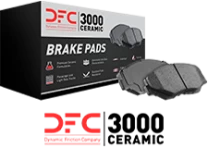
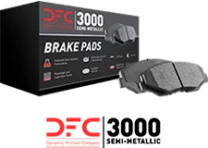













It happens faster than you’d think. One quarter you’re placing routine orders with a brake supplier you’ve used for years. The next quarter, you’re hearing rumors about financial trouble. Then the emails stop coming back. The reps stop calling. Backorders pile up. And one day you find out the company is closing its doors.
The aftermarket brake industry has seen this play out multiple times in recent years. Established brands with decades of history and thousands of loyal customers have disappeared, leaving shops and distributors scrambling to fill gaps in their brake programs with little warning.
If it’s happening to you right now, or if you want to be prepared in case it does, here’s the playbook.
Step 1: Assess What You Actually Lost
Before you start calling every brake supplier with a booth at AAPEX, take stock of what your former supplier was actually providing. This isn’t just a part number list. It’s a capability assessment.
Product categories. Were you buying just pads? Pads and rotors? Complete brake kits? Calipers? Hardware? The more categories you sourced from a single supplier, the more complex the replacement process.
Application coverage. Pull your last 12 months of purchase orders and identify your top 100 part numbers by volume. These are the applications you need to replace first. Everything else can wait.
Specialty products. Did you rely on them for police/fleet pads, heavy-duty applications, European vehicle coverage, or performance products? Specialty lines are harder to replace because not every supplier covers them.
Program benefits. Rebates, co-op marketing dollars, training programs, dedicated rep support. These are harder to quantify but real losses that your replacement supplier should address.
Inventory on hand. How much of their product is still on your shelves? That’s your runway. Once that inventory sells through, you need replacement product flowing in.
Step 2: Don’t Panic-Buy
The natural instinct is to grab whatever’s available from whoever can ship fastest. Resist that.
Panic-buying from unfamiliar suppliers or switching to the cheapest available alternative creates a new set of problems: inconsistent quality, higher comeback rates, products that don’t match your customers’ expectations, and a second transition when you eventually settle on a permanent replacement.
Use your existing inventory as a buffer. You have weeks, maybe months, before you’re truly out of stock on most applications. Use that time to evaluate properly instead of scrambling.
Step 3: Identify 2-3 Replacement Candidates
Don’t settle on the first supplier who shows up with a price sheet. Evaluate at least two or three options against these criteria:
Coverage Match
Can the replacement supplier cover your top 100 applications? What about your top 200? Where are the gaps?
Ask for a coverage analysis. A quality supplier will take your part number list and provide a cross-reference showing their equivalent part numbers, identify any applications they can’t cover, and tell you when coverage for those gaps is expected.
Quality Baseline
Your customers were used to a certain level of quality from your previous supplier. The replacement needs to match or exceed that level, or you’re trading one problem (no supplier) for another (comebacks).
Quality indicators to evaluate:
- FMSI certification (and how many consecutive years)
- Vehicle-specific friction formulations vs generic one-size-fits-all compounds
- Post-curing on all pad lines (not just premium)
- Rotor inspection process (100% electronic vs manual sampling)
- Manufacturing location and transparency
Supply Chain Stability
You just lost a supplier. The last thing you need is to build a program around another one that’s financially shaky.
Look for:
- How long have they been in business?
- Do they manufacture in-house or private-label from overseas?
- What’s their current fill rate? (Ask for data, not just a number.)
- What’s their ownership structure? (Private equity with heavy debt loads has contributed to several aftermarket brand failures.)
- Are they investing in new product development and facilities?
Pricing That Makes Sense Long-Term
Every supplier in the industry knows when a competitor shuts down. That means every remaining supplier is calling on the displaced accounts with aggressive introductory pricing. Be smart about this.
Ask:
- What’s the standard pricing at my volume level after the introductory period?
- What’s the volume rebate structure?
- What are the payment terms?
- What does the warranty claims process look like?
- Is there co-op marketing or training support?
A supplier who offers a great 90-day introductory price and then raises it 15% isn’t giving you a deal. They’re renting your business short-term.
Step 4: Test Before You Commit
Don’t convert your entire brake program based on a price sheet and a sales call. Test the product first.
How to run a meaningful test:
- Select your top 5 to 8 applications (the vehicles you see most often)
- Order 20 to 30 sets across those applications
- Install them on customer vehicles with your normal process
- Track each installation: vehicle, date, technician, part number
- Follow up at 30 and 60 days for noise, vibration, dust, or any other complaints
- Compare the results against your experience with your previous supplier
This gives you real-world data on your actual vehicles with your technicians doing the work. It’s worth more than any specification sheet or trade show demo.
If the test pads perform well, expand the relationship. If they don’t, you’ve only exposed 20 to 30 customers instead of your entire base.
Step 5: Negotiate from a Position of Strength
When a competitor closes, displaced volume is up for grabs. Every remaining supplier wants it. That gives you leverage you don’t normally have.
Use it to negotiate:
- Better pricing than you were getting from your previous supplier (the replacement supplier is gaining new volume, so there’s margin room)
- Extended warranty terms to protect you during the transition
- Stocking agreements that ensure your top applications are always available
- Training support to get your counter staff and technicians familiar with the new product line
- Co-op marketing to help you promote the new brand to your customers
The suppliers who are willing to invest in the transition (not just offer a price) are the ones building a long-term partnership. The ones who just drop a price sheet and disappear until the next order are selling you a transaction.
Step 6: Communicate the Change to Your Customers
If you’re a distributor, your shop accounts need to know what’s changing and why. If you’re a shop, your regular customers may notice different packaging or part names on their invoice.
Be proactive. A simple conversation works:
For shop customers: “We’ve upgraded our brake parts supplier. The new pads and rotors we’re using are [specific quality point: post-cured, vehicle-specific formulation, FMSI certified]. You’ll see the same or better performance from your brake job.”
For distribution accounts: “We’ve transitioned our brake program to [new supplier]. Here’s the cross-reference for the applications you order most frequently. Coverage, fill rates, and quality specs are all equal or better than what you were getting before.”
Nobody likes surprises. Get ahead of it.
Step 7: Monitor Performance and Adjust
The first 90 days after a supplier transition are the most important. Track everything:
- Comeback rate on the new product vs your historical baseline
- Fill rate from the new supplier (are they delivering what they promised?)
- Counter staff and technician feedback (any fitment issues, noise complaints, or installation concerns?)
- Customer response (any complaints or, better yet, compliments?)
If the numbers look good at 90 days, you’ve successfully transitioned. If something is off, you have data to bring to the supplier for correction, or data to support switching again if the first replacement isn’t working.
The Silver Lining
Losing a supplier is disruptive. There’s no way around that. But it’s also an opportunity to re-evaluate a purchasing decision that many shops and distributors made years ago and never revisited.
The aftermarket brake landscape has changed. Quality levels have shifted between brands. New manufacturers have matured. And suppliers that were “good enough” five years ago may not be the best option today. A forced transition is a chance to upgrade, not just replace.
DFC welcomes the comparison. Nine consecutive FMSI awards, in-house LA manufacturing, 100% post-curing, 100% electronic rotor inspection, nine pad lines with vehicle-specific formulations, and the most aggressive first-to-market coverage program in the aftermarket. Contact your DFC representative or visit dynamicfriction.com to start the conversation.
When a supplier disappears, the worst response is to panic. The best response is to use the disruption as a catalyst to build a stronger brake program than the one you had before.
For a structured evaluation framework, see our aftermarket brake supplier evaluation guide.