Brake Pad Friction Formulations Explained: What Your Shop Needs to Know

There’s a conversation that happens at the parts counter every day. Customer comes in for brake pads, and the counterperson asks the question: “Ceramic or semi-metallic?”

Most of the time, the answer comes down to price or whatever the customer had last time. Nobody explains the why behind the recommendation.

That’s a missed opportunity. Because when you understand friction at the formulation level, you can make better recommendations, charge appropriately for premium parts, and dramatically reduce the noise and vibration comebacks that eat into your shop’s profitability.

How Brake Pads Actually Stop a Vehicle

Before we get into the three main formulation types, you need to understand the two fundamental friction mechanisms that brake pads use.

Abrasive Friction

Think of this like sandpaper on wood. The pad and rotor surfaces physically grind against each other, breaking molecular bonds in both materials. Material gets removed from both the pad and the rotor with every stop.

Semi-metallic pads and some NAO formulations primarily use abrasive friction. That’s why semi-metallic pads tend to wear rotors faster and produce more dark, metallic brake dust.

Adherent Friction (Transfer Film)

This works completely differently. During the first few hundred miles of use, the pad transfers a microscopic layer of friction material onto the rotor surface. Once that transfer film is established, braking happens as pad material contacts pad material.

Ceramic pads and some premium NAO formulations use this adherent mechanism. That’s why ceramic pads produce lighter-colored dust and are generally easier on rotors.

Why this matters to your shop: If a customer comes back with dark spots on their rotors after a ceramic pad install, it usually means the proper break-in wasn’t done properly and the transfer film is uneven. That’s not a defective pad. That’s a bedding issue.

The Three Main Formulation Types

Semi-Metallic

What’s in them: 30-65% metal content by weight. Steel fibers, iron powder, graphite, and various friction modifiers held together with phenolic resin binders.

How they perform:

  • Strong initial bite, especially when cold
  • Excellent heat handling under sustained high temperatures
  • Predictable pedal feel under heavy, repeated braking
  • Higher rotor wear rate due to abrasive friction mechanism
  • More noise-prone than ceramic, especially in cold weather
  • Produce heavy, dark metallic dust

Where they make sense: Heavy trucks and SUVs with towing or payload. Performance applications. Fleet vehicles in stop-and-go duty cycles.

Ceramic

What’s in them: Ceramic fibers, various fillers, aramid fibers for structural integrity, and resin binders. Modern ceramics are copper-free to meet EPA regulations.

How they perform:

  • Quiet operation across a wide temperature range
  • Consistent, linear pedal feel
  • Light-colored dust that doesn’t adhere to wheels
  • Lower rotor wear
  • Slightly less initial bite when stone cold
  • Can fade under extreme, sustained heat

Where they make sense: Daily drivers, commuter vehicles, sedans, crossovers. European applications. Any customer who complains about brake dust.

NAO (Non-Asbestos Organic)

What’s in them: Glass fiber, rubber, carbon compounds, Kevlar or other aramid fibers, and resin.

How they perform:

  • Soft pedal feel with gentle initial engagement
  • Very quiet, especially at low speeds
  • Lowest dust production
  • Fastest wear rate, especially under heat
  • Not suitable for high-performance or heavy-duty applications

The Part Nobody Talks About: Vehicle-Specific Formulations

Here’s where the real quality difference shows up between brake pad brands. A cheap ceramic pad might use a single friction compound across 200 different applications. A premium one uses a formulation tested and tuned for the specific vehicle.

That difference shows up as noise on some applications, uneven wear, inconsistent pedal feel, or longer stopping distances.

DFC engineers vehicle-specific friction formulations. A DFC 5000 Advanced pad for a Toyota Camry has a different friction compound than one for a Ford F-150. Same product line, same quality standards, but the chemistry is matched to the application.

Post-Curing: The Manufacturing Step That Changes Everything

Most brake pads go through pressing and initial curing during manufacturing. What not every manufacturer does is post-cure the finished pad.

Post-curing is an additional heat treatment step that stabilizes the resin binders and burns off volatile compounds in the friction material.

Without post-curing: The first few hundred miles on the vehicle become the final curing stage. This causes inconsistent friction, more noise during break-in, and a longer period before the pad reaches optimal performance.

With post-curing: The pad arrives with a fully stabilized friction surface. Break-in is shorter and more predictable. The transfer film develops more evenly.

DFC post-cures 100% of its brake pads.

What This Means for Your Parts Counter

Match the formulation to the application, not the customer’s budget.

Don’t upsell by scaring people. Upsell by educating. Instead of “you need the more expensive pads,” explain why the heavy-duty formulation gives better heat management for their specific use case.

Ask about driving habits before recommending a pad type. Five questions that should be standard:

  1. What kind of driving do you mostly do?
  2. Do you tow anything regularly?
  3. Do you notice a lot of brake dust on your wheels?
  4. Any noise or vibration complaints?
  5. How long do you plan to keep the vehicle?

Choosing the Right Pad Line for Your Shop

Application Recommended Formulation DFC Product Line
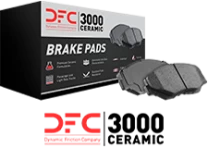
Daily driver, sedan, crossover Ceramic DFC 3000 Ceramic
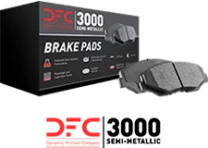
Daily driver, value option Semi-metallic DFC 3000 Semi-Metallic
Mixed driving, moderate performance Hybrid ceramic DFC 4000 HybriDynamic
Premium daily, extended pad life Advanced ceramic DFC 5000 Advanced
European applications Euro-specific ceramic DFC 5000 Euro Ceramic
Performance vehicles Performance ceramic DFC Active Performance
Trucks, towing, heavy payload Heavy-duty semi-metallic DFC Heavy Duty
Work trucks, extreme duty Maximum duty semi-metallic DFC Ultimate Duty Performance
Police and pursuit vehicles AMECA-certified high heat DFC Police

Find the right pad for your application at dynamicfriction.com.

Understanding friction formulations isn’t just academic. It’s the foundation of making better recommendations, reducing comebacks, and building the kind of brake service reputation that keeps customers coming back for the right reasons.

Related: Brake pad break-in guide | The true cost of cheap brake pads

The Copper-Free Brake Pad Law Is Here: What Shops and Distributors Need to Know

As of January 1, 2025, brake pads sold in the United States cannot contain more than 0.5% copper by weight. That’s not a California-only rule anymore. It’s nationwide.

If you’re stocking or installing brake pads, you need to understand what changed, why it matters to your business, and how to make sure the pads on your shelves are compliant.

What the Law Actually Says

The Better Brake Rule originated in Washington State and California, then expanded through legislation adopted by all 50 states via the EPA’s Copper-Free Brake Initiative. The phase-in happened in two stages:

Stage 1 (January 1, 2021): Brake pads could contain no more than 5% copper by weight. This was the “Level A” compliance standard. Most manufacturers had already transitioned by this point.

Stage 2 (January 1, 2025): Brake pads cannot contain more than 0.5% copper by weight. This is the “Level N” compliance standard and represents the final phase. At 0.5%, copper is essentially eliminated as a functional ingredient in the friction compound.

The reason behind the regulation: copper particles from brake dust wash into waterways and are toxic to aquatic organisms, particularly salmon and steelhead in the Pacific Northwest.

The LeafMark System: What Those Symbols Mean

You’ve probably noticed a small leaf symbol on brake pad packaging. That’s the LeafMark, a compliance marking system developed by the Brake Manufacturers Council.

LeafMark “A”: Compliant with Level A (5% copper cap). This was the 2021 standard.

LeafMark “B”: Compliant with Level B (no more than trace amounts of specific heavy metals including lead, mercury, cadmium, asbestos, and chromium-VI).

LeafMark “N”: Compliant with Level N (0.5% copper cap). This is the current and final standard. Any pad manufactured after January 1, 2025 should carry the “N” designation.

What to look for on the box: The LeafMark should appear on packaging and may also be stamped on the backing plate. An “N” mark means the pad meets the current 0.5% copper standard.

What This Means for Your Inventory

If you have pre-2025 brake pads on your shelf that contain more than 0.5% copper, you’re not required to pull them from inventory and destroy them. The regulation applies to manufacturing and first sale, not to retail inventory that was legally produced before the deadline.

What distributors should do:

  • Confirm that all new orders from your pad suppliers are Level N compliant
  • Identify remaining pre-2025 copper-containing stock and move it through normal sales
  • Update your catalog and ordering systems to reflect current part numbers

What shops should do:

  • Verify that the pads your supplier is shipping carry the LeafMark “N” designation
  • If you’re buying pads from multiple sources, check compliance on everything. Counterfeit and grey-market pads may not meet the current standard.

How the Reformulation Affects Performance

This is the question that matters most to techs and shop owners: do copper-free pads perform as well as the previous generation?

The honest answer: it depends on the manufacturer.

Copper was a valuable ingredient in ceramic friction formulationss. It provided thermal conductivity, structural reinforcement, and friction stability across a wide temperature range. Removing copper without adequately replacing those functions degrades performance.

What happened with budget manufacturers: Some lower-tier brands essentially pulled copper from their existing formula without fully re-engineering the compound. The result is pads that don’t handle heat as well, may exhibit more noise, or have a different pedal feel than their predecessors.

What happened with quality manufacturers: Brands that invested in R&D developed new friction chemistries that replace copper’s functions with alternative materials. These manufacturers’ current copper-free pads match or exceed the performance of their previous formulations.

DFC’s entire pad lineup has been copper-free compliant since before the January 2025 deadline. The transition involved reformulating each vehicle-specific friction compound individually, not just swapping out copper across the board.

How to Evaluate Your Pad Supplier’s Copper-Free Transition

Ask for their reformulation timeline. A manufacturer that started reformulating in 2020 or 2021 had time to engineer properly. One that rushed to comply in 2024 may have cut corners.

Compare comeback rates before and after. If your comebacks on a particular pad line increased noticeably in the past 12 to 18 months, the reformulation might be the cause.

Request updated friction data. The friction coefficient curves for the copper-free version should be close to the previous version.

Check for FMSI certification continuity. A brand that maintained FMSI certification through the reformulation demonstrated that their new formula meets the same performance standards.

Counterfeit and Non-Compliant Pads

The copper-free regulation has created a secondary problem: counterfeit and non-compliant brake pads entering the market through online channels and grey-market distributors.

Pads manufactured outside the US that haven’t been reformulated may still contain copper above 0.5%. They’re cheaper because the manufacturer didn’t invest in reformulation.
How to protect yourself:

  • Buy from authorized distributors and established supply chains
  • Verify the LeafMark on every shipment from new or unfamiliar suppliers
  • Be skeptical of dramatically lower prices on pads that should be in the same cost range as other compliant products

DFC manufactures in-house at its LA facility. Every pad ships with Level N compliance, traceable manufacturing data, and the quality controls that come with domestic production.

Looking Ahead: Euro 7 Brake Dust Regulations

The US copper-free law is the first major environmental regulation on brake friction materials, but it won’t be the last. The European Union’s Euro 7 standard (expected to take effect in late 2026 or 2027) will regulate total brake dust particulate emissions, not just copper content.

Euro 7 sets limits on the mass of brake particles that can be emitted per kilometer driven. This is a fundamentally different approach from the US regulation because it restricts the output regardless of what’s in the pad.

For shops and distributors, the takeaway is simple: the regulatory environment around brake friction materials is getting more restrictive, not less. Suppliers that demonstrate compliance leadership today are the ones most likely to keep you compliant tomorrow.

Find copper-free, Level N compliant brake pads across DFC’s full product lineup at dynamicfriction.com.

The copper-free transition is done. The law is in effect. The question now is whether the pads on your shelf perform as well without copper as they did with it. That answer depends entirely on how much your manufacturer invested in getting the reformulation right.

Related: Which brake pads are made in the USA | How to choose the right pad line for your shop

What to Do When Your Brake Parts Supplier Shuts Down

It happens faster than you’d think. One quarter you’re placing routine orders with a brake supplier you’ve used for years. The next quarter, you’re hearing rumors about financial trouble. Then the emails stop coming back. The reps stop calling. Backorders pile up. And one day you find out the company is closing its doors.

The aftermarket brake industry has seen this play out multiple times in recent years. Established brands with decades of history and thousands of loyal customers have disappeared, leaving shops and distributors scrambling to fill gaps in their brake programs with little warning.

If it’s happening to you right now, or if you want to be prepared in case it does, here’s the playbook.

Step 1: Assess What You Actually Lost

Before you start calling every brake supplier with a booth at AAPEX, take stock of what your former supplier was actually providing. This isn’t just a part number list. It’s a capability assessment.

Product categories. Were you buying just pads? Pads and rotors? Complete brake kits? Calipers? Hardware? The more categories you sourced from a single supplier, the more complex the replacement process.

Application coverage. Pull your last 12 months of purchase orders and identify your top 100 part numbers by volume. These are the applications you need to replace first. Everything else can wait.

Specialty products. Did you rely on them for police/fleet pads, heavy-duty applications, European vehicle coverage, or performance products? Specialty lines are harder to replace because not every supplier covers them.

Program benefits. Rebates, co-op marketing dollars, training programs, dedicated rep support. These are harder to quantify but real losses that your replacement supplier should address.

Inventory on hand. How much of their product is still on your shelves? That’s your runway. Once that inventory sells through, you need replacement product flowing in.

Step 2: Don’t Panic-Buy

The natural instinct is to grab whatever’s available from whoever can ship fastest. Resist that.

Panic-buying from unfamiliar suppliers or switching to the cheapest available alternative creates a new set of problems: inconsistent quality, higher comeback rates, products that don’t match your customers’ expectations, and a second transition when you eventually settle on a permanent replacement.

Use your existing inventory as a buffer. You have weeks, maybe months, before you’re truly out of stock on most applications. Use that time to evaluate properly instead of scrambling.

Step 3: Identify 2-3 Replacement Candidates

Don’t settle on the first supplier who shows up with a price sheet. Evaluate at least two or three options against these criteria:

Coverage Match

Can the replacement supplier cover your top 100 applications? What about your top 200? Where are the gaps?

Ask for a coverage analysis. A quality supplier will take your part number list and provide a cross-reference showing their equivalent part numbers, identify any applications they can’t cover, and tell you when coverage for those gaps is expected.

Quality Baseline

Your customers were used to a certain level of quality from your previous supplier. The replacement needs to match or exceed that level, or you’re trading one problem (no supplier) for another (comebacks).

Quality indicators to evaluate:

  • FMSI certification (and how many consecutive years)
  • Vehicle-specific friction formulations vs generic one-size-fits-all compounds
  • Post-curing on all pad lines (not just premium)
  • Rotor inspection process (100% electronic vs manual sampling)
  • Manufacturing location and transparency

Supply Chain Stability

You just lost a supplier. The last thing you need is to build a program around another one that’s financially shaky.

Look for:

  • How long have they been in business?
  • Do they manufacture in-house or private-label from overseas?
  • What’s their current fill rate? (Ask for data, not just a number.)
  • What’s their ownership structure? (Private equity with heavy debt loads has contributed to several aftermarket brand failures.)
  • Are they investing in new product development and facilities?

Pricing That Makes Sense Long-Term

Every supplier in the industry knows when a competitor shuts down. That means every remaining supplier is calling on the displaced accounts with aggressive introductory pricing. Be smart about this.

Ask:

  • What’s the standard pricing at my volume level after the introductory period?
  • What’s the volume rebate structure?
  • What are the payment terms?
  • What does the warranty claims process look like?
  • Is there co-op marketing or training support?

A supplier who offers a great 90-day introductory price and then raises it 15% isn’t giving you a deal. They’re renting your business short-term.

Step 4: Test Before You Commit

Don’t convert your entire brake program based on a price sheet and a sales call. Test the product first.

How to run a meaningful test:

  1. Select your top 5 to 8 applications (the vehicles you see most often)
  2. Order 20 to 30 sets across those applications
  3. Install them on customer vehicles with your normal process
  4. Track each installation: vehicle, date, technician, part number
  5. Follow up at 30 and 60 days for noise, vibration, dust, or any other complaints
  6. Compare the results against your experience with your previous supplier

This gives you real-world data on your actual vehicles with your technicians doing the work. It’s worth more than any specification sheet or trade show demo.

If the test pads perform well, expand the relationship. If they don’t, you’ve only exposed 20 to 30 customers instead of your entire base.

Step 5: Negotiate from a Position of Strength

When a competitor closes, displaced volume is up for grabs. Every remaining supplier wants it. That gives you leverage you don’t normally have.

Use it to negotiate:

  • Better pricing than you were getting from your previous supplier (the replacement supplier is gaining new volume, so there’s margin room)
  • Extended warranty terms to protect you during the transition
  • Stocking agreements that ensure your top applications are always available
  • Training support to get your counter staff and technicians familiar with the new product line
  • Co-op marketing to help you promote the new brand to your customers

The suppliers who are willing to invest in the transition (not just offer a price) are the ones building a long-term partnership. The ones who just drop a price sheet and disappear until the next order are selling you a transaction.

Step 6: Communicate the Change to Your Customers

If you’re a distributor, your shop accounts need to know what’s changing and why. If you’re a shop, your regular customers may notice different packaging or part names on their invoice.

Be proactive. A simple conversation works:

For shop customers: “We’ve upgraded our brake parts supplier. The new pads and rotors we’re using are [specific quality point: post-cured, vehicle-specific formulation, FMSI certified]. You’ll see the same or better performance from your brake job.”

For distribution accounts: “We’ve transitioned our brake program to [new supplier]. Here’s the cross-reference for the applications you order most frequently. Coverage, fill rates, and quality specs are all equal or better than what you were getting before.”

Nobody likes surprises. Get ahead of it.

Step 7: Monitor Performance and Adjust

The first 90 days after a supplier transition are the most important. Track everything:

  • Comeback rate on the new product vs your historical baseline
  • Fill rate from the new supplier (are they delivering what they promised?)
  • Counter staff and technician feedback (any fitment issues, noise complaints, or installation concerns?)
  • Customer response (any complaints or, better yet, compliments?)

If the numbers look good at 90 days, you’ve successfully transitioned. If something is off, you have data to bring to the supplier for correction, or data to support switching again if the first replacement isn’t working.

The Silver Lining

Losing a supplier is disruptive. There’s no way around that. But it’s also an opportunity to re-evaluate a purchasing decision that many shops and distributors made years ago and never revisited.

The aftermarket brake landscape has changed. Quality levels have shifted between brands. New manufacturers have matured. And suppliers that were “good enough” five years ago may not be the best option today. A forced transition is a chance to upgrade, not just replace.

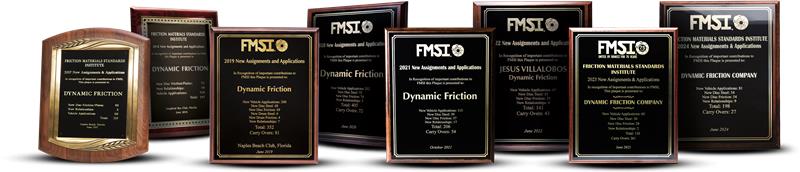
DFC welcomes the comparison. Nine consecutive FMSI awards, in-house LA manufacturing, 100% post-curing, 100% electronic rotor inspection, nine pad lines with vehicle-specific formulations, and the most aggressive first-to-market coverage program in the aftermarket. Contact your DFC representative or visit dynamicfriction.com to start the conversation.

When a supplier disappears, the worst response is to panic. The best response is to use the disruption as a catalyst to build a stronger brake program than the one you had before.

For a structured evaluation framework, see our aftermarket brake supplier evaluation guide.

How Purchasing Groups Can Maximize Margins with the Right Brake Supplier

DFC Blog
default

In today’s competitive automotive aftermarket, purchasing groups face mounting pressure to deliver value without compromising quality. One of the most effective ways to maximize margins is by partnering with a brake supplier that aligns with your operational goals. Here’s how the right brake supplier—like Dynamic Friction Company (DFC)—can transform your bottom line.

1. Consolidate Sourcing for Greater Volume Leverage

Purchasing groups often span multiple locations or businesses. By consolidating brake product sourcing with a single, trusted supplier, purchasing groups can negotiate better volume pricing. DFC offers a full suite of braking solutions—from premium rotors and pads to calipers and hardware kits—allowing groups to streamline procurement and unlock bulk discounts.

2. Leverage OE-Grade Quality for Fewer Returns

Margins are quickly eroded by returns, warranty claims, and technician callbacks. DFC minimizes these risks by manufacturing products to exact OE standards. With stringent quality control and testing, DFC ensures every brake pad, rotor, and caliper delivers consistent performance—helping you avoid the hidden costs of substandard parts.

3. Reduce Operational Costs with Full-Line Coverage

Time is money, especially in logistics and inventory management. DFC simplifies inventory planning with full-line coverage for domestic, Asian, and European vehicles. Our part number consistency and deep vehicle coverage reduce the need for secondary suppliers, lower SKU complexity, and cut down fulfillment time.

4. Tap into Private Label Opportunities

Branding matters—even for internal distribution. DFC offers private label solutions so purchasing groups can build brand equity while maintaining control over their product line. Whether you’re outfitting fleet partners or retail channels, private labeling with DFC enhances brand presence and trust.

5. Partner with a Supplier Who Understands Market Trends

DFC doesn’t just supply brake parts—we partner with you to stay ahead of industry shifts. From electric vehicle coverage to data-driven inventory recommendations, we help purchasing groups adapt, compete, and grow in evolving markets.


Maximizing Margins Starts with the Right Brake Partner

DFC is built around helping purchasing groups optimize profitability without sacrificing quality. If your group is looking to increase efficiency, reduce costs, and elevate product consistency, DFC is the supplier you can count on.

Contact us today to learn how we can support your purchasing strategy and maximize your margins in 2025 and beyond.

How to Identify Fast-Moving Brake Parts to Optimize Your Inventory

DFC Blog

Smarter Stocking Starts with Knowing What Moves

In the competitive automotive aftermarket, stocking the right parts isn’t just good business—it’s essential. Fast-moving brake components drive profitability, improve customer satisfaction, and reduce operational waste. Whether you manage a parts department, a warehouse, or a service counter, identifying top-selling SKUs ensures you stay ahead of demand and behind fewer missed sales.


Why It Pays to Prioritize Fast-Moving Parts

Brake parts with high turnover are the backbone of a well-managed inventory system. Keeping them on hand:

  • Reduces missed sales and service delays
  • Minimizes stockouts and customer frustration
  • Improves cash flow by avoiding overstock
  • Builds trust with faster service fulfillment

Optimizing your inventory around fast-movers translates to leaner operations, better forecasting, and higher margins.


The Foundation: Understand the Brake System

Brake systems are mission-critical for safety and performance. Stocking core components—pads, rotors, calipers, drums, and hardware kits—is non-negotiable. An organized inventory backed by real-time tracking ensures:

  • Accurate stock level monitoring
  • Faster response to demand shifts
  • Smart reorder thresholds
  • Clear visibility into product trends

Investing in inventory intelligence allows you to prevent both shortages and slow-moving surplus.


1. Use VIO Data and Digital Demand Trends

Start with Vehicle in Operation (VIO) data to identify high-population models in your service area. Prioritize brake parts for these vehicles—they move faster by default.

Go further by analyzing digital touchpoints:

  • Website search data
  • eCommerce product views
  • Vendor platform analytics

If front pads for a 2015–2020 Ford F-150 or rear rotors for a 2017 Honda Civic are constantly searched or purchased—stock them in volume.


2. Monitor SKU-Level Sales Velocity

Track how quickly specific part numbers sell and how frequently they’re viewed online. High-conversion SKUs with consistent sales are reliable fast-movers.

From DFC’s Lifecycle Projects strategy:

  • Monitor product page views
  • Track vendor click-outs
  • Flag SKUs with repeated interest—even if they haven’t converted yet

These behaviors signal high intent and can help guide proactive restocking.


3. Retarget High-Intent Shoppers

Not every fast-moving part is purchased immediately. Use retargeting campaigns to reconnect with customers who’ve shown interest but didn’t complete a purchase.

Tools like automated email flows, popups, and digital ads with urgency messaging (“Back in stock!” or “Going fast!”) convert interest into revenue. When paired with inventory triggers, this tactic ensures you’re stocked and ready when the sale hits.


4. Listen to Your Front-Line Team

Your techs and counter staff see trends in real time. They know which parts are always running low, reordered often, or requested by every third customer.

Regular feedback from the shop floor helps validate inventory data—and often catches fast-movers before your reports do.

Warehouse Insight: If your team is constantly rushing to reorder certain SKUs, those parts should always be in stock.


5. Personalize Stocking with Buyer Behavior Segmentation

DFC’s behavioral segmentation tools use product page interactions and click-out data to highlight fast-moving products. These insights fuel automated workflows that:

  • Target repeat viewers of your most popular parts
  • Create product-specific campaigns to boost velocity
  • Provide actionable data for smarter forecasting

Integrating this with your inventory strategy aligns marketing with stocking decisions, improving efficiency across the board.


Final Thoughts: Build Your Inventory Around What Sells

Fast-moving brake parts are the foundation of a profitable, efficient inventory strategy. By leveraging VIO data, digital insights, sales velocity, and front-line feedback, you can stock smarter—avoiding shortages while minimizing excess.

At Dynamic Friction Company (DFC), we help shops and distributors succeed with OE-quality brake parts built for high-volume demand and real-world performance. From data-backed stocking support to premium components, we’re here to help you streamline operations and drive results.

📦 Explore DFC
📞 Contact Us to discover which parts are moving in your market.

Bulk Brake Pad Buyers: The True Cost of Cheap Brake Pads and Why They Should Invest in Quality

DFC Blog

Cutting Costs or Cutting Corners?

When buying brake pads in bulk, price often plays a major role. But is choosing the cheapest option really the most cost-effective decision? In reality, low-cost brake pads can lead to increased wear, safety risks, and higher long-term expenses—especially for warehouse distributors, shop owners, and fleet managers.

Investing in high-quality brake pads from a trusted manufacturer like Dynamic Friction Company (DFC) provides long-term value through durability, performance, and reduced returns. Here’s why smart bulk buyers know that quality pays off.


1. Understanding Brake Systems and Pad Materials

Brake pads are a critical part of the vehicle’s stopping system. Pressed against the rotor by calipers, they generate friction to slow and stop the vehicle. The quality of that friction—and how it affects other components—matters deeply.

Brake Pad Types:

  • Ceramic Brake Pads: Known for quiet, smooth operation and low dust. Ideal for consistent daily driving and long wear life.
  • Semi-Metallic Brake Pads: Built for strength and heat dissipation, making them ideal for heavier loads and commercial use.
  • Organic Pads: Common in older vehicles but wear faster and offer less consistent performance.

Each formulation serves a purpose, but high-quality ceramic and semi-metallic pads strike the best balance for bulk buyers prioritizing performance and longevity.


2. The Hidden Costs of Cheap Brake Pads

Cheaper brake pads may offer upfront savings, but they often come with hidden liabilities that drive up total cost of ownership.

Frequent Replacements

Low-grade pads wear out faster, increasing labor costs and causing more vehicle downtime. For fleets and busy repair shops, these disruptions reduce efficiency and profitability.

Compromised Safety

Inconsistent friction levels can result in longer stopping distances, brake fade, and reduced control—putting vehicles and drivers at risk. Quality pads offer a reliable initial bite and fade-resistant performance.

Increased Wear on Rotors and Calipers

Cheap pads can be harsh on other brake system components, causing premature wear to rotors, calipers, and even brake fluid systems. Over time, this leads to costly repairs that far outweigh any initial savings.

Customer Complaints and Returns

For distributors and auto shops, low-cost pads often mean higher return rates and lower customer satisfaction. Protecting your reputation starts with stocking and selling reliable, high-performing components.


3. Why Bulk Buyers Should Choose Premium Brake Pads

High-quality brake pads offer measurable benefits that improve both vehicle performance and your business operations.

Longer Lifespan, Lower Service Costs

Premium pads are made with advanced friction materials and reinforced backing plates. This durability translates into fewer replacements and reduced service intervals.

Reliable Performance and Safer Braking

Top-tier pads dissipate heat efficiently and maintain stable friction—even under high loads or extreme conditions. This consistency is especially important for commercial vehicles, high-mileage fleets, and safety-conscious customers.

Better Rotor Compatibility

Quality brake pads are engineered to pair with rotors without causing undue wear. This helps protect the entire braking system and minimizes rotor resurfacing or replacement.

Stronger Customer Retention

Satisfied customers come back. Distributors and auto shops that prioritize quality earn more trust, more referrals, and more long-term business.


4. What to Look for When Buying Brake Pads in Bulk

Bulk buyers need to focus on quality and consistency—not just price. Here’s what to prioritize:

Material Composition: Look for ceramic or semi-metallic formulations with proven performance.
Reinforced Backing Plates: Choose pads with galvanized steel plates and mechanical bonding for improved strength and rust resistance.
OEM or Equivalent Standards: Ensure the product meets or exceeds factory specs.
Reputable Manufacturing: Work with trusted manufacturers known for rigorous testing and quality control.
Certifications and Compliance: Verify adherence to safety standards and performance benchmarks.


5. Maintenance Matters Too

While quality pads are essential, maintaining the brake system helps extend their lifespan and performance.

  • Regularly inspect pads for wear and replace before damage occurs.
  • Check brake fluid levels and flush as needed to prevent corrosion.
  • Keep rotors clean and free from debris or glazing.
  • Educate customers on driving habits that can prolong pad life.

Proactive maintenance, paired with premium pads, ensures vehicles stop safely—and helps reduce long-term costs.


Conclusion: Invest in Quality, Save Long-Term

Cheap brake pads might save a few dollars upfront, but the long-term costs—from repairs to reputation—can be significant. Investing in high-quality brake pads protects your bottom line, your customers, and your brand.

For warehouse distributors, fleet managers, and professional repair shops, reliable performance is the best value.


Ready to Order Premium Brake Pads in Bulk?

Dynamic Friction Company offers a full line of high-performance brake pads engineered for longevity, safety, and profitability. Whether you’re restocking your warehouse or supplying high-volume clients, DFC delivers the quality and coverage you need to succeed.

📞 Contact DFC Today to learn more about our bulk purchasing options and premium brake solutions.

The Importance of FMSI Standards for Product Compatibility

DFC Blog

When it comes to brake parts, compatibility and precise fitment are crucial. One small discrepancy in a brake pad or rotor can lead to performance issues, safety risks, and increased wear. That’s where FMSI standards come in. These standards ensure compatibility across all brake system components, emphasizing the importance of each part in maintaining safety and performance.

For auto shop workers, purchasing groups, and warehouse distributors, understanding FMSI (Friction Materials Standards Institute) codes ensures accurate part selection and optimal performance.

1. What Are FMSI Standards?

The Friction Materials Standards Institute (FMSI) was established to create a universal identification system for brake pads, brake shoes, and linings. This system assigns a unique alphanumeric code to each friction material shape and backing plate.

Why Is This Important?

✔ Ensures consistent sizing and shape across manufacturers ✔ Reduces misfit issues between pads and rotors ✔ Standardizes part identification for mechanics and distributors

Each FMSI number is tied to a specific vehicle application, making it easier to match the right brake pad or rotor with the correct braking system. FMSI standards also help in ensuring the correct rotor size for each vehicle application, which is crucial for optimal performance and safety.

2. Brake Component Types and FMSI Standards

The brake system is composed of various components, each playing a crucial role in ensuring safe and efficient braking. Understanding the different types of brake components and their corresponding FMSI (Friction Materials Standards Institute) standards is essential for selecting the right brake parts for your vehicle.

How FMSI Standards Improve Brake Pads Compatibility

Consistent Fitment Across Brands

Without a universal standard, brake pads from different manufacturers might have slight variations in shape, thickness, or mounting points, leading to fitment problems. Consistent fitment is crucial for all brake system components, including the brake pedal, to ensure effective and reliable braking.

FMSI prevents this by ensuring all manufacturers follow the same specifications, making it easier for mechanics and distributors to source and install the correct brake parts.

Eliminates Guesswork in Part Selection

For warehouse distributors and purchasing groups, FMSI numbers streamline inventory management by ensuring each brake part is assigned to the right vehicle applications. This provides a better idea of part compatibility, eliminating guesswork in the selection process.

Reduces returns and exchanges due to incorrect fitment ✔ Helps identify the right parts quickly for large-scale purchasing ✔ Standardizes cross-referencing across multiple brands

FMSI and Brake Rotors Compatibility

While FMSI numbers primarily apply to friction materials, they also play a role in rotor compatibility.

🚗 Pad and rotor misalignment can cause uneven wear, excessive noise, and reduced braking efficiency. 🚗 Using FMSI-matched pads and rotors ensures proper friction contact and heat dissipation.

For example, DFC Premium Brake Rotors are designed using OEM specifications and FMSI-compliant pad shapes, ensuring proper contact and maximum stopping power. These rotors are also engineered to handle extreme heat, preventing warping and cracks during intense driving conditions.

4. The Role of FMSI in OE vs. Aftermarket Brake Parts

FMSI numbers bridge the gap between original equipment (OE) parts and aftermarket brake solutions.

🔧 OE manufacturers rely on FMSI standards to design factory-installed brake components. 🔧 Aftermarket brands, like DFC, use these same codes to create direct-fit replacement parts. Many aftermarket brake pads, including semi-metallic ones, are made from a blend of materials like steel, iron, and copper, offering superior performance in high temperatures. 🔧 This ensures aftermarket brake pads and rotors meet or exceed OEM fitment standards.

For mechanics, this means: No modifications, no guesswork—just perfectly matched brake parts every time.

6. FMSI Standards and Brake Safety

FMSI standards play a critical role in ensuring brake safety by providing a framework for the design, testing, and certification of brake components. By adhering to FMSI standards, brake manufacturers can ensure that their products meet the required safety and performance standards.

5. How to Use FMSI Standards When Selecting Brake Parts

When choosing brake pads or rotors, look for FMSI numbers on: ✅ Manufacturer catalogsBrake pad backing platesRetail and distributor websites

Selecting the right brake pads can also minimize brake dust, as different materials like semi-metallic and ceramic pads generate varying amounts of brake dust.

This eliminates confusion and ensures every brake component fits precisely with its intended application.

Final Thoughts

FMSI standards are the backbone of brake pad and rotor compatibility. By following these guidelines, mechanics, distributors, and purchasing groups can ensure optimal fitment, performance, and safety. Additionally, FMSI-compliant parts are engineered to provide quiet braking, minimizing noise and vibration for a smoother, more comfortable driving experience.

Looking for **FMSI-compliant brake pads and rotors?**DFC offers premium, direct-fit brake solutions that adhere to industry standards for quality, reliability, and performance.