Deciding Between Resurface vs Replace Rotors: Which Is the Right Choice for Your Vehicle?

In the brake maintenance debate of resurface vs replace rotors, drivers seek cost-effective, safe solutions. This guide simplifies the pros and cons, giving you the information you need to make the right choice for your vehicle.

Key Takeaways

  • Brake rotors are key parts that help your car stop. They need regular care, and their lifespan depends on the quality of the material, how well they handle heat, the type of brake pads used, and driving conditions.
  • Resurfacing rotors can improve their performance for a short time, but it might not always be the best choice if it makes the rotors too thin to be safe.
  • Replacing rotors completely is often a better long-term choice for safety and performance. New rotors last longer, need fewer repairs, and may come with a warranty.

Understanding Brake Rotors and Their Role in Your Braking System

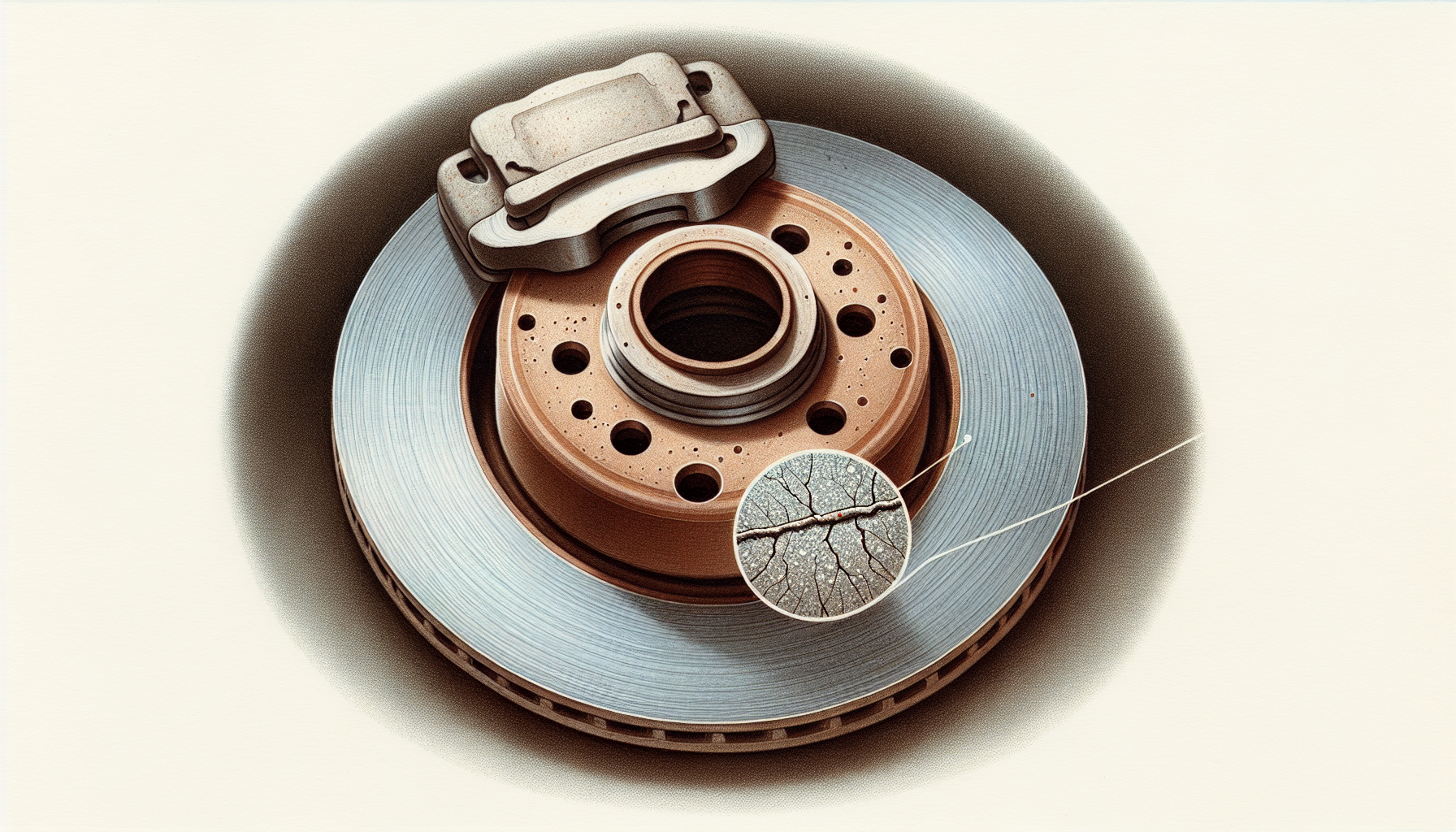
Illustration of brake rotors in a braking system

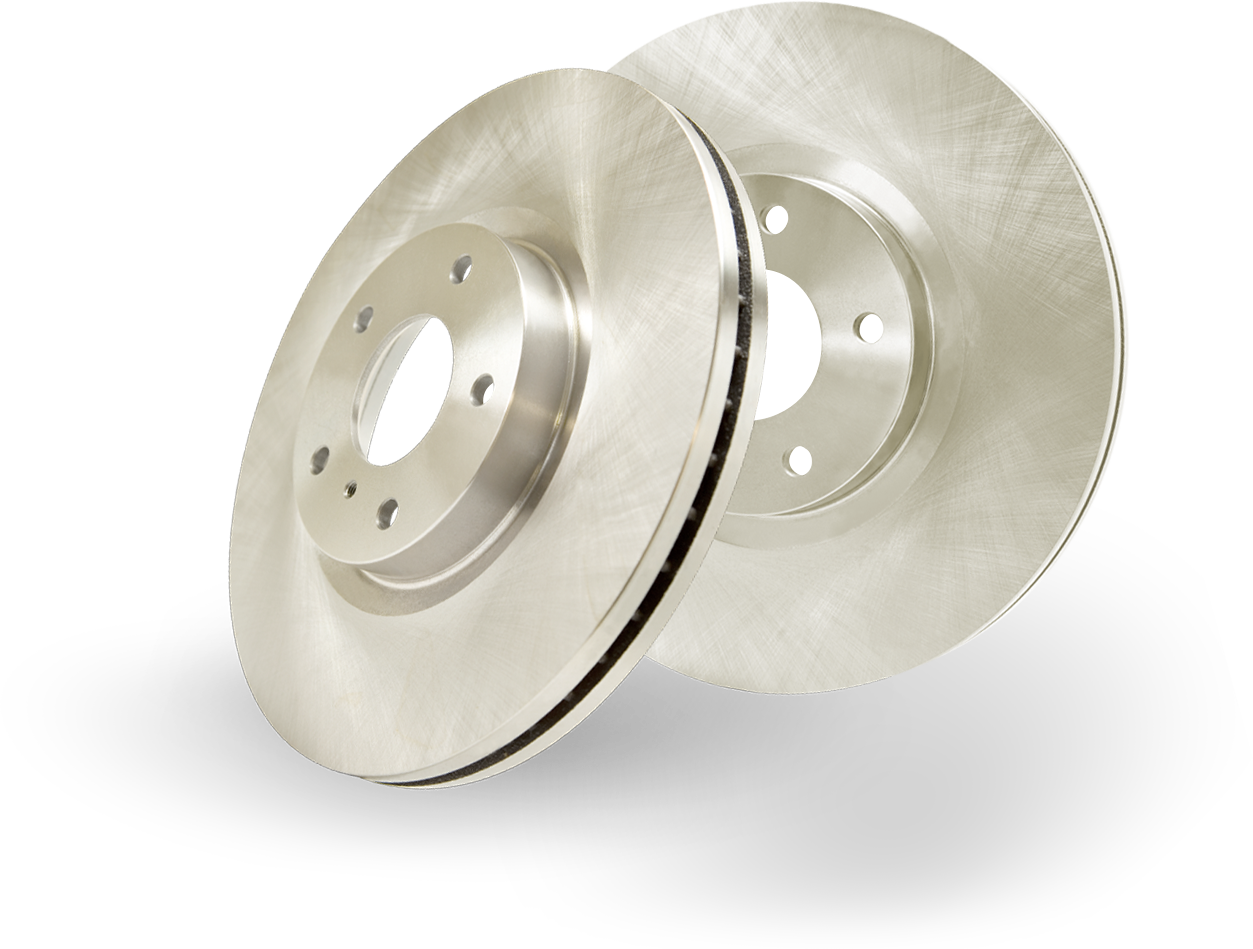
Brake rotors are hidden behind your car’s wheels and are very important for stopping your car. When you press the brake pedal, it makes the brake pads press against the rotors. These rotors are big discs that change the car’s moving energy into heat through friction. This process is crucial for stopping your car and needs a good braking system. Keeping this system in good shape includes changing worn-out brake pads on time for the best performance.

The lifespan of these important parts can vary a lot because of:

  • The quality of material used
  • How well they get rid of heat
  • The type of brake pads used
  • Your driving style and conditions

Under normal conditions, rotors usually last between 30,000 and 80,000 miles. They need regular care to work well and keep your car safe. Ignoring maintenance or exposing them to tough conditions can cause uneven surfaces on the rotors, which can affect how well they work with the brake pads and reduce your car’s stopping power.

It’s important to think about not just when, but also how you replace parts in your car’s braking system. Wear and heat damage affect both brake pads and rotors. Replacing them on time helps keep a good friction level between the pad and rotor, ensuring your car can stop effectively.

The Brake Rotor Resurfacing Process Explained

Illustration of rotor resurfacing process

The process of resurfacing rotors essentially refreshes them. By using a machine to smooth out the rotor surface and fix any thickness differences, this operation gets the rotors ready for new brake pads. Think of it as a detailed cleaning service where your car’s rotors are made smooth and even again using a special tool called a brake lathe. When you get your rotors resurfaced, you’re improving both the performance and lifespan of your braking system.

While not a permanent fix, this method offers a temporary solution to extend the life and efficiency of your vehicle’s braking parts.

What Tools Are Used?

During a brake job, the most important tool used for resurfacing is the brake lathe. This precise machine carefully removes extra material from the rotors. This ensures that when the rotors are put back on the car, their surface is as smooth and even as a freshly cleaned ice rink.

Duration of Resurfacing vs. Replacement

Urgency is key. Resurfacing might seem like the gentler method, but it’s not the fastest – taking about 15 to 30 minutes for each rotor. On the other hand, replacing them can be like a quick pit stop, letting you get back on the road faster.

When to Consider Resurfacing Your Brake Rotors

Resurfacing should only be considered when there is enough material left on the rotors to keep them thick enough for safe braking. Just like you wouldn’t wear a sweater that’s too thin in the winter, your rotors shouldn’t be resurfaced if it would make them too thin to be safe.

On the other hand, if your rotors don’t have deep grooves or warping and are still above their wear limit, they might be good candidates for resurfacing. This is especially true if you notice uneven wear on the rotors or feel vibrations when pressing the brake pedal.

The Costs: Resurfacing vs. New Brake Rotor Replacement

Comparison of costs between resurfacing and new brake rotor replacement

Choosing to resurface (smooth out) your rotors might seem cheaper than buying new ones. However, before you count the savings, remember that the costs for resurfacing might be higher than getting new ones when you add in labor costs and the time your car will be in the shop.

Time is valuable. Resurfacing takes a lot of time for your mechanic to finish and can add up, making replacing the rotors a more affordable option when you consider everything.

Replacing Brake Rotors: A Long-Term Investment?

Choosing new brake pads isn’t just a regular purchase. It’s an investment in the long-term safety and performance of your car. When you install new brake pads, they work perfectly with your brake rotors, ensuring they stay thick and even. Many new rotors come with warranties, giving you extra peace of mind. Replacing brake pads on time can also improve your car’s braking performance.

Although replacing rotors might cost more initially compared to resurfacing, it often saves money in the long run because new rotors last longer and need fewer repairs.

Signs That You Should Replace Rather Than Resurface Rotors

You should replace your rotors instead of resurfacing them if there are clear signs of damage. If you see cracks or notice that the rotors are warped, it’s time for new ones.

Severe rust or deep grooves that can’t be smoothed out are also reasons to replace rotors, especially if they are close to the minimum thickness allowed. Any damage from rust or loose lug nuts can make your braking system less effective, so replacing the rotors is the safest option.

How Driving Style Influences Rotor Wear and Maintenance Choices

The way you drive affects how long your brake rotors last. If you often speed up quickly and brake hard, your rotors will wear out faster. This can cause them to overheat and warp, meaning you’ll need to replace them sooner.

On the other hand, if you drive more gently—accelerating slowly and braking smoothly—your brake system will last longer. This careful driving can delay the need for rotor maintenance.

The Impact of Vehicle Specifications on Rotor Maintenance

Your vehicle’s design plays a big role in how you should take care of your brake rotors. There are different types of rotors, each made for specific vehicles and driving conditions.

  • Sports cars or high-performance vehicles often use vented rotors. These rotors have spaces that help get rid of heat, which is important when driving fast and braking hard.
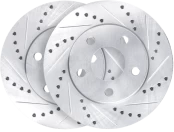
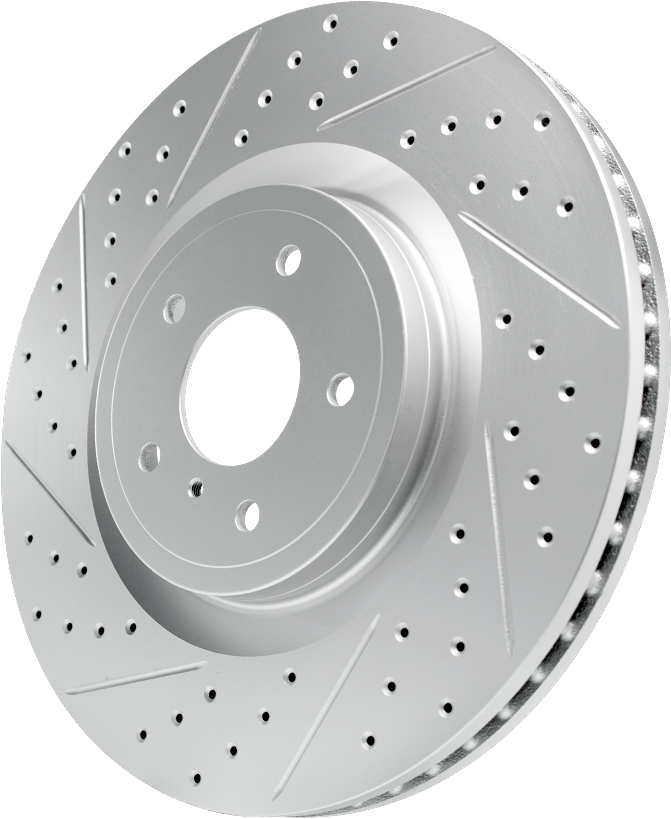
  • Slotted rotors have grooves on their surface. These grooves help improve braking by letting gases and dirt escape.
  • Drilled rotors have holes in them. These holes help improve braking by releasing gases, removing dirt, and reducing heat.
  • Standard passenger cars usually have solid rotors. These are the simplest type of rotors.

Choosing the right material for your rotors, like cast iron, carbon-ceramic, or stainless steel, is also important because each material affects how long the rotors last and how well they perform in different conditions.

If your vehicle has an anti-lock braking system, it can affect whether you should resurface or replace your brake rotors.

Professional Opinion: Why Mechanics Might Recommend Rotor Replacement

When it comes to brake maintenance, a mechanic’s advice is very important. Mechanics often recommend replacing rotors instead of resurfacing them for safety reasons. Some rotors are made very thin, so even a little wear can make them less effective. In these cases, installing new rotors is necessary to keep your car working well.

Listening to your mechanic when they suggest replacing your rotors can help ensure your car stays safe and reliable.

Summary

In the grand scheme of automotive care, the decision to resurface or replace rotors is not one to be taken lightly. It’s a balance of cost, convenience, and most critically, safety. Whether you opt for the restoration of resurfacing or the renewal of replacement, ensure your choice is informed by the condition of your rotors, your driving habits, and the specifications of your vehicle. Remember, what you decide today will echo in the stopping power of every trip you take.

Maximize Your Ride: Top Geospec Coated Rotor Benefits for Enhanced Performance

Why choose geospec coated rotors for your vehicle? This guide cuts through the clutter to explain the geospec coated rotor benefits clearly and concisely. Expect to find out how these rotors offer superior corrosion resistance, long-lasting performance, and sleek aesthetics. We’ll help you understand why they might be the smart choice for your brake system needs without resorting to technical complexities or a sales approach. Dive in for a straightforward breakdown of the advantages that geospec coated rotors bring to the table.

Key Takeaways

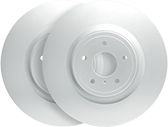
  • Geospec coated rotors offer superior corrosion resistance, enhanced wear characteristics due to premium G3000 Castings, and aesthetic appeal with a durable silver-gray finish, aligning with OE vane configurations for precise fitment.
  • DFC’s extensive inventory includes over 1400 SKUs of Geospec coated rotors, providing comprehensive coverage for a wide range of foreign and domestic passenger cars and light trucks, ensuring compatibility and optimized performance.
  • Proper maintenance and a correct bed-in process are essential for the longevity and optimal performance of Geospec coated rotors, and DFC brake kits offer a complete solution with all necessary components for a harmonious brake system.

The Geospec Coating Advantage

DFC Blog

The brake system is a very important part of keeping your car running safely. Geospec rotors are special parts made with high-quality G3000 Castings. These rotors are not just regular parts; they are made with advanced technology to match the original parts in your car for a perfect fit.

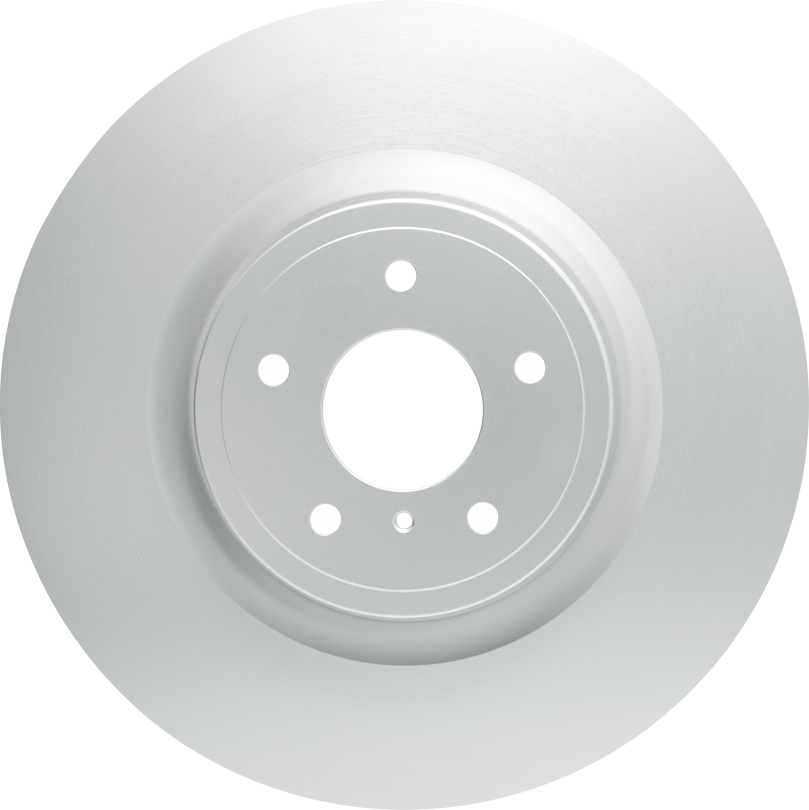
Geospec rotors are treated with a special coating process that uses rust-preventing solutions, making them last longer. This coating protects the rotors from rust while giving them a nice silver-gray color that looks good on your car. The DFC Geospec program promises that these rotors will last a long time and work very well.

Superior Corrosion Resistance

The Geospec coating is a powerful shield that wins the fight against rust and decay. It offers the best protection against corrosion when compared to older methods like zinc plating or simple paint. A brake rotor with Geospec’s modern technology stands strong against tough conditions. It also has a lasting silver-gray color that not only keeps rust away but also makes the rotor work well for a longer time.

Enhanced Wear Characteristics

The durability of a braking system is essential for its performance, and Geospec rotors are renowned for their resilience. They possess:

  • Superior wear characteristics due to the use of high-quality iron castings that enhance the strength, consistency, and longevity of these brake rotors
  • Construction aimed at long-term use
  • A design that reduces the chances of friction contamination
  • Promotion of an even bed-in process and steady wear over time

Through regular upkeep combined with their intrinsic design advantages, Geospec coated rotors can achieve a prolonged service life. When maintained correctly, these rotors preserve their exceptional wear characteristics, ensuring dependable performance from your braking system without compromise.

Aesthetic Appeal

A vehicle’s looks are as important as how it works, and the special silver-gray color of Geospec coated brake rotors helps make a car look better. This is more noticeable for cars with wheels that you can see through, where these shiny, modern-looking rotors can make the car look more attractive. The Geospec coating is not just for show. It also protects against rust and keeps the rotors looking good even in tough weather.

The special paint on these rotors lasts longer than other kinds of paint, so it stays looking new for a long time. This makes not only car fans happy but also people who drive every day and like their car to look nice for a long time. Cars with Geospec rotors are better because they work well and look good, which makes them stand out because of their great performance and nice look.

Complete Vehicle Coverage: The DFC Promise

DFC Blog

The Dynamic Friction Company (DFC) focuses on high-quality products, especially its unique Geospec coating. DFC offers a wide range of brake parts for many kinds of vehicles, including cars from other countries and trucks for light work. They promise to keep the same high standards for all vehicles, new and old, going back to 1930.

DFC has a large supply of brake parts to make sure drivers can always get the high-quality performance and strong braking power that the Geospec coating provides.

Extensive Range for Passenger Vehicles

The Geospec rotor program offers a wide range of choices, with about 1,400 different products for many kinds of cars from all over the world. DFC makes sure there is a large selection for car owners to find exactly what they need.

These products cover many years of car models, from very old ones made in 1930 to the newest ones on the roads today. Geospec has a big supply of important brake parts like rotors and pads. This means they can help a lot of different cars, making sure drivers can get the right part for their car’s brakes.

Light Truck Applications Boasting Full Protection

Geospec coated rotors are designed to handle the extra demands of light trucks, which often carry heavier loads and operate in tough conditions. These rotors are strong and last a long time because of their high-quality coating, making them perfect for light trucks. They are made with precision to fit each truck model exactly, which means they work just right for each truck. The special coating covers the whole rotor, protecting it from wear and rust, and is made to fit the truck’s specific needs.

Discovering the Geospec Program

The Geospec program by Dynamic Friction Company leads the way with its top-notch coated rotors. It offers a wide variety of choices, with over 1400 types made for different cars and light trucks. This means that every vehicle can find the right fit with this advanced rotor program.

Redesigning Rotor Surfaces

DFC carefully applies coating to every part of the rotor surface to make sure it’s even. This careful approach sets Geospec rotors apart from others.

Using precise machines, DFC makes rotors that match the exact size and balance needed. This careful making process ensures that the rotors work consistently and meet high-quality standards.

The All-Inclusive Brake Kit Solution

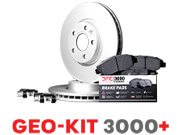
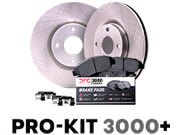
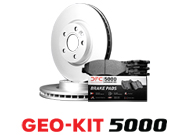
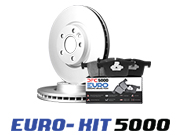
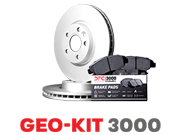
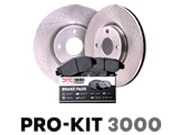
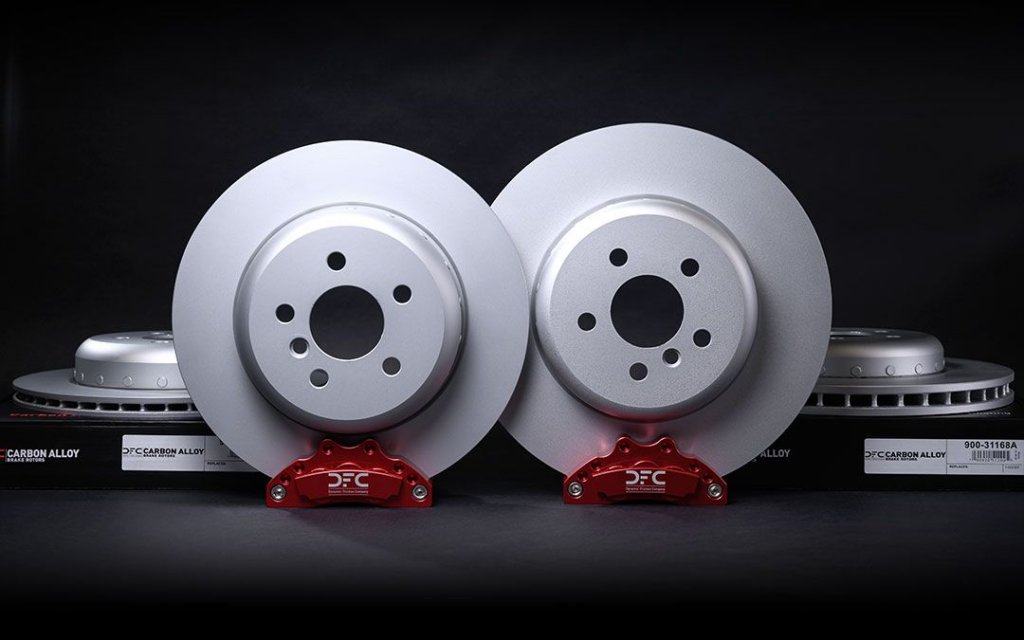
DFC takes great pride in offering a comprehensive brake kit, meticulously crafted as axle-specific sets for particular vehicle models. The kits feature Geospec coated rotors and represent the ease and financial benefits that come with acquiring an entire set for one axle, which boosts the efficiency of maintaining and replacing parts within the brake system.

The advantage of opting for DFC’s full brake kit is found in its ability to eliminate the necessity for incremental buying, guaranteeing that clients are provided with exceptional defense against both wear and corrosion.

What’s Included in a DFC Brake Kit

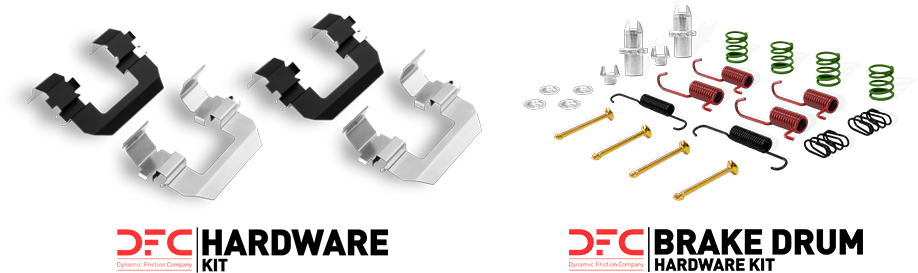
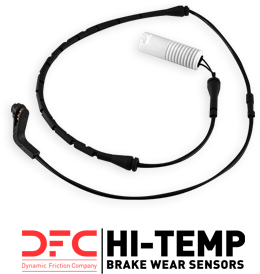
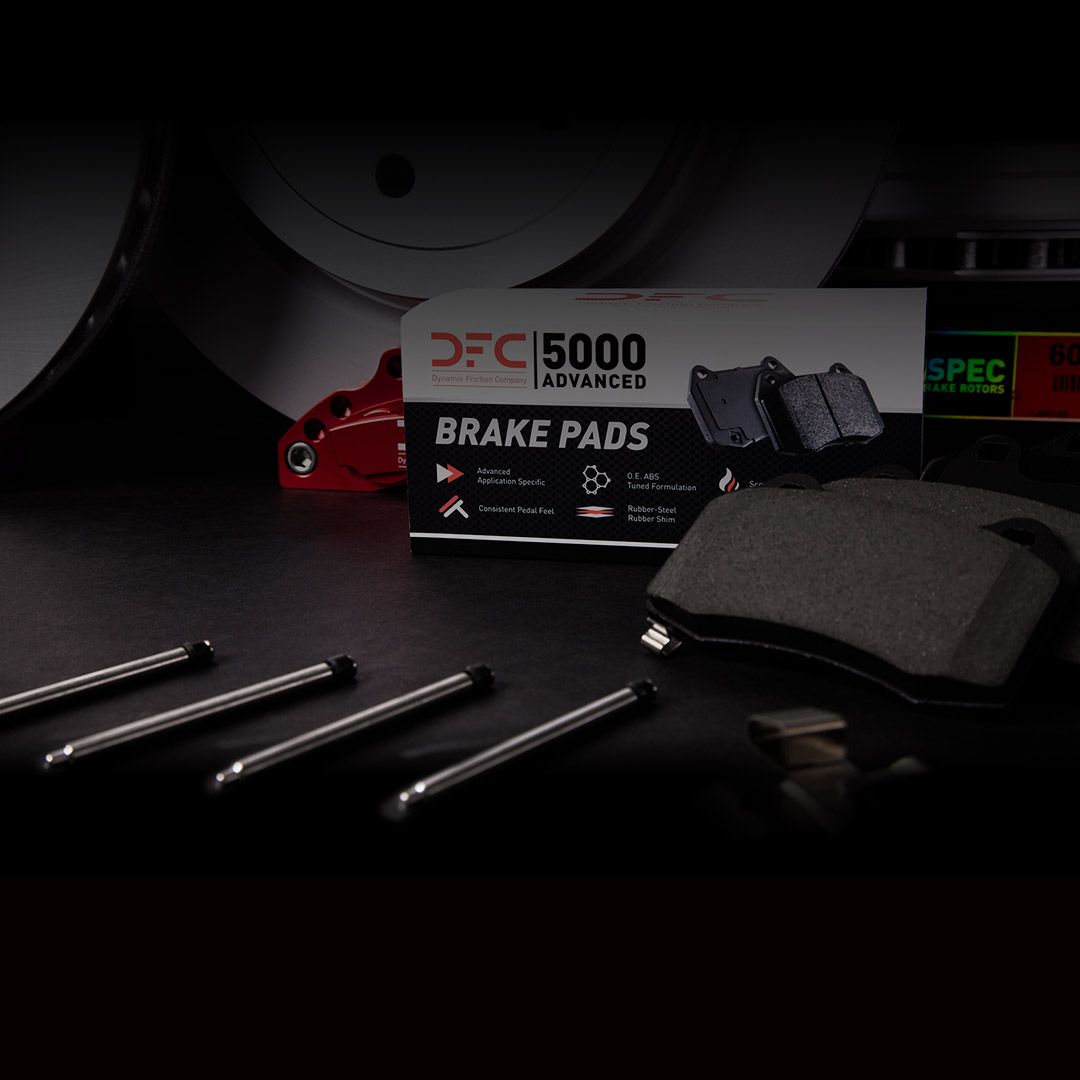
The DFC brake kit encompasses a full set of critical braking components, comprising calipers, discs, and pads for a total system overhaul. This package comes with upgraded pads and an inclusive hardware kit to deliver a fully integrated braking solution. Depending on the vehicle’s requirements, the kit may also contain extra elements like wear sensors, brake fluids, and rotor rings to cater specifically to that application.

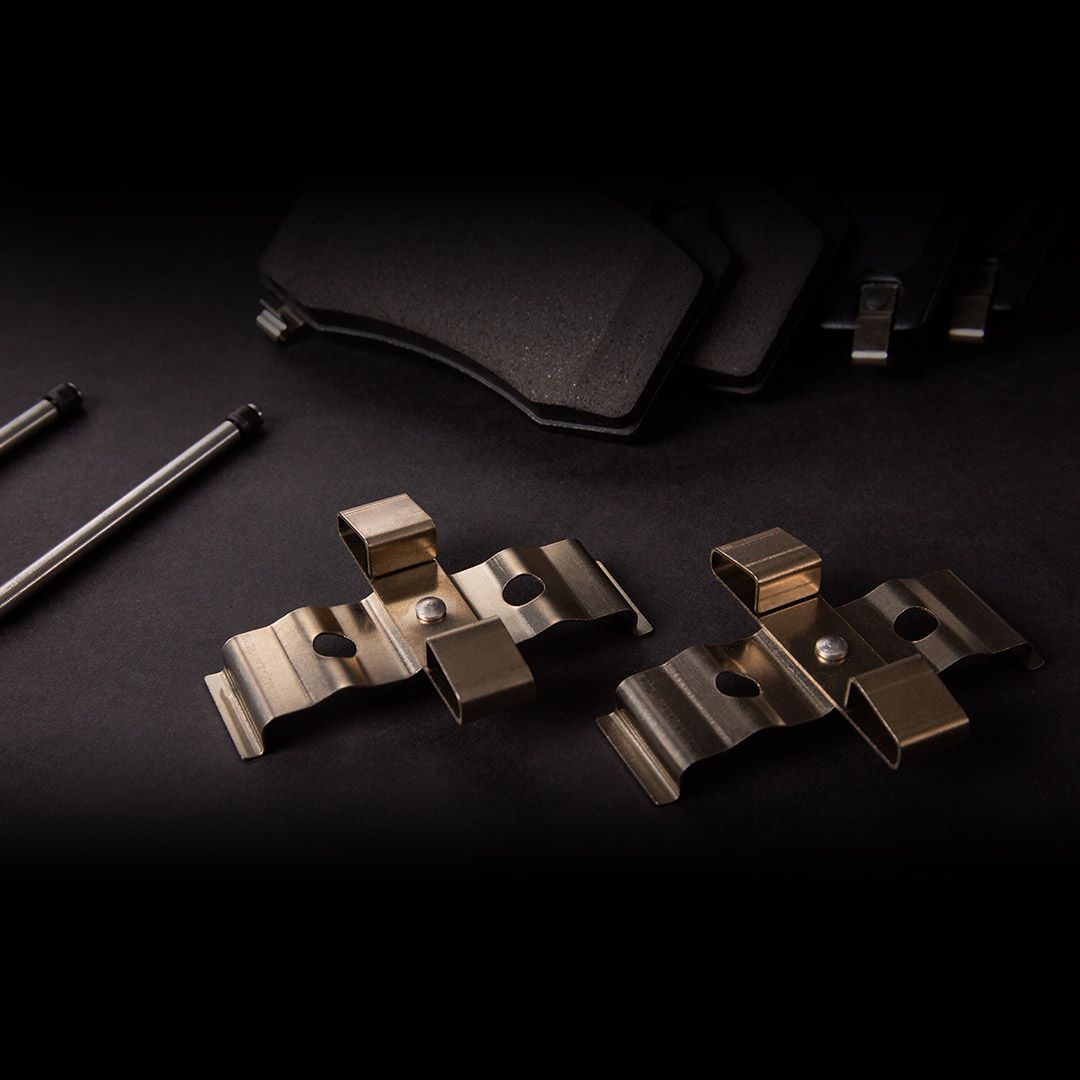
Constructed from stainless steel, the provided DFC Hardware Kits are designed to resist corrosion while enduring high temperatures. This enhances both the durability and lifespan of each brake kit component.

Why Choose a Complete Kit

Choosing a complete brake kit provides numerous advantages.

  • The components are engineered to work together seamlessly, enhancing the vehicle’s braking system performance and compatibility.
  • Noise issues become less of an issue with this option.
  • Smooth operation is achieved since all the new parts are created to operate in unison.

A complete brake kit from DFC offers additional benefits.

  • It streamlines the process of choosing the right parts
  • Delivers a matched system that simplifies selection
  • Effectively restores optimal performance
  • Meets varying customer needs concerning price, function, and design.

Summary

We understand that the Geospec-coated rotors from DFC are very good for many reasons. They do not rust easily, last a long time, and look nice. These rotors help your car run smoothly and look stylish. DFC promises to have the right rotor for every kind of vehicle because they care about quality and have many options.

Choosing a complete brake kit from DFC is even better because it has everything you need in one package. This makes it easy to use and take care of your car’s brakes. If you take good care of these rotors and use them the right way, they will work well for a long time. When you pick Geospec-coated rotors, you are choosing safety and a great driving experience.

Top Picks: Best Brake Rotors for Tesla for Enhanced Performance and Safety

If you’re looking for the best brake rotors for your Tesla, you want ones that are dependable and enhance your car’s performance. This article provides a clear review of the top brake rotors, focusing on those made especially for Tesla cars. We’ll guide you through the options that meet the high standards of your vehicle, making sure your Tesla continues to perform well.

Key Takeaways

  • Tesla vehicles feature sophisticated brake systems with anti-lock braking system, special features for enhanced control, and year/model-specific variations in rotor types and sizes for optimized performance.
  • Choosing between OEM and aftermarket rotors for Teslas involves considering factors like vehicle type, rotor design, cost, and potential warranty implications; eco-friendly options are also available.
  • Signs such as surface cracks, vibrations, and unusual noise during braking indicate it’s time to replace brake rotors, with costs varying by service provider; regular maintenance is crucial for safety and performance.

Understanding Tesla Brakes

Tesla vehicles come with a sophisticated anti-lock braking system that boasts several capabilities.

  • It prevents the wheels from locking up during intense braking, thus improving control and steering ability.
  • To enhance brake responsiveness, the system includes brake disc wiping to clear away moisture.
  • The anti-lock braking system is also designed with hydraulic fade compensation which modifies brake system pressure in situations where performance might be compromised due to conditions like brake fade or inclement weather.

These parts are very important because they help make Tesla cars both safer and perform better.

Specifically, the Model S is designed to alert the driver when the temperature is very cold, below 14 degrees Fahrenheit. This alert is to let the driver know that the car might not be as stable and that the brakes might not work as well. This attention to detail shows how Tesla is different from other car makers in how they design and make their cars.
Performance Versions

Tesla models uphold a high standard in braking systems, yet the performance variants feature specialized rotors. These unique rotors are designed to meet the rigorous requirements of performance driving, guaranteeing that every component of the vehicle is fine-tuned for both track environments and regular road use.

Yearly Variations

The brake rotors on a Tesla vehicle can vary not only based on the model but also according to the production year. This variation is due to Tesla’s commitment to constant innovation and improvement of their vehicles’ parts, aimed at boosting performance, safety, and the overall driving experience. Consequently, it’s expected that rotors would evolve as part of this advancement trajectory.
Choosing the Right Brake Rotors for Your Tesla Model

DFC Blog

When choosing brake rotors for your Tesla, it’s important to consider the exact model of your car, as well as the right size and type of rotor. For instance, the GEOMET® coated brake rotors are used for Tesla Model X cars made between 2016 and 2018.

The Tesla Model 3 is sold in two different versions, Base and Performance, which have different sizes for the front rotors, different rotor designs, and different colors for the brake calipers.

Each Tesla model has its own needs for its brake system. This means each model requires specific types and sizes of rotors. Below is a simple guide that explains the differences between the brake systems of various Tesla models.

  • Both from Palladium series. Models S and X usually possess identical braking configurations except that Model X has more substantial front brake rotors.
  • The Model 3 comes with a distinctive set-up exclusive to itself.
  • Similarly distinct is the setup found within a Tesla’s Model Y.

Ensuring you select accurately fitting brake rotors for your precise model will greatly contribute to peak performance outcomes while enhancing safety measures as well as ensuring longer-lasting wear on your car’s brakes.

OEM vs. Aftermarket Rotors

premium-brake-rotors-oe

Choosing between original Tesla brake rotors and those made by other companies is an important decision. Brake rotors not made by Tesla (non-OEM) are often less expensive, and they might last just as long or even longer than the original parts. However, it’s very important to carefully check the quality of these alternative rotors.

Aftermarket rotors often have features like:

  • A zinc coating to prevent rust
  • A thicker center area to fix certain issues found in some models
  • A lighter weight and special designs, similar to DFC’s Geomet rotors, which help keep the brake pads clean

These features are intended to improve the performance and life of the rotors when used in regular driving conditions.

Top Brake Rotor Options for Tesla Models

To augment both the performance capabilities and safety features of Tesla vehicles, there are a variety of brake rotor options available on the market. These brakes are engineered to be versatile enough for daily driving conditions as well as high-demand track environments. Let’s take a closer look at some of these offerings in greater detail.

Carbon Ceramic Rotors

geomet-finish

Choosing carbon ceramic rotors for Tesla vehicles is a wise decision for environmentally aware drivers. These rotors are lighter than traditional iron rotors, which means they reduce the overall weight of the car. This can lead to better handling and fuel efficiency.

In addition, carbon ceramic rotors are known for their durability and ability to perform well under high temperatures, which is particularly beneficial during fast driving or in hot climates. They also produce less brake dust than standard rotors, keeping wheels cleaner and reducing the environmental impact.

Carbon Ceramic Rotors vs. Traditional Cast Iron Rotors

geomet-finish

Choosing carbon ceramic rotors for Tesla vehicles is a wise decision for environmentally aware drivers. These rotors are lighter than traditional iron rotors, which means they reduce the overall weight of the car. This can lead to better handling and fuel efficiency. The reduced unsprung mass of carbon ceramic rotors allows for more precise wheel control, which translates into a smoother ride and improved vehicle dynamics.

In addition to their weight advantage, carbon ceramic rotors are known for their durability and ability to perform well under high temperatures, which is particularly beneficial during fast driving or in hot climates. They also produce less brake dust than standard rotors, keeping wheels cleaner and reducing the environmental impact. The longevity of carbon ceramic rotors is another plus; they can last the lifetime of the car under normal driving conditions, whereas traditional cast iron rotors might need to be replaced several times over the same period.

On the other hand, traditional cast iron rotors, while being more cost-effective upfront, do not offer the same performance benefits as carbon ceramic rotors. Ordinary cast iron rotors tend to warp under high temperatures, leading to reduced braking performance and potentially more frequent replacements. For a Tesla, which is engineered for high performance and efficiency, the use of ordinary cast iron rotors could compromise the vehicle’s finely-tuned dynamics and the overall driving experience that Tesla owners have come to expect.

Slotted and Drilled Rotors

drillslot

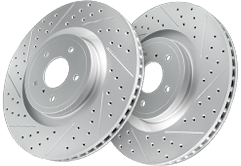
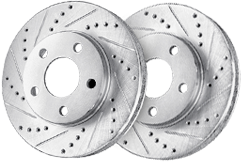
Slotted and drilled brake rotors are widely favored by Tesla owners, with the DFC’s Geomet series being a preferred choice for its ability to elevate the braking performance of their vehicles. Designed for optimal heat dispersion, these slotted rotors surpass conventional rotor design in halting efficiency.

They marry high-grade stoppage power with cost-effectiveness through advanced engineering that includes cross-drilled holes and diamond-patterned slots to maximize durability and stopping force. They employ a ‘Convergent vane’ structure which enhances resistance against both corrosion and warping.

Durability is also built into these specific rotors’ designs thanks to rotor rings tailored specifically for Tesla vehicles. These components ensure an extended service life known amongst users while remaining steadfast in maintaining vehicle performance standards.

Brake Pad Selection for Optimal Performance

s1 pads box

Ceramic brake pads are generally considered the best option for Tesla vehicles due to their quiet operation, low dust output, and durability. These qualities make ceramic pads particularly appealing to drivers who prioritize cleanliness and a quiet ride.

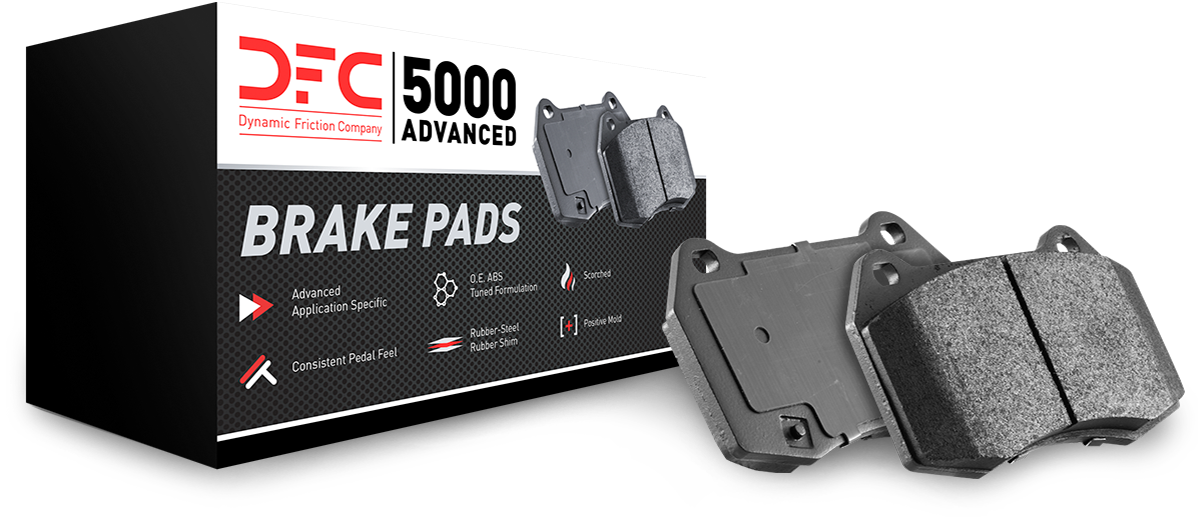
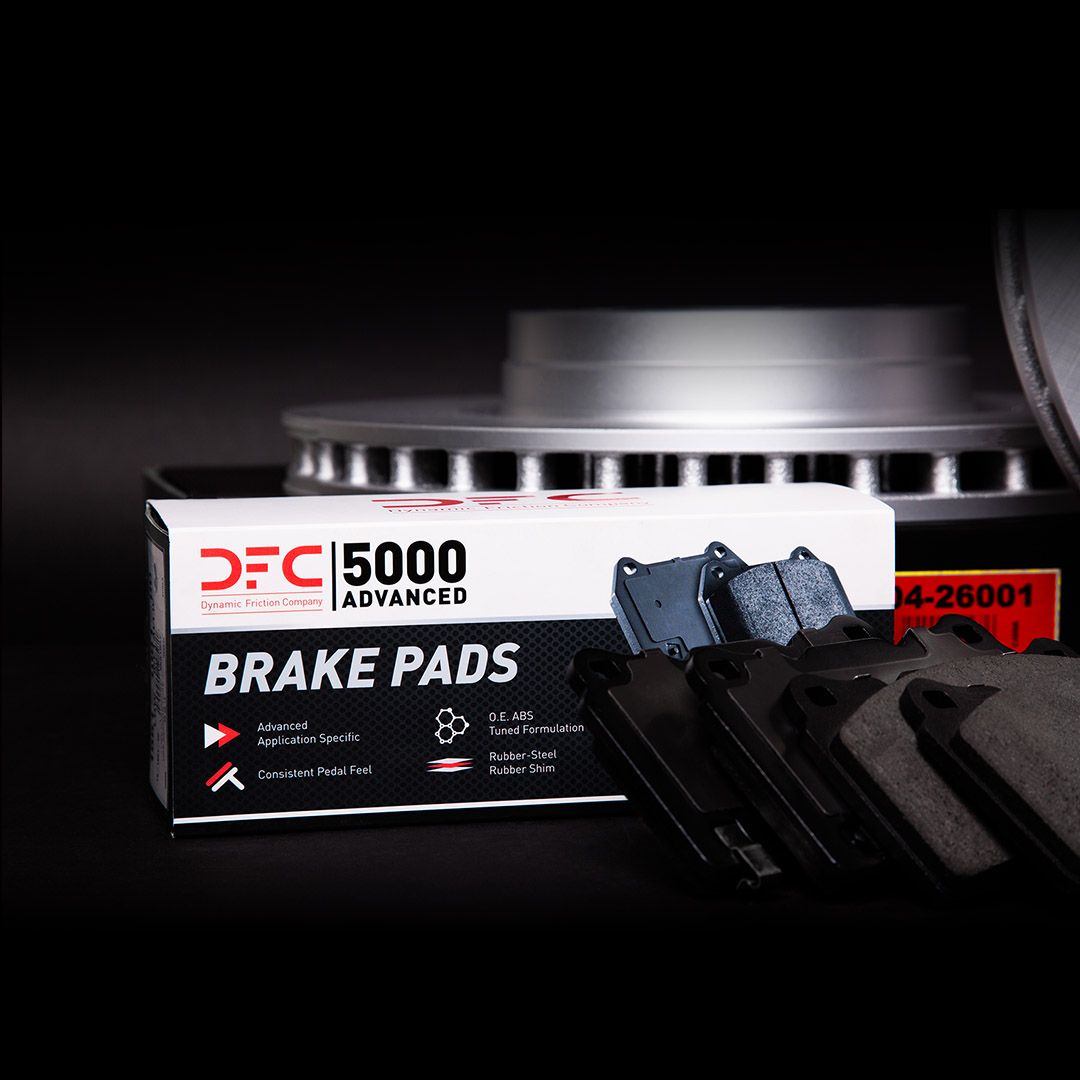
When considering the best brake pads for your Tesla, Dynamic Friction Company (DFC) stands out with its exceptional offerings. The DFC 5000 Advanced series brake pads is the most compatible brake pad are engineered to complement the advanced regenerative braking system of Tesla, ensuring optimal performance and minimal wear.

Unlike other brands, DFC brake pads are designed specifically by your vehicle’s exact year, make, and model. Add the fact that these brake pads are also crafted in a unique formulation that reduces noise and dust, which is especially beneficial for maintaining the pristine conditions of car models, especially your Tesla.

Moreover, these pads are thermally stable and provide consistent braking power even under high temperatures, making them an ideal choice for Tesla owners who demand superior quality and performance without compromising on environmental consciousness.

Signs It’s Time to Replace Your Tesla Brake Rotors

Brake rotors are parts that naturally wear out over time, just like any other part of a car. Eventually, they will need to be replaced. How can you tell when it’s time for new ones? Look out for certain signs that show your Tesla’s brake rotors might need changing. For example, if you see large cracks on the rotor surface, especially if they reach the edges, this usually means it’s time to get new rotors. Also, if you notice deep grooves or other clear signs of wear on the part of the rotor that touches the brake pads, this is another indication that they need to be replaced.

If you feel shaking in the steering wheel or the brake pedal when you brake, this could suggest a problem with the rotors. If you hear loud noises when you are braking, this could also mean that the rotors are worn out or that they have rusted. It’s very important to have your Tesla’s brakes checked regularly to keep the car safe to drive and to make sure it performs well.

Cost of New Brake Rotors for Tesla Vehicles

The price of new brake pads and rotors for Tesla vehicles can fluctuate based on a variety of factors. Reports from Tesla owners suggest that the cost to replace both front and rear brake pads and rotors can range between $840 to $1,583. When you also factor in the replacement of parking brake pads along with the front and rear pads and rotors, expenses may increase up to approximately $2,500.

Due to this variation in quotes offered by different Tesla service centers, there’s noticeable unpredictability regarding the total cost encompassing parts and labor which might be attributed to various service providers. Labor charges are subject not only to variability, but could significantly affect overall costs as well. It’s advisable for vehicle owners seeking these services to obtain multiple estimates ensuring they receive optimal value when spending money on such maintenance tasks.

Potential Warranty Concerns

Opting for aftermarket brake rotors might seem appealing, but it’s crucial to consider the potential impact on your warranty. It’s a common myth that just by installing aftermarket parts such as brake rotors on a Tesla can lead to an automatic void of the vehicle’s warranty. Consumer rights are protected by the Federal Trade Commission (FTC), which allows individuals to use non-original parts without forfeiting their warranty.

The assurance provided by Tesla will remain intact unless evidence shows that any problems needing repair were directly caused by an installed aftermarket part. Warranty services cannot be rejected simply because there is an aftermarket rotor fitted. Proof must be shown that this component is responsible for the damage incurred. Meticulous documentation of changes and consulting certified professionals when putting in these types of parts play a critical role in preserving your car’s coverage under its original guarantee.

Installation Tips and Best Practices

When you’ve made your selection, the next phase is the installation process. Tesla has developed unique tools specifically for facilitating swift and safe removal, disassembly, and reassembling of braking components to prevent damage during servicing. The proper completion of certain maintenance or installation jobs on Tesla vehicles often necessitates these specialized instruments.

For some vehicle models, installing aftermarket rear rotors can be notably quick and simple – some boasting that this can be accomplished in as little as 20 minutes for each corner. These rotors are double disc ground at the brake pad contact area to enhance quicker bedding-in of brake pads which leads to a quieter performance with smoother stops. It’s crucial for owners who modify their vehicles by adding parts like front calipers to meticulously document all changes and consult certified technicians when installing aftermarket enhancements to ensure peak performance from their vehicle’s brakes.

Summary

If you own a Tesla or simply admire these remarkable vehicles, grasping the details of their braking systems and the array of choices for rotor types can deepen your admiration. Keep in mind that brake rotors and pads are vital to both your safety and your Tesla’s performance. It is essential to choose these parts thoughtfully, considering factors like how you drive, environmental conditions, and financial limitations. Armed with proper understanding and equipment, you can maximize the high-caliber performance of your Tesla while maintaining confidence in its roadworthiness.

Brake Check Guide: How Do You Tell If You Need New Rotors or Just Brake Pads?

Noise, vibration, and performance anxiety – your car’s brakes are signaling for help, but what exactly do they need? “How do you tell if you need new rotors or just brake pads?” Spotting the difference is essential for safe driving, and this article cuts through the uncertainty. We’ll provide clear signs to look out for and steps to ensure you’re making the right call between new rotors and brake pads, keeping you confident on the road.

Key Takeaways

  • Brake systems consist of pads, rotors, calipers, and brake fluid working together; brake pads wear down normally, while rotors last longer, but both require regular checks for vehicle safety.
  • Identifying brake issues involves paying attention to symptoms like pedal pulsation, steering wheel shake, unusual noises, and visual clues such as grooves or cracks on rotors, indicating whether pad replacement or rotor service is needed.
  • Driving habits, road conditions, and regular professional inspections are crucial in maintaining brake system health, with high-quality replacement parts ensuring optimal safety and performance.

Spotting the Signs: Brake Pads vs. Rotors

Illustration of worn brake pads and rotors

The story of your car’s brakes needing attention is told through shakes, noises, and visual wear. You’ll notice the brake pads getting thin and worn out, while checking the condition of the rotors takes a closer look. It’s important to recognize these signs to keep your car’s brakes working well and keep you safe on the road.

Let’s look at the clear signs that tell you if your brakes need a quick fix or a more serious repair. From a shaky steering wheel to strange sounds when you hit the brake pedal, we’ll help you understand these signs of trouble. We’ll also show you how to spot the visual hints that reveal the health of your brake parts, helping you speak the ‘language’ of your car’s brakes.

Pedal Pulsation and Steering Wheel Shake

If you’re feeling a pulsing sensation under your foot when you press the brake pedal, or if your steering wheel seems to tremble unexpectedly, these are clear signs that your brake rotors may be the issue, leading to unwanted vibrations. Cheaper rotors might meet basic requirements but can cause vibrations and faster wear on your brake system, much like an orchestra playing with low-quality instruments.

Vibrations in the brake pedal are not just annoying; they suggest a decline in your car’s braking ability. It’s crucial to address these warnings promptly by getting your brakes checked. Ignoring them can lead to more serious brake problems down the road.

Noise Alerts: Listening to Your Brakes

The noises your vehicle makes can be alarming. Squealing or grinding brakes usually mean you need new brake pads. If you hear scraping sounds, check the rotors for wear or damage, which could affect your car’s stopping power.

Listening to these sounds is crucial for your safety. They signal when to replace brake pads or inspect rotors, ensuring your vehicle stops effectively.

Visual Clues: Inspecting the Components

Illustration of inspecting brake components

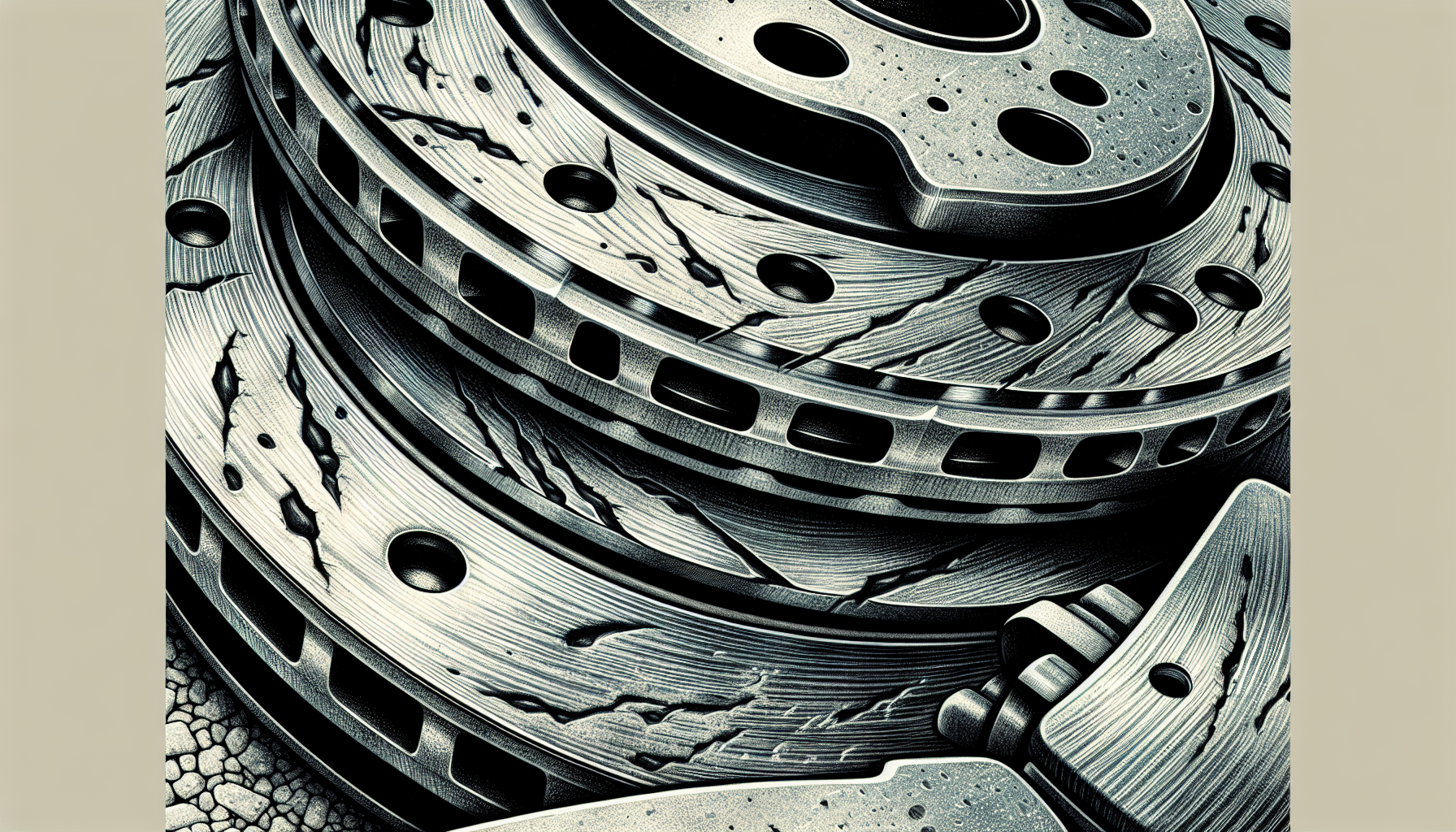
At times, the condition of your braking system is clearly displayed on its very components. By examining the surface of your brake rotors, you can uncover evidence such as scoring, grooves or a shiny glaze that narrates their wear and tear – indicative that it’s time for a thorough brake check by a professional. When there are deep grooves or significant edges formed at the end of the rotor, this signals substantial erosion akin to severe scratches on what should be a flat surface.

The appearance of heat spots or corrosion on an otherwise flawless rotor surface might also suggest problems with your brakes. Heat spots could result in uncomfortable vibrations during braking and indicate extreme use while rust might affect just aesthetics or cause serious deterioration impairing rotor reliability, these are visual warnings hinting at potential danger unless promptly remedied.

Any form of cracking within the brake rotor is an urgent red flag requiring immediate attention. These cracks may appear minor like fine lines but can escalate to visible splits suggesting replacement over repair. Similar to how one would treat a broken bone, compromised integrity requires swift action for safety reasons.

Summary

In the intricate symphony of car maintenance, your braking system is vital for both safety and performance. We’ve delved into the details of brake maintenance, from recognizing the various parts to detecting deterioration signs. The influence of one’s driving style and environmental conditions on brakes has been examined, along with determining when replacement trumps resurfacing. Stressing professional evaluations and high-quality components’ significance in replacements is crucial. Use this guide as your navigation tool through the complex realm of vehicle brakes to guarantee that each trip you make is supported by a robustly serviced car.

Frequently Asked Questions

What are the symptoms of a bad rotor?

If your rotors are in poor condition, you might notice indications like squeaking, squealing or grinding noises when the brakes are engaged. A vibration or pulsation felt through the steering wheel and a shaking of the wheel itself can signal problems such as warped or excessively worn down rotors.

How often should I check my brake pads and rotors?

You should inspect your brake pads approximately every 10,000 to 20,000 miles and examine your rotors between every 50,000 to 70,000 miles. Consider adjusting these intervals in accordance with the specific conditions you drive in and your personal driving habits.

Can I just replace my brake pads and not the rotors?

Certainly, if your rotors remain above the minimum thickness recommended by the manufacturer and exhibit no substantial wear or damage, you can opt to solely replace the brake pads.

What causes a vibrating brake pedal?

Issues with the rotors, including warping or uneven pad deposits, can lead to a brake pedal that vibrates. This condition may disrupt the seamless operation of braking and necessitates immediate attention.

Is it necessary to replace both brake rotors at the same time?

Indeed, for the sake of ensuring uniform braking and averting any tendency for the vehicle to veer to one side during a brake application, it is imperative to change both brake rotors concurrently. Adhering to this procedure is considered an optimal standard in maintaining brake systems.

3 Reasons Why Your Customers will be Impressed with these Coated Brake Rotors!

DFC Blog

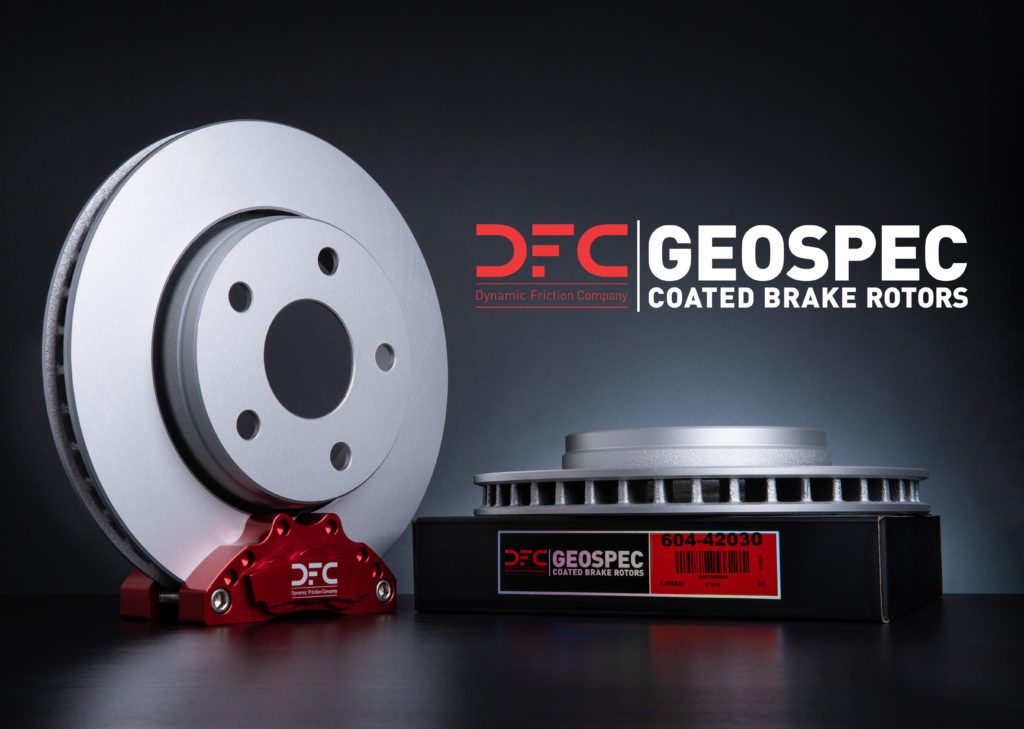
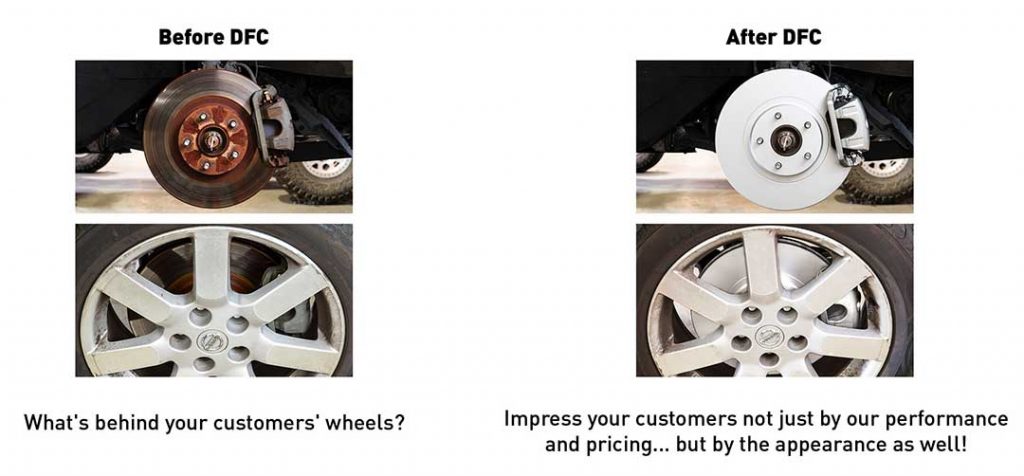
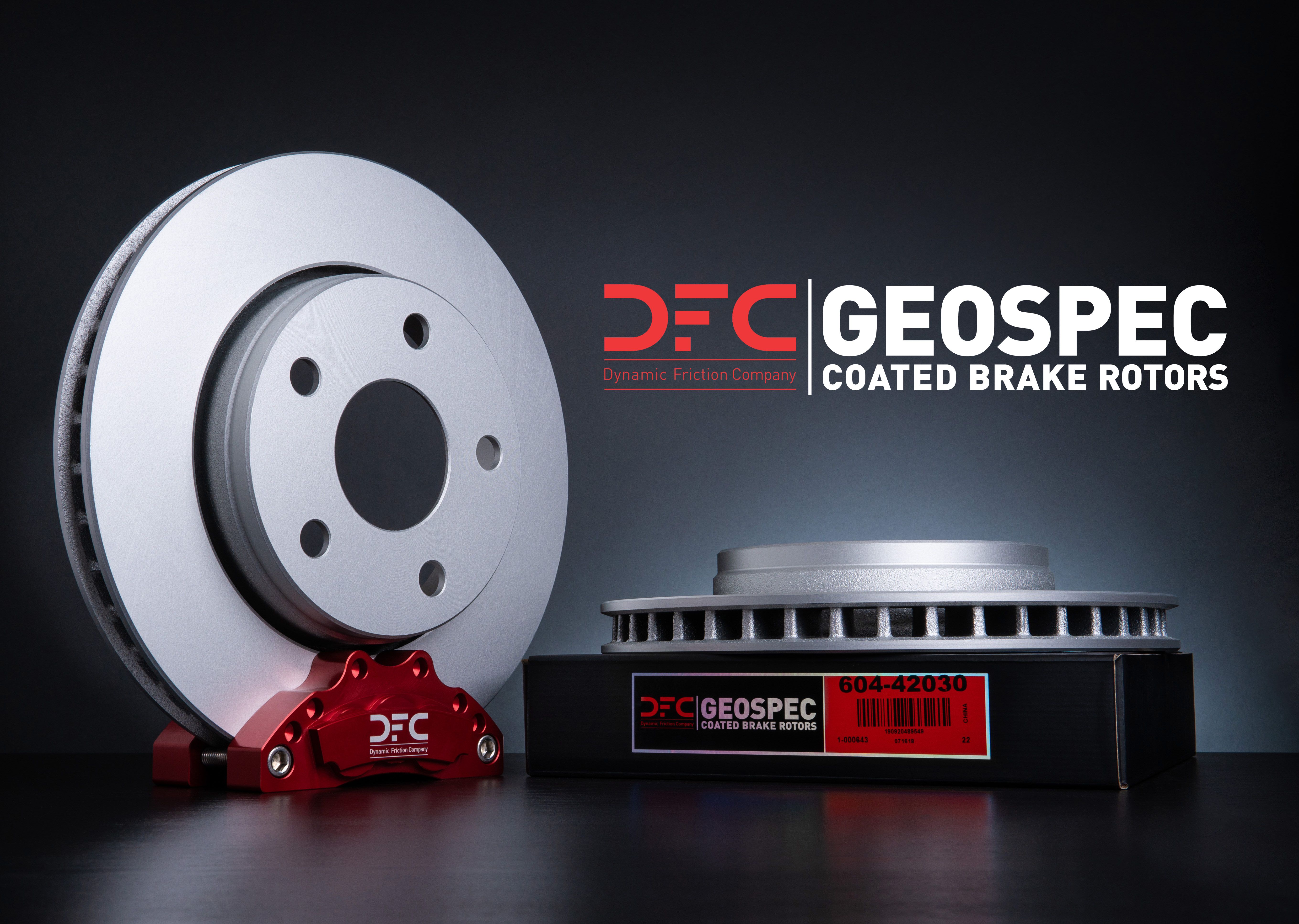
With today’s open wheels, a car’s brake components are clearly visible. DFC’s GEOSPEC Coated Brake Rotors will keep it free from rust, looking great, and keeping your customers’ happy, long after you’ve installed them.

3 Reasons Why:

DFC Blog
DFC Blog

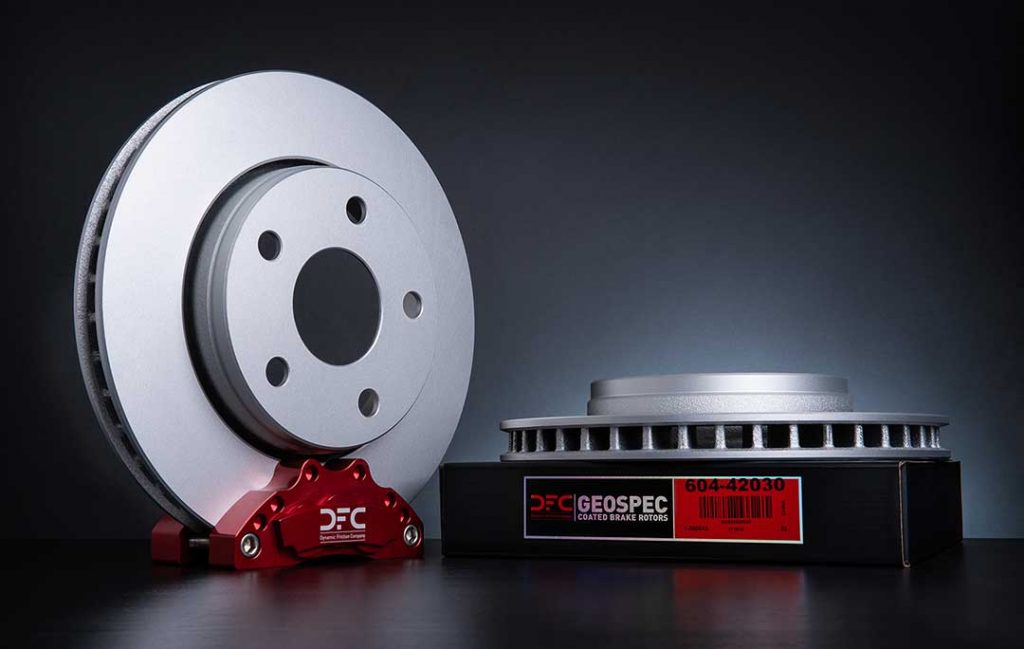
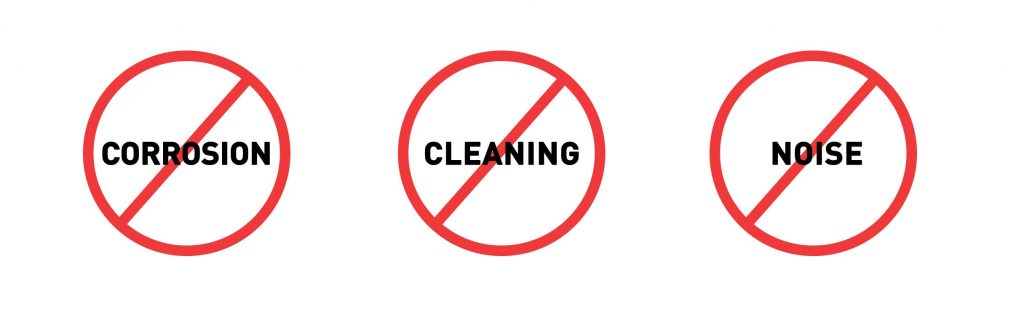
DFC GEOSPEC Coated Brake Rotors are specially coated with a special paint to form a durable and attractive silver-gray finish that fights rust far better than other conventional paint or zinc plating.

DFC Blog

Each DFC GeoSpec Coated Brake Rotors is processed dry, shipped dry, and ready to install without any additional preparation.
An average brake job takes 1.25-2.5 hours per axle. Without the need to clean an oil covered rotor, this saves a tremendous amount of time and money during the installation process. The coating is simply and safely swept away by the friction material with no harmful effects.

• Engineered with premium G3000/G11H18 iron castings for strength, stability, and durability
• Original Equipment (OE) vane
• Provides superior corrosion protection over zinc / conventional painting
• CNC-machined to the tightest tolerances
• 100% precision cut and mill-balanced
• Non-directional finish 
• Quality tested to ensure long-lasting performance
• Set at a great price

To learn more about DFC GeoSpec Coated Brake Rotors,
please visit: www.dynamicfriction.com/products/geospec


About Dynamic Friction Company

DFC is an award winning brake components manufacturer and supplier headquartered in Southern California. DFC offers a complete brake systems program for all passenger cars, pickup, & medium duty trucks. DFC is recognized for its devotion to bringing its customers the latest and greatest in brake products available without the exorbitant costs. DFC boasts a full complement of dedicated in-house engineers and R&D staff who work vigorously to give our customers first-to-market advantage and assurances that modern technological complexities are fully addressed.

DFC Blog

DFC_Introduces_Tesla Mode_ S_and_Model_X_Brake_Rotors_&_Pads

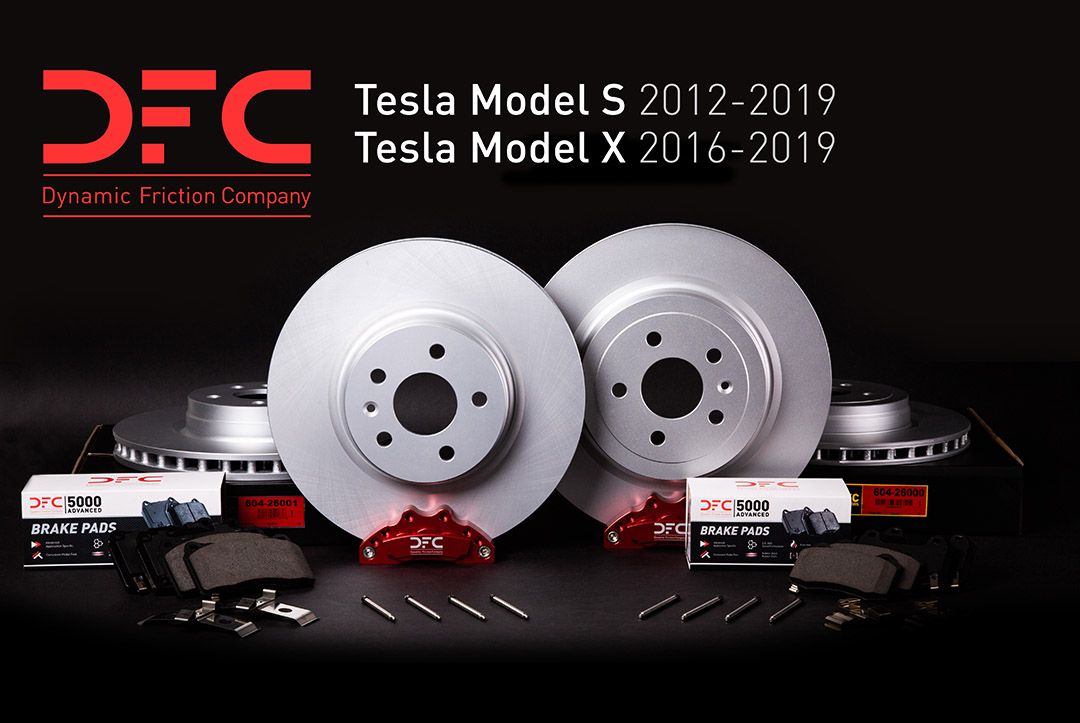
CERRITOS, CA – California based, Dynamic Friction Company (DFC) announced that Tesla Model S (2012-2019) and Model X (2016-2019) brake components have been added to the DFC premium brake offering.  The new part number additions have been made available in DFC’s premium rotor, friction, and hardware line.

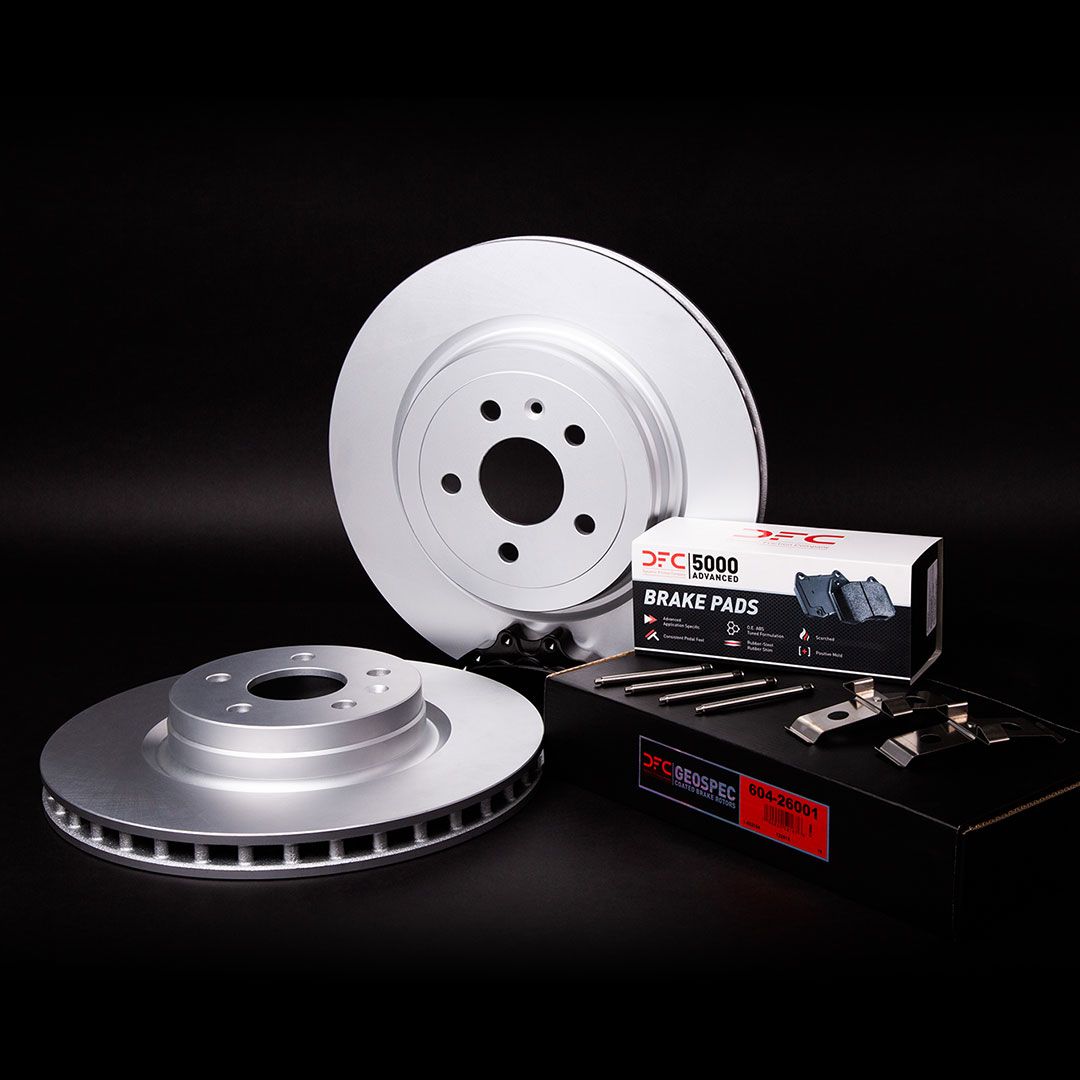
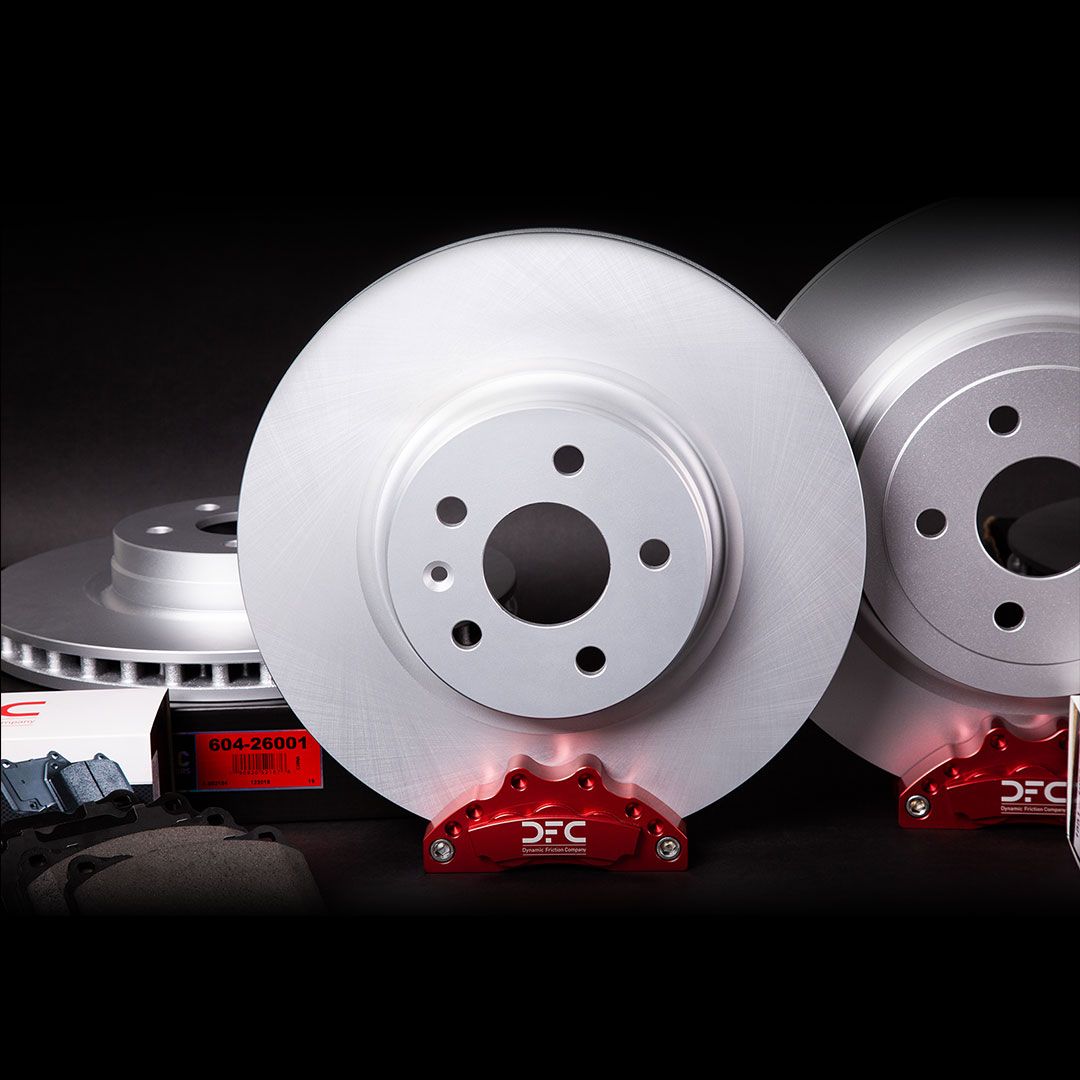
DFC’s GeoSpec Coated brake rotor offering has been engineered to precise specifications in order to mimic the Tesla factory components.  All DFC GeoSpec Coated brake rotors are specially coated to form a durable and attractive silver-gray finish that fights rust. Each rotor is prepared with a non-directional finish to promote a faster and more even brake pad bed-in, along with quieter and smoother stops.

The combination of DFC’s GeoSpec Coated brake rotors along with the 5000 Advanced application specific formulated brake pads and hardware kit, serves to ensure that braking characteristics maintain factory performance and feel. “We fully acknowledge that the technology behind the advanced braking systems of Tesla require advanced attention to detail in every aspect of its design and have gone the extra mile to ensure that our research and development teams strictly follow the original design,” says DFC Co-Founder, Dino Crescentini.

Thank you for joining us today and we hope to see you on our next product release.

DFC Announces New Brake Rotor Application – 2019-2020 Chevrolet Silverado / GMC Sierra 1500

DFC Blog

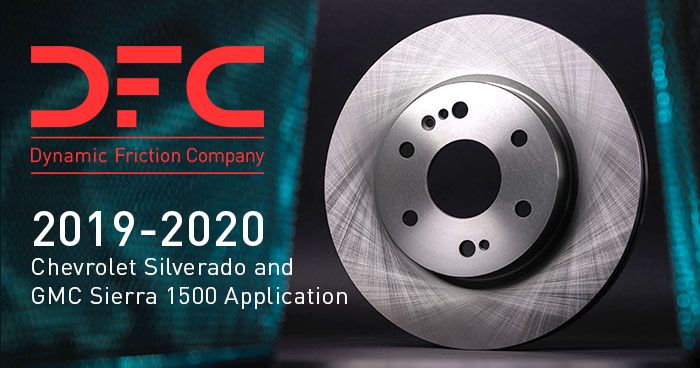
Southern California brake parts supplier, Dynamic Friction Company announces that it is the first brake supplier to release front disc brake rotors for the all new 2019-2020 Chevrolet Silverado 1500 and all new 2019-2020 GMC Sierra 1500.

DFC CEO, Dan Nguyen stated, “We pride ourselves in keeping our fingers on the pulse of our customers’ needs by taking immediate steps to research, engineer, and catalog the latest vehicle applications currently in operation.”  The DFC 600 Premium and DFC 604 GEOSPEC Coated brake rotors are manufactured to strict O.E. tolerances and specifications.

About Dynamic Friction Company

DFC is an award winning brake components manufacturer and supplier headquartered in Southern California. DFC offers a complete brake systems program for all passenger car, pickup, & medium duty trucks. DFC is recognized for its devotion to bringing its customers the latest and greatest in brake product available without the exorbitant costs. DFC boasts a full complement of dedicated in-house engineers and R&D staff who work vigorously to give our customers first-to-market advantage and assurances that modern technological complexities are fully addressed.

For information please visit DFC at: http://www.dynamicfriction.com

Dynamic Friction Company Introduces Geospec ® Fully Coated Brake Rotor Program

DFC Blog

Dynamic Friction Company Introduces GeoSpec ® Fully Coated Brake Rotor Program

Dynamic Friction Company is proud to introduce the Geospec ® “fully” coated rotor program. The GeoSpec program is the only coated rotor program to offer:

• A full range of applications. DFC GeoSpec is the industry’s most complete vehicle coverage for foreign, domestic passenger cars and light truck applications boasting approximately 1400+ SKU’s.

• A fully coated brake rotor. All GeoSpec rotors are completely coated (inside and out) using high quality rust prevention coating.

• A friendly bed-in process. GeoSpec coating is designed not to contaminate friction and rotor surfaces ensuring proper braking bed-in and wear characteristics.

• A ready to install part. GeoSpec rotors offer complete protection from the elements before and after installation and require no cleaning prior to installation.

• A competitively priced high quality product. GeoSpec rotors are engineered and manufactured with premium G3000 Castings duplicating precise Original Equipment vane configurations and fitment.

About Dynamic Friction Company

DFC is an award winning brake components manufacturer and supplier headquartered in Southern California.  DFC offers a complete brake systems program for all passenger car, pickup, & medium duty trucks. DFC is recognized for its devotion to bringing its customers the latest and greatest in brake product available without the exorbitant costs. DFC boasts a full compliment of dedicated in-house engineers and R&D staff who work vigorously to give our customers first-to-market advantage and assurances that modern technological complexities are fully addressed.

For information please visit DFC at: http://www.dynamicfriction.com