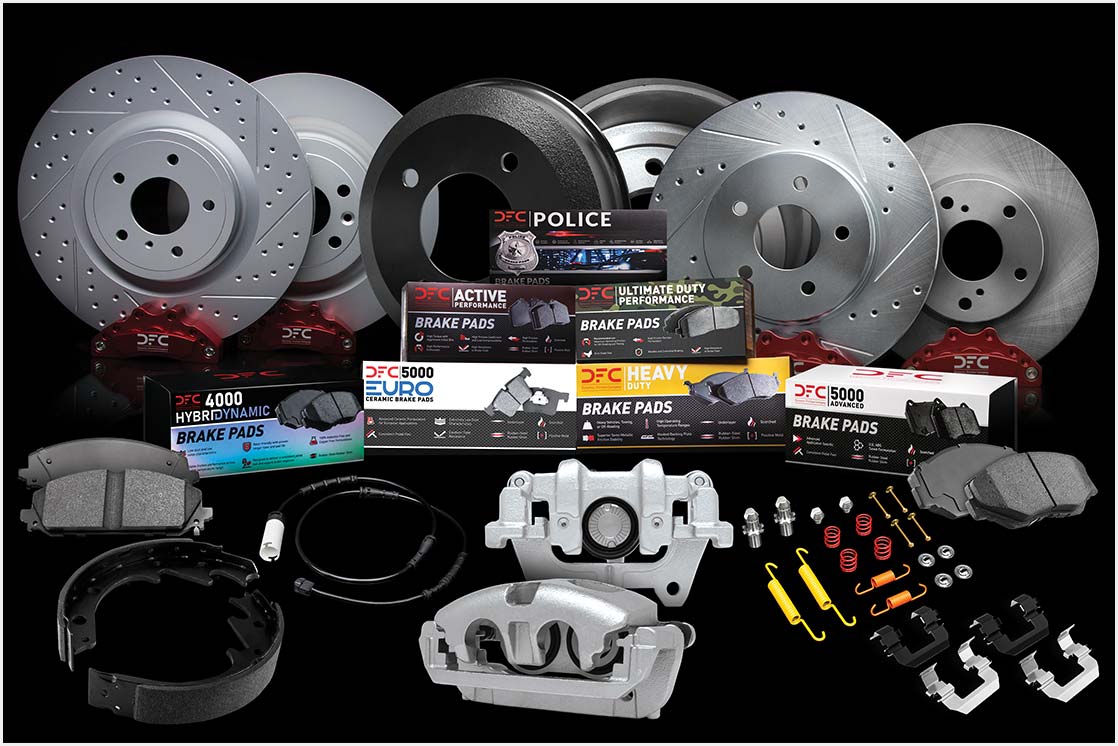
Brake Pad Break-In Done Right: The Technician’s Complete Guide

You install new pads and rotors, torque everything to spec, pump the pedal, and hand the keys back. Customer drives off. Three days later, they’re on the phone complaining about vibration, noise, or a soft pedal.

You pull the car back in, and the rotors already have dark spots. The pads look uneven. And you’re eating labor on a comeback that shouldn’t exist.

Nine times out of ten, this is a break-in problem. The pads weren’t bedded correctly, and the friction surface never transferred properly to the rotor. It takes five minutes to do right. Skipping it creates hours of diagnostic work and wasted parts.

Why Break-In Matters (The Science in 60 Seconds)

Ceramic pads use adherent friction. During break-in, the pad deposits a thin, even layer of friction material onto the rotor surface. If that transfer film develops unevenly, you get hot spots, inconsistent friction, and pulsation.

Semi-metallic pads use abrasive friction. Break-in seats the pad surface against the rotor and establishes a consistent contact pattern.

In both cases, the break-in also burns off residual gases and volatile compounds from manufacturing. If those don’t burn off in a controlled way during bedding, they’ll cause green fade during normal driving.

The Standard Break-In Procedure

Step 1: Verify the installation. Pump the brake pedal several times to seat the pads. Confirm a firm pedal. Check for dragging or abnormal noise at very low speed.

Step 2: Perform 8 to 10 moderate stops. From approximately 35 mph, apply moderate brake pressure (about 60-70% of full force) to slow to about 10 mph. Do not come to a complete stop.

Step 3: Perform 2 to 3 slightly more aggressive stops. From approximately 45 mph, apply firmer pressure (about 80% of full force) to slow to about 15 mph. Avoid a complete stop.

Step 4: Cool down. Drive at moderate speed for 2 to 3 minutes without heavy braking.

Step 5: Avoid sitting on the brake. This is the part that matters most. After bedding stops, do not sit at a stoplight or parking spot with the brake pedal pressed. Hot pads clamped against a stationary rotor deposit a thick, uneven patch of friction material. That deposit creates a high spot you’ll feel as pulsation within the first week.

Adjustments by Pad Type

Ceramic Pads

The standard procedure above is designed primarily for ceramic formulations. Pay special attention to Step 5. For premium vehicle-specific pads like DFC 5000 Advanced, the transfer film develops more predictably because the friction compound is matched to the specific rotor.

Semi-Metallic Pads

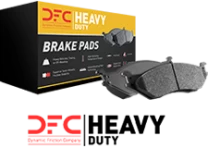
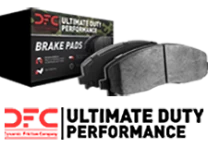
Semi-metallic pads can handle slightly more aggressive break-in. Increase starting speed to 40 mph and apply slightly more pressure. For DFC Heavy Duty or DFC Ultimate Duty Performance pads, break-in is especially important because the first towing session shouldn’t be the uncontrolled break-in.

Performance Pads

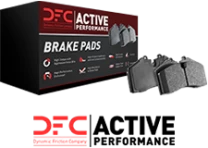
DFC Active Performance pads are formulated for higher operating temperatures. From 50 to 60 mph, perform 8 to 10 progressively harder stops with 30 seconds between each. The final 2 to 3 stops should briefly activate ABS. Then do a 5-minute cool-down lap.

Police / Pursuit Pads

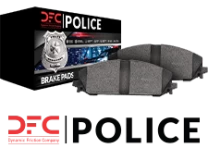
DFC Police pads are AMECA certified for pursuit-rated applications. Follow the performance procedure, then add 3 to 4 stops from 60 mph with firm braking.

The Post-Curing Advantage

Without post-curing: The first few hundred miles become the final curing stage. Inconsistent friction, more noise during break-in, and longer time before optimal performance.

With post-curing: Break-in is shorter and more predictable. The transfer film develops more evenly.

DFC post-cures 100% of its brake pads across every product line.

What Happens When Break-In Goes Wrong

Pad imprinting / material deposits. Dark spots on the rotor face from uneven pad material transfer. Causes pulsation that feels like a warped rotor. Usually from sitting on the brake with hot pads.

Glazing. The pad surface looks smooth and shiny with a blue or golden tint. The friction material was overheated without proper bedding. Light glazing can be scuffed with sandpaper and re-bedded. Heavy glazing means new pads.

Green fade. Brakes felt weak during the first few hard stops, then improved. Residual manufacturing gases pushing the pad away from the rotor. Post-cured pads virtually eliminate green fade.

Uneven wear patterns. Check that the caliper slides freely and hardware is correctly installed before blaming break-in.

The 60-Second Customer Explanation

“We’ve done the initial bedding on your new brakes, but they’ll continue to break in over the next hundred miles or so. During that time, avoid really hard braking if you can. And at red lights, try not to hold the brake pedal down hard. Light pedal pressure at stoplights is fine. The pads are still conditioning to the rotors.”

The Comeback Prevention Connection

Industry estimates suggest that improper pad bedding contributes to roughly 30% of brake-related warranty returns. Five minutes of bedding stops. Sixty seconds of customer education. Zero comebacks from break-in issues.

Find the right brake pads at dynamicfriction.com. Every DFC pad is 100% post-cured.

Break-in isn’t optional. It’s the final step of every quality brake installation.

Related: How to reduce brake job comebacks | Ceramic vs semi-metallic: a professional guide

Brake Pad Friction Formulations Explained: What Your Shop Needs to Know

There’s a conversation that happens at the parts counter every day. Customer comes in for brake pads, and the counterperson asks the question: “Ceramic or semi-metallic?”

Most of the time, the answer comes down to price or whatever the customer had last time. Nobody explains the why behind the recommendation.

That’s a missed opportunity. Because when you understand friction at the formulation level, you can make better recommendations, charge appropriately for premium parts, and dramatically reduce the noise and vibration comebacks that eat into your shop’s profitability.

How Brake Pads Actually Stop a Vehicle

Before we get into the three main formulation types, you need to understand the two fundamental friction mechanisms that brake pads use.

Abrasive Friction

Think of this like sandpaper on wood. The pad and rotor surfaces physically grind against each other, breaking molecular bonds in both materials. Material gets removed from both the pad and the rotor with every stop.

Semi-metallic pads and some NAO formulations primarily use abrasive friction. That’s why semi-metallic pads tend to wear rotors faster and produce more dark, metallic brake dust.

Adherent Friction (Transfer Film)

This works completely differently. During the first few hundred miles of use, the pad transfers a microscopic layer of friction material onto the rotor surface. Once that transfer film is established, braking happens as pad material contacts pad material.

Ceramic pads and some premium NAO formulations use this adherent mechanism. That’s why ceramic pads produce lighter-colored dust and are generally easier on rotors.

Why this matters to your shop: If a customer comes back with dark spots on their rotors after a ceramic pad install, it usually means the proper break-in wasn’t done properly and the transfer film is uneven. That’s not a defective pad. That’s a bedding issue.

The Three Main Formulation Types

Semi-Metallic

What’s in them: 30-65% metal content by weight. Steel fibers, iron powder, graphite, and various friction modifiers held together with phenolic resin binders.

How they perform:

  • Strong initial bite, especially when cold
  • Excellent heat handling under sustained high temperatures
  • Predictable pedal feel under heavy, repeated braking
  • Higher rotor wear rate due to abrasive friction mechanism
  • More noise-prone than ceramic, especially in cold weather
  • Produce heavy, dark metallic dust

Where they make sense: Heavy trucks and SUVs with towing or payload. Performance applications. Fleet vehicles in stop-and-go duty cycles.

Ceramic

What’s in them: Ceramic fibers, various fillers, aramid fibers for structural integrity, and resin binders. Modern ceramics are copper-free to meet EPA regulations.

How they perform:

  • Quiet operation across a wide temperature range
  • Consistent, linear pedal feel
  • Light-colored dust that doesn’t adhere to wheels
  • Lower rotor wear
  • Slightly less initial bite when stone cold
  • Can fade under extreme, sustained heat

Where they make sense: Daily drivers, commuter vehicles, sedans, crossovers. European applications. Any customer who complains about brake dust.

NAO (Non-Asbestos Organic)

What’s in them: Glass fiber, rubber, carbon compounds, Kevlar or other aramid fibers, and resin.

How they perform:

  • Soft pedal feel with gentle initial engagement
  • Very quiet, especially at low speeds
  • Lowest dust production
  • Fastest wear rate, especially under heat
  • Not suitable for high-performance or heavy-duty applications

The Part Nobody Talks About: Vehicle-Specific Formulations

Here’s where the real quality difference shows up between brake pad brands. A cheap ceramic pad might use a single friction compound across 200 different applications. A premium one uses a formulation tested and tuned for the specific vehicle.

That difference shows up as noise on some applications, uneven wear, inconsistent pedal feel, or longer stopping distances.

DFC engineers vehicle-specific friction formulations. A DFC 5000 Advanced pad for a Toyota Camry has a different friction compound than one for a Ford F-150. Same product line, same quality standards, but the chemistry is matched to the application.

Post-Curing: The Manufacturing Step That Changes Everything

Most brake pads go through pressing and initial curing during manufacturing. What not every manufacturer does is post-cure the finished pad.

Post-curing is an additional heat treatment step that stabilizes the resin binders and burns off volatile compounds in the friction material.

Without post-curing: The first few hundred miles on the vehicle become the final curing stage. This causes inconsistent friction, more noise during break-in, and a longer period before the pad reaches optimal performance.

With post-curing: The pad arrives with a fully stabilized friction surface. Break-in is shorter and more predictable. The transfer film develops more evenly.

DFC post-cures 100% of its brake pads.

What This Means for Your Parts Counter

Match the formulation to the application, not the customer’s budget.

Don’t upsell by scaring people. Upsell by educating. Instead of “you need the more expensive pads,” explain why the heavy-duty formulation gives better heat management for their specific use case.

Ask about driving habits before recommending a pad type. Five questions that should be standard:

  1. What kind of driving do you mostly do?
  2. Do you tow anything regularly?
  3. Do you notice a lot of brake dust on your wheels?
  4. Any noise or vibration complaints?
  5. How long do you plan to keep the vehicle?

Choosing the Right Pad Line for Your Shop

Application Recommended Formulation DFC Product Line
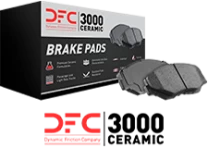
Daily driver, sedan, crossover Ceramic DFC 3000 Ceramic
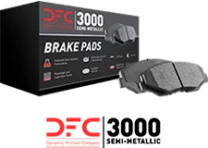
Daily driver, value option Semi-metallic DFC 3000 Semi-Metallic
Mixed driving, moderate performance Hybrid ceramic DFC 4000 HybriDynamic
Premium daily, extended pad life Advanced ceramic DFC 5000 Advanced
European applications Euro-specific ceramic DFC 5000 Euro Ceramic
Performance vehicles Performance ceramic DFC Active Performance
Trucks, towing, heavy payload Heavy-duty semi-metallic DFC Heavy Duty
Work trucks, extreme duty Maximum duty semi-metallic DFC Ultimate Duty Performance
Police and pursuit vehicles AMECA-certified high heat DFC Police

Find the right pad for your application at dynamicfriction.com.

Understanding friction formulations isn’t just academic. It’s the foundation of making better recommendations, reducing comebacks, and building the kind of brake service reputation that keeps customers coming back for the right reasons.

Related: Brake pad break-in guide | The true cost of cheap brake pads

Experience Superior Braking Performance from the First Stop

DFC Blog
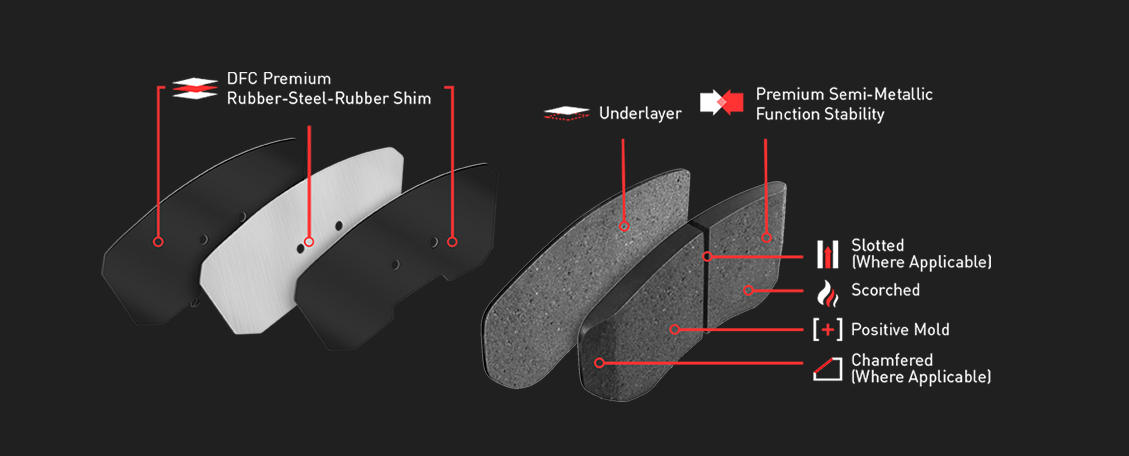
Scorched to remove uncured bonding agents, minimizing the need for initial break-in period and increasing stopping power from the initial stop

Confidence Begins with the First Press of the Pedal

Whether you’re a daily commuter, fleet operator, or high-performance driver, you need reliable stopping power—right from the first stop. At Dynamic Friction Company (DFC), we ensure that confidence with every brake pad we produce.

A key part of that performance? Post-curing. This advanced manufacturing process delivers immediate stopping power, reduces break-in time, and guarantees friction stability under all driving conditions.


What is Post-Curing—and Why Does It Matter?

Post-curing is a heat treatment process applied to brake pads after molding. It fully cures the friction material by eliminating uncured bonding agents and stabilizing the pad’s composition.

Many competitors skip this step, relying on drivers to “bed-in” the pads during use—leaving initial performance compromised. At DFC, every brake pad is 100% post-cured so it’s ready to perform the moment it’s installed.


The DFC Post-Curing Advantage

Immediate Stopping Power

No long break-in periods. Our post-cured pads deliver confident, responsive braking from the first press—ideal for customers who demand immediate results.

Consistent Braking in Any Condition

Post-curing stabilizes the pad’s friction coefficient, ensuring uniform performance across a wide range of temperatures and conditions—from city traffic to highway emergencies.

Reduced Noise & Vibration

By eliminating volatile compounds during post-curing, we reduce the risk of noise, vibration, and harshness (NVH). Expect smoother, quieter stops—every time.

Longer Pad Life

Post-curing reduces uneven wear and prevents glazing, extending the lifespan of your pads and minimizing downtime for replacements.

Superior Thermal Stability

High heat from aggressive or frequent braking won’t compromise performance. DFC pads maintain their integrity and stopping power even under extreme thermal stress.


Scorched for Extra Performance

After post-curing, we go one step further: scorching. This additional treatment burns off residual gases and surface impurities, enhancing initial bite and further shortening break-in time. It’s an extra step that delivers extra performance—only from DFC.


Post-Cured Pads Across the DFC Lineup

All DFC brake pads are post-cured and engineered for precision. Here are just a few examples from our range:


Why Trust DFC for Your Braking Needs?

  • 100% Post-Cured for Instant Performance
  • Scorched for Optimal Break-In
  • Engineered to OEM Standards or Better
  • Backed by Industry-Leading Technical Support

Upgrade to DFC Brake Pads and Feel the Difference

Looking for brake pads that offer instant performance, longer life, and fewer comebacks? Choose DFC post-cured brake pads and give your customers the confidence they deserve—right from the first stop.

Premium Materials in DFC Brake Pads: What Sets Us Apart

DFC Blog

In the automotive brake industry, materials matter. From friction stability to noise reduction and durability, the quality of the materials used in brake pads directly impacts performance. At Dynamic Friction Company (DFC), we are committed to using only the highest-quality, premium materials in our brake parts, including brake pads, rotors, and kits, ensuring they meet the demands of today’s vehicles and provide optimal safety and reliability.

In this post, we’ll explore the specific materials that make DFC brake pads stand out, along with the unique benefits these components bring to your braking experience.

1. The Importance of High-Quality Brake Pads

High-quality brake pads are essential for ensuring the safety and reliability of a vehicle’s braking system. Brake pads are a critical component of a vehicle’s brake system, and their performance can significantly impact the overall braking performance of the vehicle. High-quality brake pads are designed to provide stable friction performance, excellent fade resistance, and low dust, making them ideal for various driving conditions.

Using high-quality brake pads can also help to reduce brake noise, which is a common issue with lower-quality brake pads. Brake noise can be caused by a variety of factors, including worn-out brake pads, misaligned brake rotors, and loose brake components. High-quality brake pads are designed to minimize brake noise and provide a smoother braking experience.

In addition to their performance benefits, high-quality brake pads are also designed to meet or exceed OEM standards. This means that they are designed to provide the same level of performance and reliability as the original equipment brake pads that came with the vehicle. By using high-quality brake pads, vehicle owners can ensure that their brake system is functioning at its best and that they are getting the most out of their vehicle.

High-Quality Friction Materials for Reliable Brake Pads

The heart of any brake pad lies in its friction material. High-quality brake pads, including performance brake pads, are essential for ensuring the safety and reliability of a vehicle’s braking system. DFC’s brake pads are crafted using advanced formulations tailored to deliver consistent friction performance. These include:

  • HybriDynamic Formulations for everyday drivers seeking smooth, reliable stops.
  • Ceramic Formulations like those in our EURO 5000 series, designed for high performance with minimal dust and noise.
  • Specialized Police and Heavy-Duty Formulations to handle extreme demands, with stability under high-temperature braking.

Each DFC pad is carefully post-cured and scorched to stabilize the friction material, increasing initial stopping power and ensuring consistent braking performance right from installation.

3. Advanced Materials and Manufacturing Process

Dynamic Friction Company uses advanced materials and manufacturing processes to produce high-quality brake pads that meet the demands of modern vehicles. The company’s brake pads are formulated to provide optimal and reliable stopping performance, excellent fade resistance, low dust, and stable friction performance across a wide temperature range.

One of the key materials used in Dynamic Friction Company’s brake pads is ceramic. Ceramic pads are made with a denser version of material used in pottery or plates and are designed to provide excellent fade resistance, low dust, and stable friction performance. Ceramic pads are also designed to reduce brake noise and provide a longer service life compared to traditional brake pads.

In addition to ceramic, Dynamic Friction Company also uses semi-metallic materials in some of its brake pads. Semi-metallic pads combine metal and organic materials to provide a balance of performance and durability. These pads are designed to provide excellent stopping power and are ideal for vehicles that require high-performance braking.

Dynamic Friction Company’s brake pads are also designed to withstand extreme heat, heavy-duty operation, and frequent stopping. The company’s brake pads are engineered to meet the demands of various driving conditions, including spirited street driving, off-roading, and towing. By using advanced materials and manufacturing processes, Dynamic Friction Company is able to produce brake pads that provide exceptional braking performance and reliability.

The company’s manufacturing process involves a submerged coating process that ensures 100% coating coverage of the inner vanes and all exposed non-braking surfaces. This process provides superior corrosion resistance and durability, making Dynamic Friction Company’s brake pads ideal for vehicles that are exposed to harsh weather conditions.

Overall, Dynamic Friction Company’s advanced materials and manufacturing processes make its brake pads some of the best in the industry. By using high-quality materials and advanced manufacturing techniques, the company is able to produce brake pads that provide exceptional braking performance, reliability, and durability.

DFC Premium Rubber-Steel-Rubber Shims for Brake Noise Reduction

DFC Blog

DFC brake pads incorporate advanced noise-reducing technology with Premium Rubber-Steel-Rubber (RSR) shims. These shims help absorb and dampen noise, reducing vibration and harshness (NVH) commonly associated with braking. The RSR design effectively minimizes braking noise, ensuring a quiet, comfortable ride while also promoting durability.

This multilayered shim technology is used across DFC’s product lines, from our DFC 3000 Brake Pads for daily driving to our police and heavy-duty pads, all providing drivers with a premium, noise-free experience.


3. Superior Corrosion Resistance with High-Carbon Content and Protective Coatings

Corrosion is one of the biggest threats to brake components, potentially reducing both lifespan and performance. DFC combats this issue with two essential components:

  • High-Carbon Content Rotors: Available with DFC brake pads for enhanced noise reduction, stability, and resilience to high-temperature stress.
  • GeoSpec Coating Technology: This patented silver-gray coating is applied to rotors to resist rust and corrosion, delivering extended durability without compromising performance.

DFC brake pads are engineered to perform under extreme conditions, such as track use and heavy-duty scenarios.

By pairing our brake pads with high-quality, corrosion-resistant rotors, DFC provides an added layer of protection that helps keep brake systems functioning smoothly and safely.

Chamfered and Slotted Design for Enhanced Braking Performance

DFC brake pads feature chamfered and slotted designs to optimize braking performance. These design features also contribute to improved pedal response, ensuring quick and effective braking. These design features reduce edge lift, which helps prevent irregular pad wear and minimizes the chance of brake noise. Slotted pads also promote heat dissipation and debris clearing, keeping your brake pads clean and effective over time.

Chamfering and slotting are premium design choices that align with original equipment manufacturer (OEM) standards, providing a smoother and more stable braking experience. This approach is part of DFC’s dedication to maintaining the highest standards in product engineering and design.

5. Environmentally Responsible, 100% Copper-Free and Asbestos-Free

At DFC, we prioritize both performance and environmental responsibility. All of our brake pads are 100% copper-free and asbestos-free, complying with California and Washington’s low-copper requirements well ahead of regulatory deadlines. By eliminating these harmful materials, DFC reduces environmental impact and enhances driver safety.


Why DFC’s Use of Premium Materials Matters

From advanced friction materials to high-quality shims and coatings, DFC’s dedication to using only premium materials ensures that our brake pads provide:

  • Consistent Performance: Reliable braking power, fade resistance, and long-lasting friction stability.
  • Durability: Materials and designs that withstand high temperatures, harsh conditions, and extended use.
  • Noise Reduction: Enhanced shims and construction techniques for a quieter ride.
  • Environmental Compliance: Sustainable and eco-friendly materials that meet industry regulations.

Choose DFC for Your Braking Needs

DFC’s commitment to quality materials is a commitment to the safety, satisfaction, and peace of mind of every driver. When you choose DFC brake pads, you’re choosing high performance, reliability, and braking components crafted to exceed expectations. For anyone who values top-quality materials in their brake system, DFC brake pads are the clear choice.

Upgrade to DFC today and experience the difference premium materials make. Visit DFC’s website to explore our full range of premium brake products.