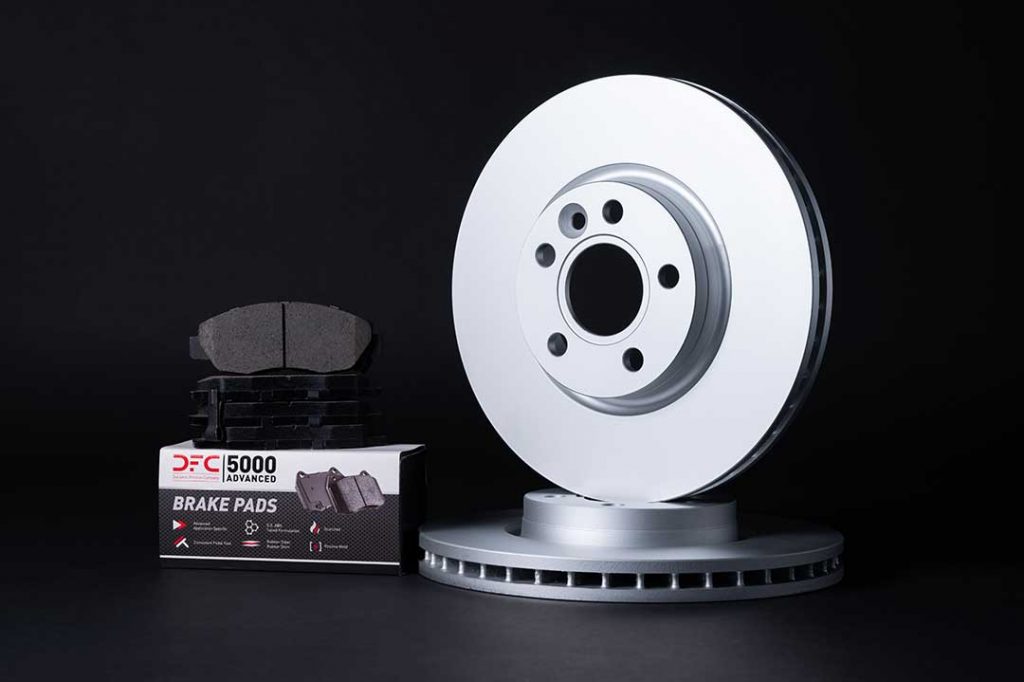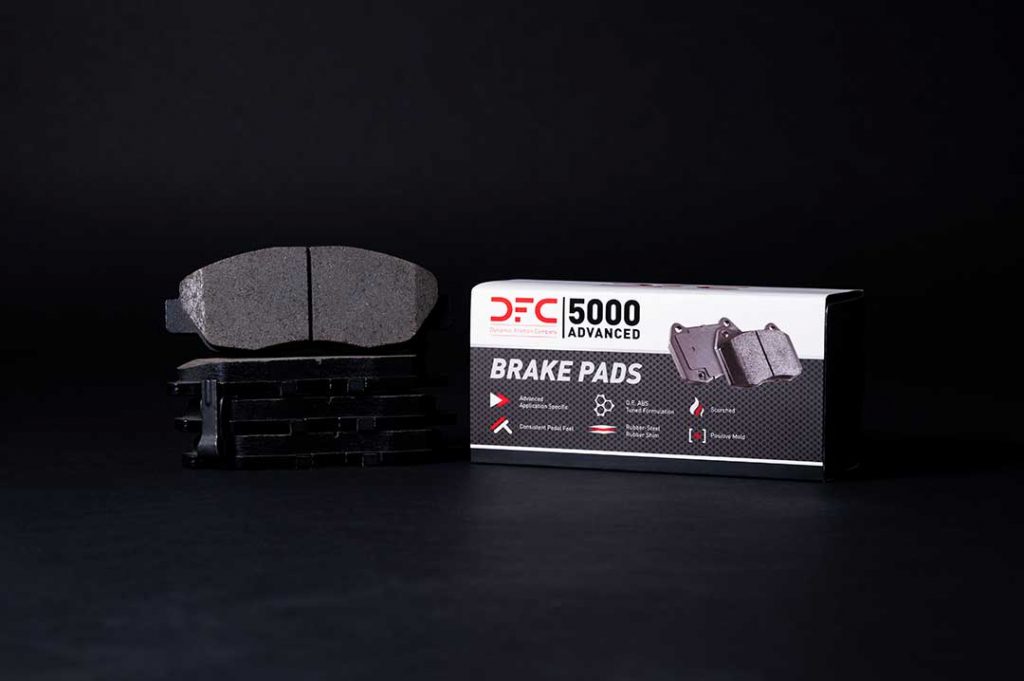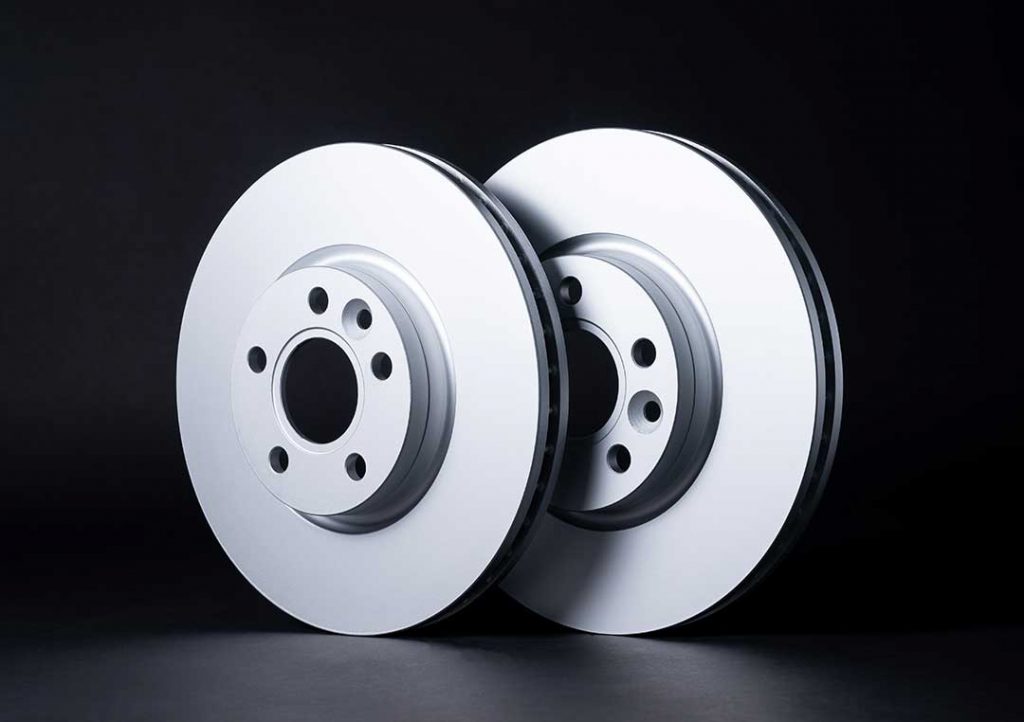
Premium Materials in DFC Brake Pads: What Sets Us Apart

DFC Blog

In the automotive brake industry, materials matter. From friction stability to noise reduction and durability, the quality of the materials used in brake pads directly impacts performance. At Dynamic Friction Company (DFC), we are committed to using only the highest-quality, premium materials in our brake parts, including brake pads, rotors, and kits, ensuring they meet the demands of today’s vehicles and provide optimal safety and reliability.

In this post, we’ll explore the specific materials that make DFC brake pads stand out, along with the unique benefits these components bring to your braking experience.

1. The Importance of High-Quality Brake Pads

High-quality brake pads are essential for ensuring the safety and reliability of a vehicle’s braking system. Brake pads are a critical component of a vehicle’s brake system, and their performance can significantly impact the overall braking performance of the vehicle. High-quality brake pads are designed to provide stable friction performance, excellent fade resistance, and low dust, making them ideal for various driving conditions.

Using high-quality brake pads can also help to reduce brake noise, which is a common issue with lower-quality brake pads. Brake noise can be caused by a variety of factors, including worn-out brake pads, misaligned brake rotors, and loose brake components. High-quality brake pads are designed to minimize brake noise and provide a smoother braking experience.

In addition to their performance benefits, high-quality brake pads are also designed to meet or exceed OEM standards. This means that they are designed to provide the same level of performance and reliability as the original equipment brake pads that came with the vehicle. By using high-quality brake pads, vehicle owners can ensure that their brake system is functioning at its best and that they are getting the most out of their vehicle.

High-Quality Friction Materials for Reliable Brake Pads

The heart of any brake pad lies in its friction material. High-quality brake pads, including performance brake pads, are essential for ensuring the safety and reliability of a vehicle’s braking system. DFC’s brake pads are crafted using advanced formulations tailored to deliver consistent friction performance. These include:

  • HybriDynamic Formulations for everyday drivers seeking smooth, reliable stops.
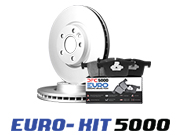
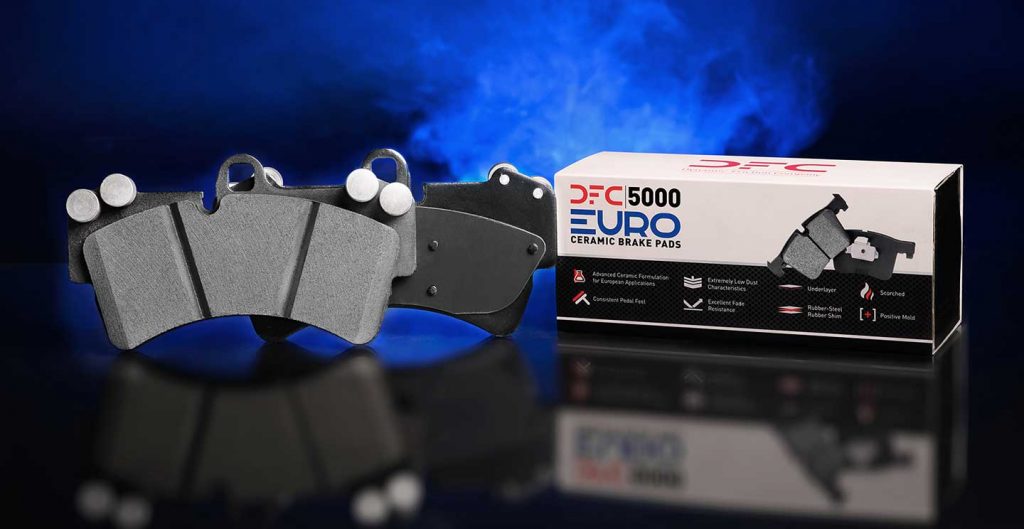
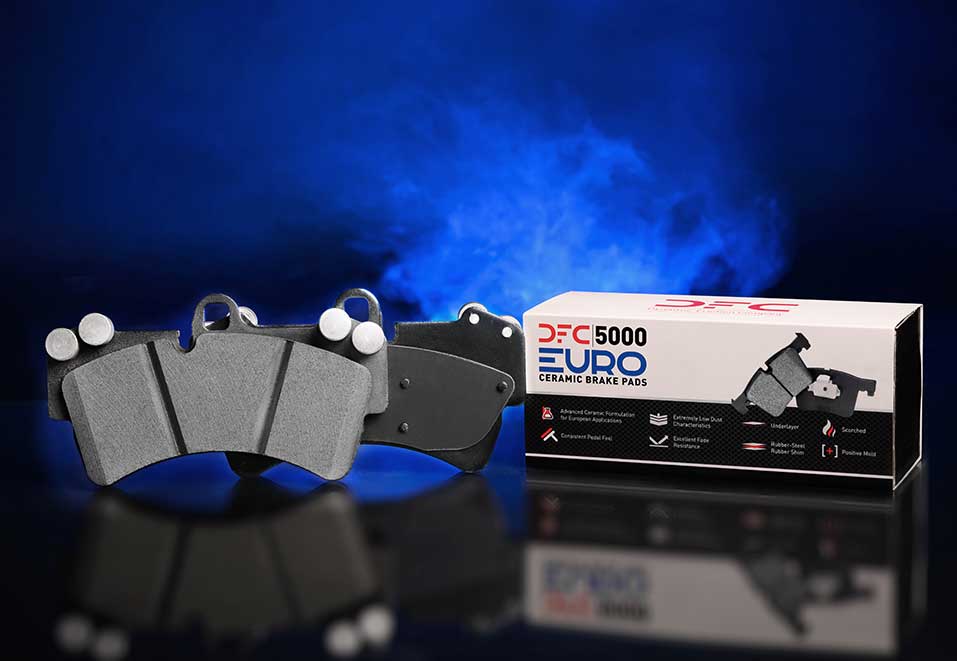
  • Ceramic Formulations like those in our EURO 5000 series, designed for high performance with minimal dust and noise.
  • Specialized Police and Heavy-Duty Formulations to handle extreme demands, with stability under high-temperature braking.

Each DFC pad is carefully post-cured and scorched to stabilize the friction material, increasing initial stopping power and ensuring consistent braking performance right from installation.

3. Advanced Materials and Manufacturing Process

Dynamic Friction Company uses advanced materials and manufacturing processes to produce high-quality brake pads that meet the demands of modern vehicles. The company’s brake pads are formulated to provide optimal and reliable stopping performance, excellent fade resistance, low dust, and stable friction performance across a wide temperature range.

One of the key materials used in Dynamic Friction Company’s brake pads is ceramic. Ceramic pads are made with a denser version of material used in pottery or plates and are designed to provide excellent fade resistance, low dust, and stable friction performance. Ceramic pads are also designed to reduce brake noise and provide a longer service life compared to traditional brake pads.

In addition to ceramic, Dynamic Friction Company also uses semi-metallic materials in some of its brake pads. Semi-metallic pads combine metal and organic materials to provide a balance of performance and durability. These pads are designed to provide excellent stopping power and are ideal for vehicles that require high-performance braking.

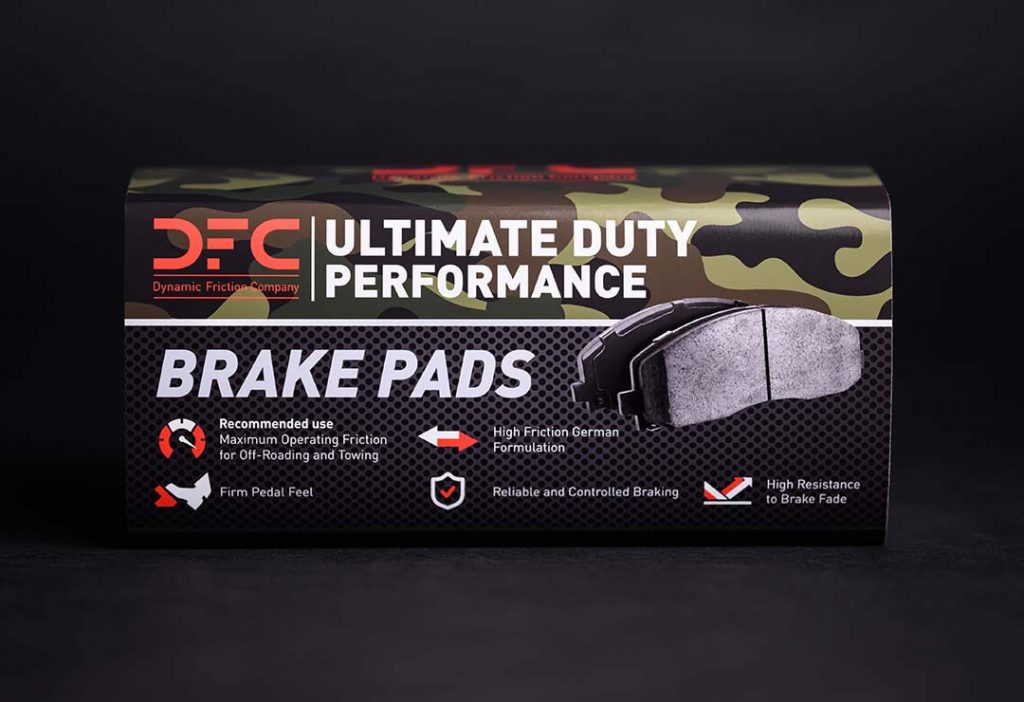
Dynamic Friction Company’s brake pads are also designed to withstand extreme heat, heavy-duty operation, and frequent stopping. The company’s brake pads are engineered to meet the demands of various driving conditions, including spirited street driving, off-roading, and towing. By using advanced materials and manufacturing processes, Dynamic Friction Company is able to produce brake pads that provide exceptional braking performance and reliability.

The company’s manufacturing process involves a submerged coating process that ensures 100% coating coverage of the inner vanes and all exposed non-braking surfaces. This process provides superior corrosion resistance and durability, making Dynamic Friction Company’s brake pads ideal for vehicles that are exposed to harsh weather conditions.

Overall, Dynamic Friction Company’s advanced materials and manufacturing processes make its brake pads some of the best in the industry. By using high-quality materials and advanced manufacturing techniques, the company is able to produce brake pads that provide exceptional braking performance, reliability, and durability.

DFC Premium Rubber-Steel-Rubber Shims for Brake Noise Reduction

DFC Blog

DFC brake pads incorporate advanced noise-reducing technology with Premium Rubber-Steel-Rubber (RSR) shims. These shims help absorb and dampen noise, reducing vibration and harshness (NVH) commonly associated with braking. The RSR design effectively minimizes braking noise, ensuring a quiet, comfortable ride while also promoting durability.

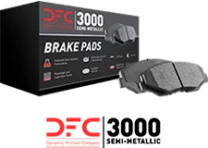
This multilayered shim technology is used across DFC’s product lines, from our DFC 3000 Brake Pads for daily driving to our police and heavy-duty pads, all providing drivers with a premium, noise-free experience.


3. Superior Corrosion Resistance with High-Carbon Content and Protective Coatings

Corrosion is one of the biggest threats to brake components, potentially reducing both lifespan and performance. DFC combats this issue with two essential components:

  • High-Carbon Content Rotors: Available with DFC brake pads for enhanced noise reduction, stability, and resilience to high-temperature stress.
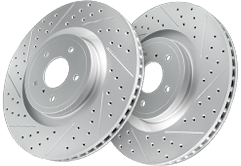
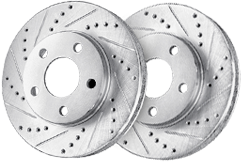
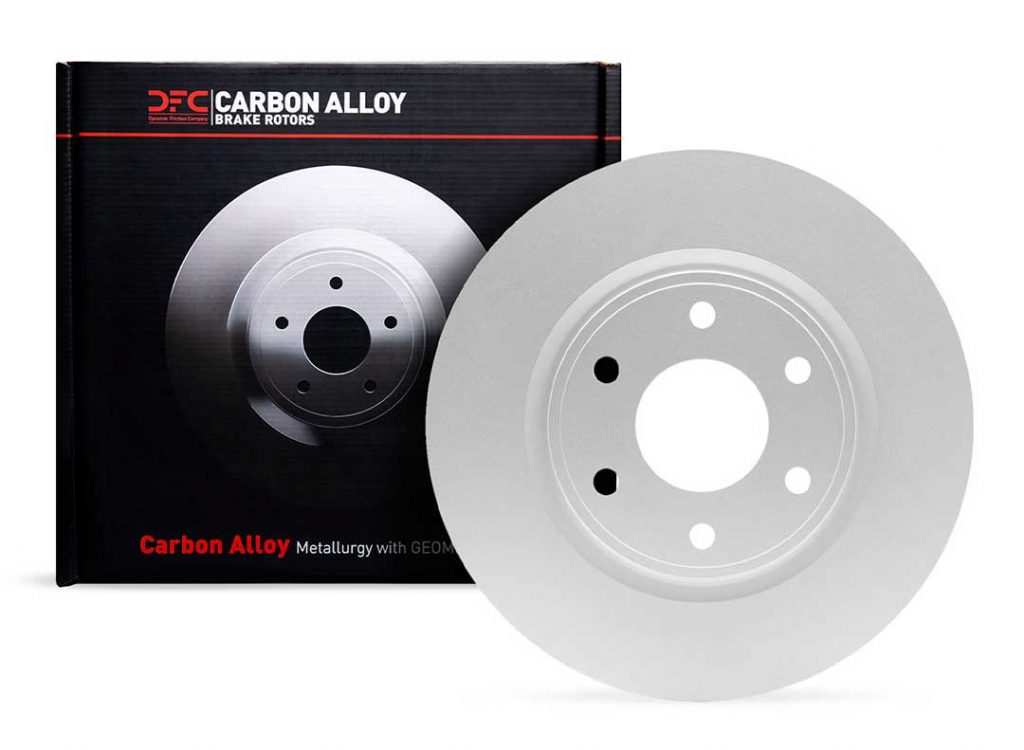
  • GeoSpec Coating Technology: This patented silver-gray coating is applied to rotors to resist rust and corrosion, delivering extended durability without compromising performance.

DFC brake pads are engineered to perform under extreme conditions, such as track use and heavy-duty scenarios.

By pairing our brake pads with high-quality, corrosion-resistant rotors, DFC provides an added layer of protection that helps keep brake systems functioning smoothly and safely.

Chamfered and Slotted Design for Enhanced Braking Performance

DFC brake pads feature chamfered and slotted designs to optimize braking performance. These design features also contribute to improved pedal response, ensuring quick and effective braking. These design features reduce edge lift, which helps prevent irregular pad wear and minimizes the chance of brake noise. Slotted pads also promote heat dissipation and debris clearing, keeping your brake pads clean and effective over time.

Chamfering and slotting are premium design choices that align with original equipment manufacturer (OEM) standards, providing a smoother and more stable braking experience. This approach is part of DFC’s dedication to maintaining the highest standards in product engineering and design.

5. Environmentally Responsible, 100% Copper-Free and Asbestos-Free

At DFC, we prioritize both performance and environmental responsibility. All of our brake pads are 100% copper-free and asbestos-free, complying with California and Washington’s low-copper requirements well ahead of regulatory deadlines. By eliminating these harmful materials, DFC reduces environmental impact and enhances driver safety.


Why DFC’s Use of Premium Materials Matters

From advanced friction materials to high-quality shims and coatings, DFC’s dedication to using only premium materials ensures that our brake pads provide:

  • Consistent Performance: Reliable braking power, fade resistance, and long-lasting friction stability.
  • Durability: Materials and designs that withstand high temperatures, harsh conditions, and extended use.
  • Noise Reduction: Enhanced shims and construction techniques for a quieter ride.
  • Environmental Compliance: Sustainable and eco-friendly materials that meet industry regulations.

Choose DFC for Your Braking Needs

DFC’s commitment to quality materials is a commitment to the safety, satisfaction, and peace of mind of every driver. When you choose DFC brake pads, you’re choosing high performance, reliability, and braking components crafted to exceed expectations. For anyone who values top-quality materials in their brake system, DFC brake pads are the clear choice.

Upgrade to DFC today and experience the difference premium materials make. Visit DFC’s website to explore our full range of premium brake products.

Why DFC 3000 Brake Pads Are Ideal for Daily Drivers

For most drivers, finding the best brake pads for a smooth, quiet, and reliable braking experience is essential, especially when it comes to daily commutes. At Dynamic Friction Company (DFC), we’ve engineered the DFC 3000 Brake Pads specifically for daily drivers who need consistent performance, safety, and value in their braking system. In this blog, we’ll explore the key features of DFC 3000 Brake Pads and why they’re the perfect choice for drivers who depend on their vehicle every day.

1. Consistent Stopping Power

One of the primary advantages of DFC 3000 Brake Pads is their ability to deliver consistent stopping power across a range of temperatures and conditions. These brake pads are designed with a unique formulation that enhances braking performance, providing smooth, responsive braking, even during stop-and-go traffic or highway driving. For daily drivers, this means dependable braking in virtually any driving situation, giving you peace of mind every time you press the brake pedal.

2. Enhanced Fade Resistance

Brake fade can be a real concern, especially for drivers who encounter frequent stops. The DFC 3000 Brake Pads are engineered with fade-resistant properties, maintaining stable friction performance even during extended use. This feature helps reduce braking distance, which can be crucial in emergency situations, making them a safe choice for daily drivers who face unpredictable road conditions.

Low Brake Dust Formula for Cleaner Wheels

Daily drivers who prioritize a clean, professional-looking vehicle will appreciate DFC 3000 Brake Pads’ low-dust formula. These pads are made with a special material composition that minimizes brake dust production, keeping your wheels cleaner for longer. Not only does this improve the appearance of your vehicle, but it also reduces the time and effort needed to maintain it.

4. Reduced Noise, Vibration, and Harshness (NVH)

Ceramic brake pads, such as the DFC 3000 Brake Pads, are manufactured with advanced rubber-steel-rubber shims, which help to reduce noise, vibration, and harshness (NVH) during braking. This design minimizes the chance of squeaking or rattling, creating a quieter, smoother ride. Daily drivers will appreciate the comfort and reduced noise, which is especially beneficial for those who spend extended time on the road.

5. Easy and Reliable Installation

DFC 3000 Brake Pads are designed with positive mold construction, ensuring uniform material density and ease of installation. The precision of these pads allows for a straightforward fit that enhances to plate adhesion, minimizing time spent in the garage, making them ideal for mechanics and DIYers alike. With DFC 3000 Brake Pads, you can get back on the road quickly and confidently.

6. Built to Meet OEM Standards

DFC’s commitment to quality means that the DFC 3000 Brake Pads, including OEM pads, meet or exceed OEM (Original Equipment Manufacturer) standards. This ensures that each pad provides reliable, high-performance braking that you can depend on. When you choose DFC 3000 Brake Pads, you’re choosing a product backed by rigorous quality standards, making them a reliable choice for the average daily driver.

7. 100% Copper-Free and Environmentally Friendly

In line with industry standards and environmental regulations, DFC 3000 Brake Pads are 100% copper-free and asbestos-free. This eco-conscious choice aligns with the California and Washington restrictions, and with their wide temperature range, drivers can feel good about selecting a product that’s both high-performing and environmentally responsible.

Why Choose DFC 3000 Brake Pads for Your Daily Drive?

For daily drivers, the DFC 3000 Brake Pads are designed to enhance the everyday driving experience with great stopping power. With superior stopping power, low dust, reduced noise, and a smooth, responsive feel, they bring reliability and comfort to every drive. Say goodbye to one-size-fits-all solutions—opt for brake pads that truly meet the needs of daily driving.

Equip your vehicle with DFC 3000 Brake Pads and experience the difference in every commute.

Top 2018 Subaru Outback Brake Kits for Optimal Stopping Power

Need better braking for your 2018 Subaru Outback? Discover the top 2018 Subaru Outback brake kits that enhance stopping power and safety for various driving conditions.

Key Takeaways

  • Upgrading to enhanced brake kits for the 2018 Subaru Outback improves stopping power and performance, especially in demanding driving conditions.
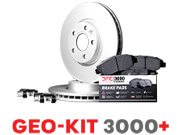
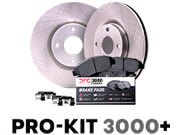
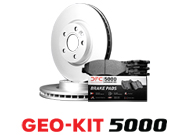
  • Three main types of brake kits are available: GEOKIT 5000+ for high-performance needs, GEOKIT 3000+ for regular use, and PROKIT 3000+ for a comprehensive upgrade.
  • Regular maintenance and inspections of your brake system are important to ensure safety and optimal braking performance.

Understanding Brake Kits for the 2018 Subaru Outback

Brake systems tailor-made for the 2018 Subaru Outback significantly improve the vehicle’s braking capabilities, particularly in tough driving scenarios. The original brakes on your Subaru Outback might be adequate for daily use. They may fall short when faced with steep or rugged landscapes where enhanced braking strength is vital.

Upgraded brake kits provide more than just confidence behind the wheel. They deliver essential stopping power and manage heat effectively during intense driving conditions. These kits often come equipped with genuine Subaru brake pads, top-tier rotors, and robust calipers that are engineered to collectively offer a superior level of brake performance.

For those who regularly drive under arduous conditions, transitioning from factory-installed brakes to an upgraded kit can mark a substantial enhancement. Such upgrades not only bolster safety and efficiency, but also amplify the overall driving experience in your 2018 Subaru Outback.

Types of Brake Kits Available

Upgrading the brakes of your 2018 Subaru Outback presents a variety of choices. Available brake kits such as the GEOKIT 5000+, GEOKIT 3000+, and PROKIT 3000+ each provide distinct characteristics and advantages tailored to suit different driving requirements and tastes.

Exploring the environment. We can examine the specific offerings that come with each kit for your Subaru’s braking system enhancement.

DFC GEOKIT 5000+

DFC Blog

The GEOKIT 5000+ is crafted for those who require top-notch performance from their braking system, making it an excellent choice for drivers with high expectations. The kit comes equipped with DFC GEOSPEC coated brake rotors that are engineered to elevate both durability and effectiveness. These brake disks adeptly manage the thermal loads encountered during intense braking scenarios, delivering dependable stopping force precisely when necessary.

What sets the GEOKIT 5000+ apart is its exceptional ability to disperse heat. The specially coated rotors sustain elevated temperatures, which helps in minimizing the likelihood of brake fade after consistent use. Drivers tackling demanding drives such as navigating steep inclines or hauling heavy loads will find this feature particularly beneficial.

Every component within the GEOKIT 5000+, from the robust brake pads to each piece of hardware included in the kit, has been meticulously developed for longevity and superior function. As a comprehensive package designed specifically for your Subaru Outback’s brakes, this set not only enhances efficiency but also ensures steadfast dependability over time.

DFC GEOKIT 3000+

DFC Blog

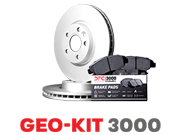
The GEOKIT 3000+ is an ideal match for typical driving scenarios, striking a harmonious balance between everyday functionality and performance. This set comprises DFC GeoSPEC Coated Brake Rotors alongside DFC 3000 Ceramic Brake Pads, collaborating seamlessly to ensure stable and uniform brake response.

For Subaru Outback drivers who mainly navigate through city streets or daily commutes, the GEOKIT 3000+ delivers sufficient stopping force without resorting to high-performance parts. It stands as a dependable selection that boosts both braking proficiency and safety in regular use, guaranteeing you can come to a safe halt when necessary.

DFC PROKIT 3000+

DFC Blog

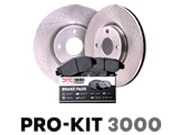
The PROKIT 3000+ offers a significant enhancement to your Subaru’s brake system, ensuring seamless integration and peak efficiency among all elements. This set comprises of high-quality DFC Premium Brake Rotors, advanced-technology DFC 3000 Ceramic Brake Pads, and robust stainless steel DFC Hardware Kits that withstand corrosion and intense heat.

This kit is crafted for adaptability across various driving scenarios with its full array of braking parts. It caters to both automatic transmission (auto trans) and manual transmission (manual trans) vehicles, delivering the assuredness and handling required to manage diverse landscapes effectively. The use of superior materials promises enduring efficacy while reducing the need for frequent upkeep.

Ideal for those intent on a substantial upgrade in their Subaru Outback’s braking capacity, the PROKIT 3000+ stands out as an exceptional choice. Its completeness in coverage combined with top-tier components marks it as a powerful improvement aimed at enhancing safety measures alongside vehicular operation finesse.

Benefits of Upgrading Your 2018 Subaru Outback’s Brakes

Enhancing the braking system of your 2018 Subaru Outback can yield numerous advantages that bolster safety and elevate driving dynamics. A notable improvement comes in the form of more responsive brakes, which is essential during sudden halts or when descending steep grades. Advanced brake assemblies are engineered to minimize complications such as brake fade, maintaining reliable performance even in demanding situations.

The significance of superior quality brake pads and rotors cannot be overstated for these enhancements. Authentic Subaru brake pads coupled with high-endurance rotors enhance your car’s stopping capabilities substantially. The inclusion of larger rotors paired with sturdy calipers also aids in amplifying overall braking efficacy, thereby rendering a safer and more commanding drive.

Upgrading your brakes offers enhanced longevity and lower maintenance demands. Components fashioned for high-performance endure tough usage better than standard factory-installed ones do—this translates into fewer mechanical concerns over time while saving on both finances and servicing efforts. Such dependability means you can count on your brakes long-term.

To improve durability and effectiveness, upgraded braking systems provide an enriched vehicular operation experience by using top-tier semi-metallic pads known for their resistance to heat buildup and friction forces across diverse driving conditions—which assures a fluidity behind the wheel that instills confidence each time you pilot your Outback.

Average Cost of Brake Kits for the 2018 Subaru Outback

When contemplating an upgrade to the brake system of your 2018 Subaru Outback, being informed about the expenses is crucial. The replacement cost for brake pads usually falls between $150 and $300 for each axle when factoring in both labor and parts. This estimate might fluctuate based on the grade of brake pads chosen as well as how intricate the installation process is.

Examining just the part costs, you’ll find that front or rear pads range from $100 to $200 per set per axle. If opting for luxury-grade brake pads known for their enhanced performance and longevity, prices can ascend from $150 up to around $250. Conversely, standard-quality options are typically more economically priced within a bracket of $75 to $100. These price points reflect your commitment to investing in top-notch components that bolster your vehicle’s braking capabilities.

Another significant element affecting overall costs includes labor charges associated with fitting new brake pads, which tend to vary between service providers but commonly situate themselves in an approximate window of 80 to 100.Additional services may alter these fees slightly. Considering this information promotes improved budgetary preparation while ensuring you secure excellent value when enhancing your Subaru Outback’s brakes.

Installation Tips for Subaru Outback Brake Kits

Replacing brake pads on your Subaru Outback can be a fulfilling do-it-yourself endeavor, provided that you adhere to essential steps and exercise caution for safety. Before anything else, it is vital to ensure the vehicle is securely propped up on jack stands during the installation of brake kits. This measure not only safeguards against potential mishaps, but also provides a stable platform from which to work.

In order to effortlessly push back the caliper piston and make room for new pads, employing a specialized tool designed for brake calipers can greatly aid in this task. Not only does this help streamline the pad replacement process, but it also minimizes any risk of causing harm to the caliper itself. It’s important not to forget retracting the electronic parking brake before initiating pad installation. Failing to do so may complicate matters.

After remounting each wheel following completion of your kit installments or pad replacements on your Outback model by Subaru, ensuring all bolts are tightened correctly—typically requiring 88.5 lb-ft of torque—is crucial for safe operation going forward with driving stability restored thanks solely because every bolt has been properly adjusted without fail. By adhering closely to the pieces advice provided herein will likely result in a successful job done and lead to notably better braking efficiency across board once completed too.

Maintaining Your Brake System

It’s critical to keep your braking system in top condition for peak performance and safety. An annual inspection of the brake system, or more frequent checks if problems are noticed, is recommended for early detection of potential issues such as worn brake pads or damaged rotors that might impair braking effectiveness.

To maintain optimal responsiveness from your brakes, ensure regular monitoring and replacement of brake fluid approximately every two years. Brake fluid tends to attract moisture over time, which can cause a decline in its ability to perform effectively. Fresh fluid plays an integral role in keeping your brakes functioning smoothly.

When your vehicle’s brake pads diminish to less than one quarter inch thick or show evidence of deterioration, it is crucial to replace them with new ones. Following the manufacturer’s directions when bedding-in new pads and rotors will guarantee they bed properly reducing noise while maximizing their efficacy right out of the gate by promoting uniform wear across these components.

Do not ignore any odd sounds or vibrations experienced during braking. They could signal deeper malfunctions within the system that may escalate into costly repairs if neglected. Applying grease on sliding surfaces post-installation ensures quiet operation along with proper movement of the parts involved—thus prolonging their lifespan—and contributes significantly towards preserving a secure driving atmosphere through well-maintained brakes.

Summary

Ensuring your 2018 Subaru Outback is equipped with a top-notch brake system is vital for maintaining its safety, driving performance, and dependability. This guide has detailed all the essential information you need to know, from discerning the various brake kits on offer to appreciating the advantages that come with upgrading.

Choosing premium-quality braking components like authentic Subaru brake pads, state-of-the-art rotors, and robust calipers can greatly improve your vehicle’s deceleration capabilities. Not only does this bolster safety, but it also elevates your driving pleasure by instilling unwavering confidence no matter what the road throws at you.

Adhering to correct installation techniques and routine maintenance ensures that your enhanced braking system continues to perform optimally over time. Embrace these upgrades for superior stopping might in your Subaru Outback. Drive securely knowing that every journey is backed by an impeccably maintained set of brakes.

Frequently Asked Questions

How much does it cost to replace brakes on a Subaru Outback?

Replacing the brakes on a Subaru Outback typically costs between $180 and $300 per axle when you include both parts and labor.

It’s a good idea to do both axles at the same time for even wear and better performance.

What are the benefits of upgrading to a high-performance brake kit?

Upgrading to a high-performance brake kit offers better brake response and reduced fade, resulting in a safer and more reliable driving experience.

You’ll enjoy increased durability and improved overall braking performance, making it a smart choice for any car enthusiast.

How much does it cost to replace brake pads on a 2018 Subaru Outback?

Replacing the brake pads on your 2018 Subaru Outback will usually cost between $150 and $300 per axle, which includes both parts and labor.

It’s a good idea to budget for around $100 to $200 for the parts alone.

What tools are needed for installing a brake kit on a Subaru Outback?

You’ll need a brake caliper tool, jack stands, and a torque wrench to install a brake kit on your Subaru Outback.

Just make sure the vehicle is securely supported for a safe installation!

How often should the brake fluid be replaced?

To keep your braking system in top shape, it’s best to replace your brake fluid every two years.

Regular checks will help ensure your safety on the road.

Understanding What Maintenance Does a Tesla Need: A Complete Guide

If you’re curious about “what maintenance does a Tesla need”, you’ll find that it’s simpler than traditional cars. Beyond standard tire care and some electrical system checks, Teslas require less frequent service, reflecting their cutting-edge design. In this article, we’ll navigate the essentials of Tesla maintenance, detailing what tasks are needed, how often, and what makes them unique, so you can maintain your Tesla’s peak performance for years to come.

Key Takeaways

  • Teslas have a simplified maintenance schedule compared to gasoline vehicles, focusing on items like brake fluid, A/C desiccant bags, and cabin air filters at specific intervals to ensure vehicle longevity and safety.
  • Teslas require less frequent maintenance due to fewer moving parts, regenerative braking reducing wear on brake components, and advanced battery and electric motor designs signaling maintenance needs via in-car notifications.
  • Tesla Service Centers provide professional maintenance and repairs, supplemented by mobile service options for convenience and regular software updates to optimize vehicle performance and battery management.

Decoding Tesla’s Recommended Maintenance Schedule

Tesla vehicle in maintenance

The maintenance schedule recommended by Tesla is crafted specifically to ensure that your electric vehicle operates optimally. The routine care for Tesla vehicles differs significantly from their gasoline counterparts, which often require frequent oil changes and timing belt replacements. Key services central to the upkeep of a Tesla include inspecting brake fluid, replacing A/C desiccant bags, and changing the cabin air filter on models including the popular Model 3—all at specified intervals.

Following this prescribed maintenance routine helps preserve both the safety and longevity of your vehicle while also upholding its value in the resale market—an advantageous strategy for any astute owner of a Tesla automobile.

Essential Regular Checks

Regular maintenance is essential, even for advanced vehicles such as a Tesla. Conducting daily checks ensures that your car remains in excellent condition and helps prevent unforeseen problems. Make sure to routinely verify the following components:

  • The state of your tires and their inflation levels
  • Functionality of lights, signals, and windshield wipers
  • Operation of the horn
  • Alerts on the touchscreen interface
  • Levels of windshield washer fluid

Adhering to these inspections is key to maintaining smooth operation for your Tesla.

To complement these practices with thorough oversight, weekly and monthly reviews should also be taking part. These additional measures guarantee every element of your Tesla performs optimally. Plus, thanks to the integrated Tire Pressure Monitoring System, you’ll be promptly notified if there are any deviations in tire pressure ensuring all four wheels maintain appropriate inflation for safe driving conditions.

Long-Term Service Items

Regular checks are essential for maintaining your Tesla, but don’t overlook the less frequent maintenance tasks. Brake fluid needs a professional inspection every four years, although you typically won’t have to worry about battery coolant after it’s in place.

Regarding the air conditioning system, the desiccant bag that prevents moisture should be changed once every 4 to 6 years based on your specific Tesla model. Replacing the cabin air filter every two years is crucial for optimal performance of both your vehicle’s high efficiency particulate air (HEPA) filter and its overall ability to provide clean air through its air conditioning system – something all Tesla drivers certainly appreciate.

The Minimalist Approach to Tesla Care

The innovative design of Tesla vehicles is not just about the stylish outer look, but also about the ingeniously simple internal mechanics. Unlike conventional gasoline-powered cars that require regular maintenance such as oil changes and replacing spark plugs, Tesla’s electric vehicles boast a reduced number of moving parts which allows them to forgo these routine services. The approach towards upkeep in a Tesla vehicle involves dealing with problems as they occur rather than following strict schedules based on mileage or time.

Within the cabin of a Tesla, there’s also an emphasis on durability through simplicity. By decreasing the amount of physical buttons and switches, there are fewer components that could potentially malfunction over time. Contributing to lower maintenance requirements for owners.

Regenerative Braking’s Impact

The regenerative braking system in Tesla vehicles plays a crucial role in maintaining the company’s reputation for minimal maintenance. It captures energy that would otherwise be lost during deceleration, saving power and greatly diminishing wear on braking components. Consequently, this leads to a less frequent requirement for replacing brake pads.

As a result of this innovative braking method, even those parts typically exposed to substantial usage—like the brake calipers and pads—suffer from reduced deterioration. This extends the duration between service appointments by preserving these critical components over longer periods.

Battery and Electric Motor Maintenance

Tesla’s promise of low maintenance is deeply rooted in its design, particularly within its electric motor and battery. This engineering significantly reduces the need for routine care compared to the more complex mechanics found in traditional gas-powered vehicles. In instances where service is needed, your Tesla will proactively alert you through the car’s touchscreen display, ensuring that maintenance is conducted only when it’s actually required.

For optimal performance and longevity of your Tesla’s battery:

  • Minimize the use of Supercharging stations and avoid letting the charge get too low
  • Preheat the battery before connecting to a Supercharger station for an enhanced charging experience
  • It’s important to entrust services concerning high-voltage battery coolant or brake fluid levels exclusively to trained professionals at a certified Tesla Service Center or approved provider.

Navigating Tesla Service Center Offerings

Tesla Service Centers are fully prepared to offer a variety of critical maintenance services when your vehicle requires professional attention. These facilities can handle everything from rotating tires every 6,250 miles for uniform wear and peak performance to fixing minor cosmetic issues such as accidental dings and scratches, ensuring that your Tesla remains in prime condition.

In areas where roads are treated with salt, vehicles need extra care due to the corrosive nature of salt. To preserve efficiency and combat this issue, Tesla Service Centers provide additional maintenance like cleaning and lubricating brake calipers specifically designed for these conditions.

Mobile Service Perks

For those who prioritize both efficiency and performance, the Tesla mobile service delivers the technical prowess of a Tesla Service Center right to your doorstep. The majority of repair work is carried out by skilled technicians at a location of your choice, often removing the need for you to visit an actual service center. This approach not only conserves time, but also enables any complex issues that may require extra attention to be diagnosed in advance for expedited servicing once at the Service Center.

In instances where repairs fall beyond what can be handled during a mobile service appointment, you have access to Tesla’s comprehensive support system which includes collision centers as well as centers endorsed by Tesla itself. It is essential that when setting up such services, all vital information has been provided and there’s sufficient space arranged for our technician’s work needs — particularly if adverse weather conditions prevail.

In-Car Maintenance Monitoring

Tesla prioritizes a fluid user experience right down to car upkeep, making the in-car touchscreen your individual hub for maintenance. Within this interface, Tesla owners can tailor settings and functions while effortlessly keeping an eye on their vehicle’s condition. The ‘My Apps’ section provides quick navigation to applications designed to help monitor service requirements, and the dedicated Tesla owners app sends prompt notifications regarding upcoming maintenance or necessary repairs.

Continuous software updates are dispatched that enhance not only battery regulation but also improve the complete performance of the vehicle.

Understanding Alerts and Notifications

The ingenious touchscreen interface serves not only as a control hub but also acts as an early warning system for any possible problems. Popup alerts furnish you with comprehensive guidance on how to address issues, guaranteeing that you’re always aware of the status of your Tesla.

For monitoring your vehicle’s warnings and notifications, just tap the bell symbol located at the top of the Controls screen – this function is specifically crafted to maintain awareness and ensure your Tesla remains in optimal shape.

When It’s Time for Professional Help

Occasionally, the most sophisticated vehicles require the expertise of a professional. The touchscreen in a Tesla is proficient at informing you about the status of your vehicle, providing warning alerts that suggest when professional assistance might be necessary. Such notifications are an integral component of your Tesla’s communication system, making sure you’re aware when it’s appropriate to reach out to specialists for servicing or repair work.

Enhancing Your Tesla’s Longevity

Longevity of Tesla vehicles

It’s expected, not merely possible, to reach significant mileage achievements with your Tesla. The design of its batteries anticipates a lifespan of 15 to 20 years, and it’s conceivable for the vehicles to cover over 400,000 miles before there may be a need to consider replacing the battery—this reimagines enduring performance in the automotive industry.

Adhering strictly to the maintenance schedule recommended by Tesla is an act that transcends basic upkeep. It constitutes an investment in a robust asset engineered for longevity. By taking preventative measures in caring for your vehicle, you are ensuring that it remains reliable over time.

Cost-Effective Strategies for Tesla Repairs

Owning a Tesla, like any other car, comes with the unavoidable reality of maintenance and repair costs. To efficiently handle these expenses, it’s wise to look into purchasing an extended warranty. Doing so can alleviate the burden of steep Tesla repair costs that may arise once the original factory warranty is no longer in effect. Considering warranties from third-party providers might yield more flexibility and potential savings by giving you access to a broader range of service locations.

Over time, one might expect total Tesla maintenance costs could reach about $5,552 throughout the vehicle’s lifespan. Implementing such strategies for financial protection can help ensure these expenses remain manageable while maintaining your peace of mind regarding future Tesla maintenance expenditures.

Tesla Maintenance Myths Debunked

It’s time to address and debunk prevalent myths surrounding the maintenance of Teslas. Electric vehicles like Tesas are not subject to emissions testing, thanks to their non-existent emission levels, which allow them to easily bypass regulatory hurdles that often entangle gasoline-powered cars. Concerns over the practicality of electric cars can be put aside because charging these vehicles overnight fits seamlessly into most people’s daily schedules, thus showcasing both convenience and a revolutionary edge.

Tesla’s Autopilot frequently finds itself at the center of discussions. It stands as evidence of how advanced autonomous driving technology can substantially improve vehicle safety.

Summary

As we reach the end of our journey through the intricacies of Tesla maintenance, remember that owning an electric vehicle from Tesla isn’t just about embracing cutting-edge technology; it’s about redefining the relationship between driver and car. From the reduced maintenance needs to the advanced in-car monitoring and the longevity that comes with careful ownership, Teslas are designed to make the driving experience as seamless as possible. Embrace the future of driving with confidence, knowing you have the knowledge to keep your Tesla cruising for years to come.

Frequently Asked Questions

How often should the cabin air filter be replaced in a Tesla?

You should replace the cabin air filter in your Tesla every two years to maintain optimal air quality inside the car.

Can I perform brake fluid checks on my Tesla myself?

Tesla advises that inspections of brake fluid should be conducted by qualified personnel at a Tesla Service Center or an approved service provider.

Attempting to assess the condition of your brake connected fluids on your own is not recommended.

Is it necessary to bring my Tesla to a service center for minor repairs?

Tesla’s mobile service offers the convenience of performing numerous minor repairs at a location that suits you, thereby eliminating the necessity to go to a service center.

Do Tesla vehicles require oil changes?

Tesla vehicles, being electric, do not have the conventional internal combustion engine components that necessitate oil changes.

How can I extend the life of my Tesla’s battery?

To prolong the lifespan of your Tesla’s battery, it is advisable to steer clear of habitual Supercharging and allowing the battery to discharge deeply.

Warming up the battery before utilizing Supercharger stations can enhance the efficiency of charging.

Deciding Between Resurface vs Replace Rotors: Which Is the Right Choice for Your Vehicle?

In the brake maintenance debate of resurface vs replace rotors, drivers seek cost-effective, safe solutions. This guide simplifies the pros and cons, giving you the information you need to make the right choice for your vehicle.

Key Takeaways

  • Brake rotors are key parts that help your car stop. They need regular care, and their lifespan depends on the quality of the material, how well they handle heat, the type of brake pads used, and driving conditions.
  • Resurfacing rotors can improve their performance for a short time, but it might not always be the best choice if it makes the rotors too thin to be safe.
  • Replacing rotors completely is often a better long-term choice for safety and performance. New rotors last longer, need fewer repairs, and may come with a warranty.

Understanding Brake Rotors and Their Role in Your Braking System

Illustration of brake rotors in a braking system

Brake rotors are hidden behind your car’s wheels and are very important for stopping your car. When you press the brake pedal, it makes the brake pads press against the rotors. These rotors are big discs that change the car’s moving energy into heat through friction. This process is crucial for stopping your car and needs a good braking system. Keeping this system in good shape includes changing worn-out brake pads on time for the best performance.

The lifespan of these important parts can vary a lot because of:

  • The quality of material used
  • How well they get rid of heat
  • The type of brake pads used
  • Your driving style and conditions

Under normal conditions, rotors usually last between 30,000 and 80,000 miles. They need regular care to work well and keep your car safe. Ignoring maintenance or exposing them to tough conditions can cause uneven surfaces on the rotors, which can affect how well they work with the brake pads and reduce your car’s stopping power.

It’s important to think about not just when, but also how you replace parts in your car’s braking system. Wear and heat damage affect both brake pads and rotors. Replacing them on time helps keep a good friction level between the pad and rotor, ensuring your car can stop effectively.

The Brake Rotor Resurfacing Process Explained

Illustration of rotor resurfacing process

The process of resurfacing rotors essentially refreshes them. By using a machine to smooth out the rotor surface and fix any thickness differences, this operation gets the rotors ready for new brake pads. Think of it as a detailed cleaning service where your car’s rotors are made smooth and even again using a special tool called a brake lathe. When you get your rotors resurfaced, you’re improving both the performance and lifespan of your braking system.

While not a permanent fix, this method offers a temporary solution to extend the life and efficiency of your vehicle’s braking parts.

What Tools Are Used?

During a brake job, the most important tool used for resurfacing is the brake lathe. This precise machine carefully removes extra material from the rotors. This ensures that when the rotors are put back on the car, their surface is as smooth and even as a freshly cleaned ice rink.

Duration of Resurfacing vs. Replacement

Urgency is key. Resurfacing might seem like the gentler method, but it’s not the fastest – taking about 15 to 30 minutes for each rotor. On the other hand, replacing them can be like a quick pit stop, letting you get back on the road faster.

When to Consider Resurfacing Your Brake Rotors

Resurfacing should only be considered when there is enough material left on the rotors to keep them thick enough for safe braking. Just like you wouldn’t wear a sweater that’s too thin in the winter, your rotors shouldn’t be resurfaced if it would make them too thin to be safe.

On the other hand, if your rotors don’t have deep grooves or warping and are still above their wear limit, they might be good candidates for resurfacing. This is especially true if you notice uneven wear on the rotors or feel vibrations when pressing the brake pedal.

The Costs: Resurfacing vs. New Brake Rotor Replacement

Comparison of costs between resurfacing and new brake rotor replacement

Choosing to resurface (smooth out) your rotors might seem cheaper than buying new ones. However, before you count the savings, remember that the costs for resurfacing might be higher than getting new ones when you add in labor costs and the time your car will be in the shop.

Time is valuable. Resurfacing takes a lot of time for your mechanic to finish and can add up, making replacing the rotors a more affordable option when you consider everything.

Replacing Brake Rotors: A Long-Term Investment?

Choosing new brake pads isn’t just a regular purchase. It’s an investment in the long-term safety and performance of your car. When you install new brake pads, they work perfectly with your brake rotors, ensuring they stay thick and even. Many new rotors come with warranties, giving you extra peace of mind. Replacing brake pads on time can also improve your car’s braking performance.

Although replacing rotors might cost more initially compared to resurfacing, it often saves money in the long run because new rotors last longer and need fewer repairs.

Signs That You Should Replace Rather Than Resurface Rotors

You should replace your rotors instead of resurfacing them if there are clear signs of damage. If you see cracks or notice that the rotors are warped, it’s time for new ones.

Severe rust or deep grooves that can’t be smoothed out are also reasons to replace rotors, especially if they are close to the minimum thickness allowed. Any damage from rust or loose lug nuts can make your braking system less effective, so replacing the rotors is the safest option.

How Driving Style Influences Rotor Wear and Maintenance Choices

The way you drive affects how long your brake rotors last. If you often speed up quickly and brake hard, your rotors will wear out faster. This can cause them to overheat and warp, meaning you’ll need to replace them sooner.

On the other hand, if you drive more gently—accelerating slowly and braking smoothly—your brake system will last longer. This careful driving can delay the need for rotor maintenance.

The Impact of Vehicle Specifications on Rotor Maintenance

Your vehicle’s design plays a big role in how you should take care of your brake rotors. There are different types of rotors, each made for specific vehicles and driving conditions.

  • Sports cars or high-performance vehicles often use vented rotors. These rotors have spaces that help get rid of heat, which is important when driving fast and braking hard.
  • Slotted rotors have grooves on their surface. These grooves help improve braking by letting gases and dirt escape.
  • Drilled rotors have holes in them. These holes help improve braking by releasing gases, removing dirt, and reducing heat.
  • Standard passenger cars usually have solid rotors. These are the simplest type of rotors.

Choosing the right material for your rotors, like cast iron, carbon-ceramic, or stainless steel, is also important because each material affects how long the rotors last and how well they perform in different conditions.

If your vehicle has an anti-lock braking system, it can affect whether you should resurface or replace your brake rotors.

Professional Opinion: Why Mechanics Might Recommend Rotor Replacement

When it comes to brake maintenance, a mechanic’s advice is very important. Mechanics often recommend replacing rotors instead of resurfacing them for safety reasons. Some rotors are made very thin, so even a little wear can make them less effective. In these cases, installing new rotors is necessary to keep your car working well.

Listening to your mechanic when they suggest replacing your rotors can help ensure your car stays safe and reliable.

Summary

In the grand scheme of automotive care, the decision to resurface or replace rotors is not one to be taken lightly. It’s a balance of cost, convenience, and most critically, safety. Whether you opt for the restoration of resurfacing or the renewal of replacement, ensure your choice is informed by the condition of your rotors, your driving habits, and the specifications of your vehicle. Remember, what you decide today will echo in the stopping power of every trip you take.

Maximize Your Ride: Top Geospec Coated Rotor Benefits for Enhanced Performance

Why choose geospec coated rotors for your vehicle? This guide cuts through the clutter to explain the geospec coated rotor benefits clearly and concisely. Expect to find out how these rotors offer superior corrosion resistance, long-lasting performance, and sleek aesthetics. We’ll help you understand why they might be the smart choice for your brake system needs without resorting to technical complexities or a sales approach. Dive in for a straightforward breakdown of the advantages that geospec coated rotors bring to the table.

Key Takeaways

  • Geospec coated rotors offer superior corrosion resistance, enhanced wear characteristics due to premium G3000 Castings, and aesthetic appeal with a durable silver-gray finish, aligning with OE vane configurations for precise fitment.
  • DFC’s extensive inventory includes over 1400 SKUs of Geospec coated rotors, providing comprehensive coverage for a wide range of foreign and domestic passenger cars and light trucks, ensuring compatibility and optimized performance.
  • Proper maintenance and a correct bed-in process are essential for the longevity and optimal performance of Geospec coated rotors, and DFC brake kits offer a complete solution with all necessary components for a harmonious brake system.

The Geospec Coating Advantage

DFC Blog

The brake system is a very important part of keeping your car running safely. Geospec rotors are special parts made with high-quality G3000 Castings. These rotors are not just regular parts; they are made with advanced technology to match the original parts in your car for a perfect fit.

Geospec rotors are treated with a special coating process that uses rust-preventing solutions, making them last longer. This coating protects the rotors from rust while giving them a nice silver-gray color that looks good on your car. The DFC Geospec program promises that these rotors will last a long time and work very well.

Superior Corrosion Resistance

The Geospec coating is a powerful shield that wins the fight against rust and decay. It offers the best protection against corrosion when compared to older methods like zinc plating or simple paint. A brake rotor with Geospec’s modern technology stands strong against tough conditions. It also has a lasting silver-gray color that not only keeps rust away but also makes the rotor work well for a longer time.

Enhanced Wear Characteristics

The durability of a braking system is essential for its performance, and Geospec rotors are renowned for their resilience. They possess:

  • Superior wear characteristics due to the use of high-quality iron castings that enhance the strength, consistency, and longevity of these brake rotors
  • Construction aimed at long-term use
  • A design that reduces the chances of friction contamination
  • Promotion of an even bed-in process and steady wear over time

Through regular upkeep combined with their intrinsic design advantages, Geospec coated rotors can achieve a prolonged service life. When maintained correctly, these rotors preserve their exceptional wear characteristics, ensuring dependable performance from your braking system without compromise.

Aesthetic Appeal

A vehicle’s looks are as important as how it works, and the special silver-gray color of Geospec coated brake rotors helps make a car look better. This is more noticeable for cars with wheels that you can see through, where these shiny, modern-looking rotors can make the car look more attractive. The Geospec coating is not just for show. It also protects against rust and keeps the rotors looking good even in tough weather.

The special paint on these rotors lasts longer than other kinds of paint, so it stays looking new for a long time. This makes not only car fans happy but also people who drive every day and like their car to look nice for a long time. Cars with Geospec rotors are better because they work well and look good, which makes them stand out because of their great performance and nice look.

Complete Vehicle Coverage: The DFC Promise

DFC Blog

The Dynamic Friction Company (DFC) focuses on high-quality products, especially its unique Geospec coating. DFC offers a wide range of brake parts for many kinds of vehicles, including cars from other countries and trucks for light work. They promise to keep the same high standards for all vehicles, new and old, going back to 1930.

DFC has a large supply of brake parts to make sure drivers can always get the high-quality performance and strong braking power that the Geospec coating provides.

Extensive Range for Passenger Vehicles

The Geospec rotor program offers a wide range of choices, with about 1,400 different products for many kinds of cars from all over the world. DFC makes sure there is a large selection for car owners to find exactly what they need.

These products cover many years of car models, from very old ones made in 1930 to the newest ones on the roads today. Geospec has a big supply of important brake parts like rotors and pads. This means they can help a lot of different cars, making sure drivers can get the right part for their car’s brakes.

Light Truck Applications Boasting Full Protection

Geospec coated rotors are designed to handle the extra demands of light trucks, which often carry heavier loads and operate in tough conditions. These rotors are strong and last a long time because of their high-quality coating, making them perfect for light trucks. They are made with precision to fit each truck model exactly, which means they work just right for each truck. The special coating covers the whole rotor, protecting it from wear and rust, and is made to fit the truck’s specific needs.

Discovering the Geospec Program

The Geospec program by Dynamic Friction Company leads the way with its top-notch coated rotors. It offers a wide variety of choices, with over 1400 types made for different cars and light trucks. This means that every vehicle can find the right fit with this advanced rotor program.

Redesigning Rotor Surfaces

DFC carefully applies coating to every part of the rotor surface to make sure it’s even. This careful approach sets Geospec rotors apart from others.

Using precise machines, DFC makes rotors that match the exact size and balance needed. This careful making process ensures that the rotors work consistently and meet high-quality standards.

The All-Inclusive Brake Kit Solution

DFC takes great pride in offering a comprehensive brake kit, meticulously crafted as axle-specific sets for particular vehicle models. The kits feature Geospec coated rotors and represent the ease and financial benefits that come with acquiring an entire set for one axle, which boosts the efficiency of maintaining and replacing parts within the brake system.

The advantage of opting for DFC’s full brake kit is found in its ability to eliminate the necessity for incremental buying, guaranteeing that clients are provided with exceptional defense against both wear and corrosion.

What’s Included in a DFC Brake Kit

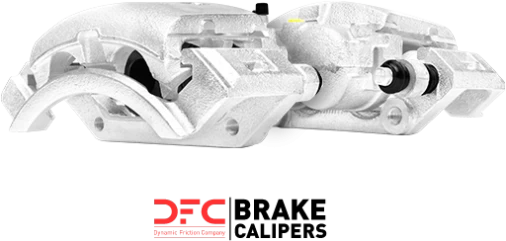
The DFC brake kit encompasses a full set of critical braking components, comprising calipers, discs, and pads for a total system overhaul. This package comes with upgraded pads and an inclusive hardware kit to deliver a fully integrated braking solution. Depending on the vehicle’s requirements, the kit may also contain extra elements like wear sensors, brake fluids, and rotor rings to cater specifically to that application.

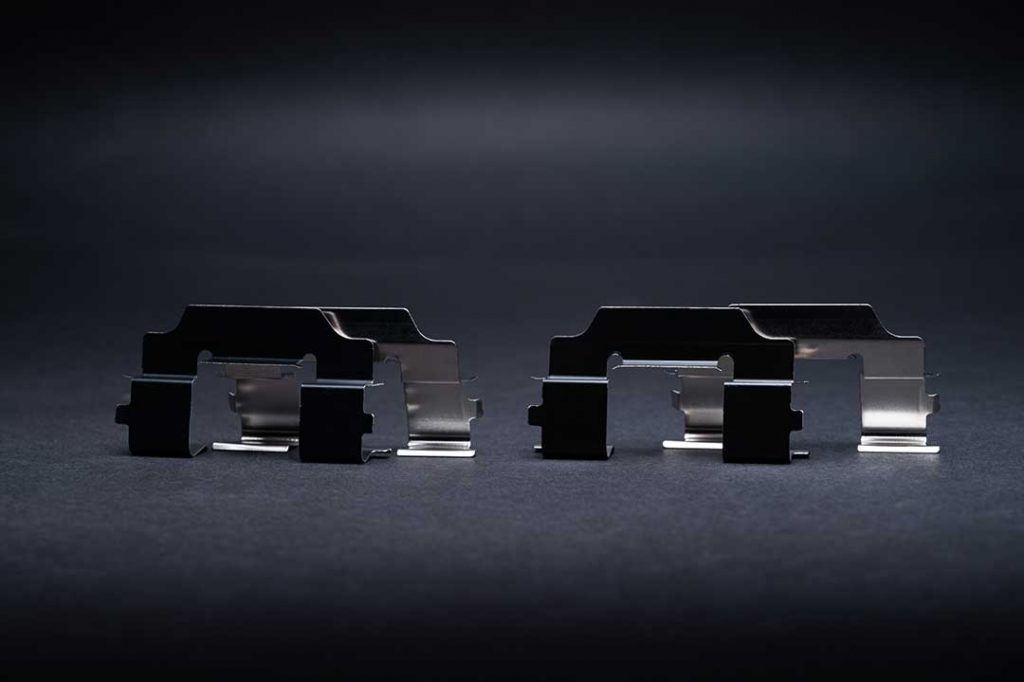
Constructed from stainless steel, the provided DFC Hardware Kits are designed to resist corrosion while enduring high temperatures. This enhances both the durability and lifespan of each brake kit component.

Why Choose a Complete Kit

Choosing a complete brake kit provides numerous advantages.

  • The components are engineered to work together seamlessly, enhancing the vehicle’s braking system performance and compatibility.
  • Noise issues become less of an issue with this option.
  • Smooth operation is achieved since all the new parts are created to operate in unison.

A complete brake kit from DFC offers additional benefits.

  • It streamlines the process of choosing the right parts
  • Delivers a matched system that simplifies selection
  • Effectively restores optimal performance
  • Meets varying customer needs concerning price, function, and design.

Summary

We understand that the Geospec-coated rotors from DFC are very good for many reasons. They do not rust easily, last a long time, and look nice. These rotors help your car run smoothly and look stylish. DFC promises to have the right rotor for every kind of vehicle because they care about quality and have many options.

Choosing a complete brake kit from DFC is even better because it has everything you need in one package. This makes it easy to use and take care of your car’s brakes. If you take good care of these rotors and use them the right way, they will work well for a long time. When you pick Geospec-coated rotors, you are choosing safety and a great driving experience.

Top Picks: Best Brake Rotors for Tesla for Enhanced Performance and Safety

If you’re looking for the best brake rotors for your Tesla, you want ones that are dependable and enhance your car’s performance. This article provides a clear review of the top brake rotors, focusing on those made especially for Tesla cars. We’ll guide you through the options that meet the high standards of your vehicle, making sure your Tesla continues to perform well.

Key Takeaways

  • Tesla vehicles feature sophisticated brake systems with anti-lock braking system, special features for enhanced control, and year/model-specific variations in rotor types and sizes for optimized performance.
  • Choosing between OEM and aftermarket rotors for Teslas involves considering factors like vehicle type, rotor design, cost, and potential warranty implications; eco-friendly options are also available.
  • Signs such as surface cracks, vibrations, and unusual noise during braking indicate it’s time to replace brake rotors, with costs varying by service provider; regular maintenance is crucial for safety and performance.

Understanding Tesla Brakes

Tesla vehicles come with a sophisticated anti-lock braking system that boasts several capabilities.

  • It prevents the wheels from locking up during intense braking, thus improving control and steering ability.
  • To enhance brake responsiveness, the system includes brake disc wiping to clear away moisture.
  • The anti-lock braking system is also designed with hydraulic fade compensation which modifies brake system pressure in situations where performance might be compromised due to conditions like brake fade or inclement weather.

These parts are very important because they help make Tesla cars both safer and perform better.

Specifically, the Model S is designed to alert the driver when the temperature is very cold, below 14 degrees Fahrenheit. This alert is to let the driver know that the car might not be as stable and that the brakes might not work as well. This attention to detail shows how Tesla is different from other car makers in how they design and make their cars.
Performance Versions

Tesla models uphold a high standard in braking systems, yet the performance variants feature specialized rotors. These unique rotors are designed to meet the rigorous requirements of performance driving, guaranteeing that every component of the vehicle is fine-tuned for both track environments and regular road use.

Yearly Variations

The brake rotors on a Tesla vehicle can vary not only based on the model but also according to the production year. This variation is due to Tesla’s commitment to constant innovation and improvement of their vehicles’ parts, aimed at boosting performance, safety, and the overall driving experience. Consequently, it’s expected that rotors would evolve as part of this advancement trajectory.

Choosing the Right Brake Rotors for Your Tesla Model

DFC Blog

When choosing brake rotors for your Tesla, it’s important to consider the exact model of your car, as well as the right size and type of rotor. For instance, the GEOMET® coated brake rotors are used for Tesla Model X cars made between 2016 and 2018.

The Tesla Model 3 is sold in two different versions, Base and Performance, which have different sizes for the front rotors, different rotor designs, and different colors for the brake calipers.

Each Tesla model has its own needs for its brake system. This means each model requires specific types and sizes of rotors. Below is a simple guide that explains the differences between the brake systems of various Tesla models.

  • Both from Palladium series. Models S and X usually possess identical braking configurations except that Model X has more substantial front brake rotors.
  • The Model 3 comes with a distinctive set-up exclusive to itself.
  • Similarly distinct is the setup found within a Tesla’s Model Y.

Ensuring you select accurately fitting brake rotors for your precise model will greatly contribute to peak performance outcomes while enhancing safety measures as well as ensuring longer-lasting wear on your car’s brakes.

OEM vs. Aftermarket Rotors

premium-brake-rotors-oe

Choosing between original Tesla brake rotors and those made by other companies is an important decision. Brake rotors not made by Tesla (non-OEM) are often less expensive, and they might last just as long or even longer than the original parts. However, it’s very important to carefully check the quality of these alternative rotors.

Aftermarket rotors often have features like:

  • A zinc coating to prevent rust
  • A thicker center area to fix certain issues found in some models
  • A lighter weight and special designs, similar to DFC’s Geomet rotors, which help keep the brake pads clean

These features are intended to improve the performance and life of the rotors when used in regular driving conditions.

Top Brake Rotor Options for Tesla Models

To augment both the performance capabilities and safety features of Tesla vehicles, there are a variety of brake rotor options available on the market. These brakes are engineered to be versatile enough for daily driving conditions as well as high-demand track environments. Let’s take a closer look at some of these offerings in greater detail.

Carbon Ceramic Rotors

geomet-finish

Choosing carbon ceramic rotors for Tesla vehicles is a wise decision for environmentally aware drivers. These rotors are lighter than traditional iron rotors, which means they reduce the overall weight of the car. This can lead to better handling and fuel efficiency.

In addition, carbon ceramic rotors are known for their durability and ability to perform well under high temperatures, which is particularly beneficial during fast driving or in hot climates. They also produce less brake dust than standard rotors, keeping wheels cleaner and reducing the environmental impact.

Carbon Ceramic Rotors vs. Traditional Cast Iron Rotors

geomet-finish

Choosing carbon ceramic rotors for Tesla vehicles is a wise decision for environmentally aware drivers. These rotors are lighter than traditional iron rotors, which means they reduce the overall weight of the car. This can lead to better handling and fuel efficiency. The reduced unsprung mass of carbon ceramic rotors allows for more precise wheel control, which translates into a smoother ride and improved vehicle dynamics.

In addition to their weight advantage, carbon ceramic rotors are known for their durability and ability to perform well under high temperatures, which is particularly beneficial during fast driving or in hot climates. They also produce less brake dust than standard rotors, keeping wheels cleaner and reducing the environmental impact. The longevity of carbon ceramic rotors is another plus; they can last the lifetime of the car under normal driving conditions, whereas traditional cast iron rotors might need to be replaced several times over the same period.

On the other hand, traditional cast iron rotors, while being more cost-effective upfront, do not offer the same performance benefits as carbon ceramic rotors. Ordinary cast iron rotors tend to warp under high temperatures, leading to reduced braking performance and potentially more frequent replacements. For a Tesla, which is engineered for high performance and efficiency, the use of ordinary cast iron rotors could compromise the vehicle’s finely-tuned dynamics and the overall driving experience that Tesla owners have come to expect.

Slotted and Drilled Rotors

drillslot

Slotted and drilled brake rotors are widely favored by Tesla owners, with the DFC’s Geomet series being a preferred choice for its ability to elevate the braking performance of their vehicles. Designed for optimal heat dispersion, these slotted rotors surpass conventional rotor design in halting efficiency.

They marry high-grade stoppage power with cost-effectiveness through advanced engineering that includes cross-drilled holes and diamond-patterned slots to maximize durability and stopping force. They employ a ‘Convergent vane’ structure which enhances resistance against both corrosion and warping.

Durability is also built into these specific rotors’ designs thanks to rotor rings tailored specifically for Tesla vehicles. These components ensure an extended service life known amongst users while remaining steadfast in maintaining vehicle performance standards.

Brake Pad Selection for Optimal Performance

s1 pads box

Ceramic brake pads are generally considered the best option for Tesla vehicles due to their quiet operation, low dust output, and durability. These qualities make ceramic pads particularly appealing to drivers who prioritize cleanliness and a quiet ride.

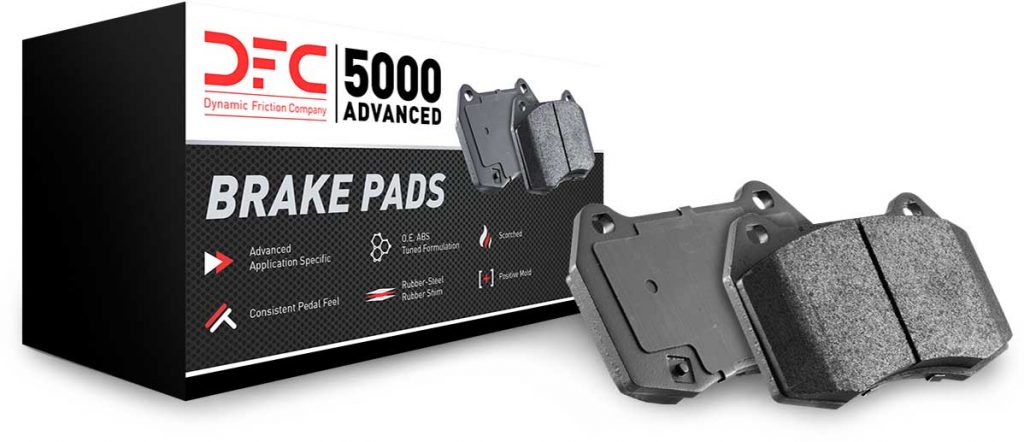
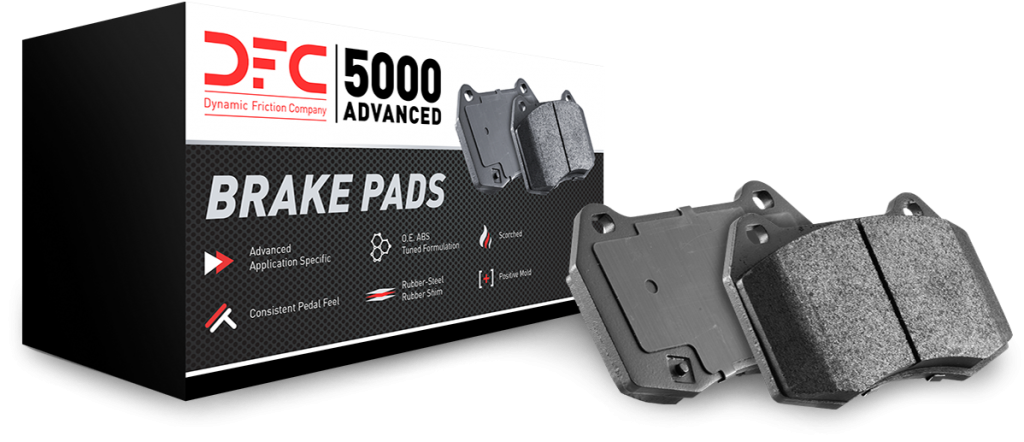
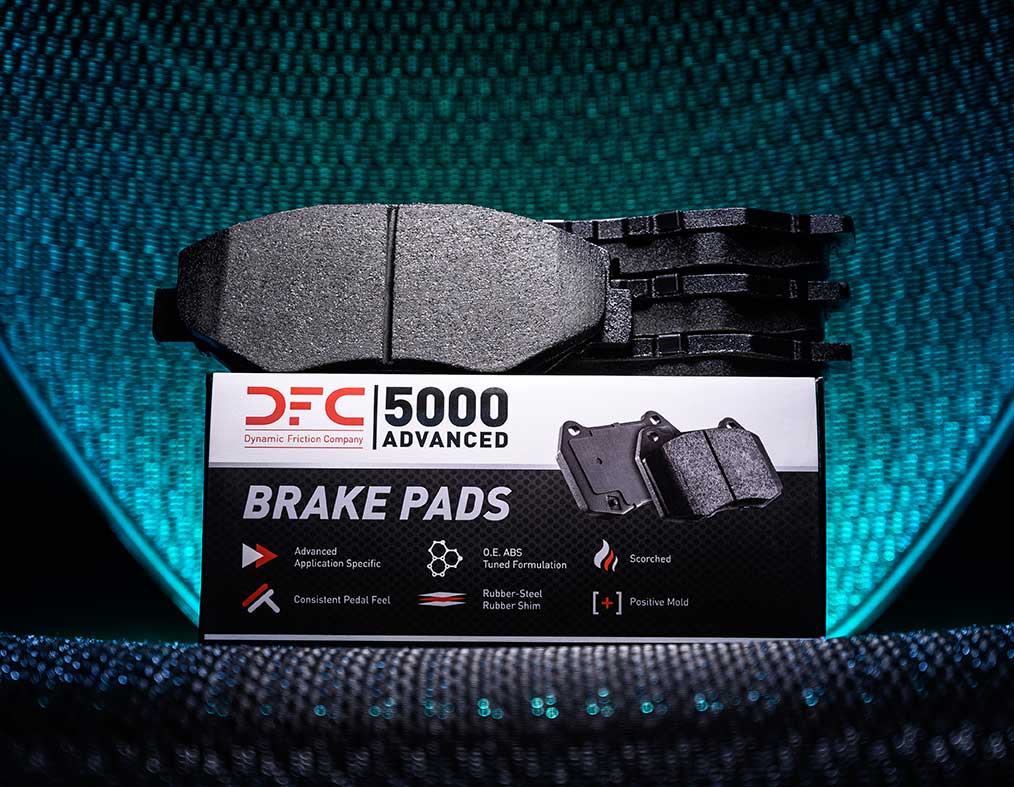
When considering the best brake pads for your Tesla, Dynamic Friction Company (DFC) stands out with its exceptional offerings. The DFC 5000 Advanced series brake pads is the most compatible brake pad are engineered to complement the advanced regenerative braking system of Tesla, ensuring optimal performance and minimal wear.

Unlike other brands, DFC brake pads are designed specifically by your vehicle’s exact year, make, and model. Add the fact that these brake pads are also crafted in a unique formulation that reduces noise and dust, which is especially beneficial for maintaining the pristine conditions of car models, especially your Tesla.

Moreover, these pads are thermally stable and provide consistent braking power even under high temperatures, making them an ideal choice for Tesla owners who demand superior quality and performance without compromising on environmental consciousness.

Signs It’s Time to Replace Your Tesla Brake Rotors

Brake rotors are parts that naturally wear out over time, just like any other part of a car. Eventually, they will need to be replaced. How can you tell when it’s time for new ones? Look out for certain signs that show your Tesla’s brake rotors might need changing. For example, if you see large cracks on the rotor surface, especially if they reach the edges, this usually means it’s time to get new rotors. Also, if you notice deep grooves or other clear signs of wear on the part of the rotor that touches the brake pads, this is another indication that they need to be replaced.

If you feel shaking in the steering wheel or the brake pedal when you brake, this could suggest a problem with the rotors. If you hear loud noises when you are braking, this could also mean that the rotors are worn out or that they have rusted. It’s very important to have your Tesla’s brakes checked regularly to keep the car safe to drive and to make sure it performs well.

Cost of New Brake Rotors for Tesla Vehicles

The price of new brake pads and rotors for Tesla vehicles can fluctuate based on a variety of factors. Reports from Tesla owners suggest that the cost to replace both front and rear brake pads and rotors can range between $840 to $1,583. When you also factor in the replacement of parking brake pads along with the front and rear pads and rotors, expenses may increase up to approximately $2,500.

Due to this variation in quotes offered by different Tesla service centers, there’s noticeable unpredictability regarding the total cost encompassing parts and labor which might be attributed to various service providers. Labor charges are subject not only to variability, but could significantly affect overall costs as well. It’s advisable for vehicle owners seeking these services to obtain multiple estimates ensuring they receive optimal value when spending money on such maintenance tasks.

Potential Warranty Concerns

Opting for aftermarket brake rotors might seem appealing, but it’s crucial to consider the potential impact on your warranty. It’s a common myth that just by installing aftermarket parts such as brake rotors on a Tesla can lead to an automatic void of the vehicle’s warranty. Consumer rights are protected by the Federal Trade Commission (FTC), which allows individuals to use non-original parts without forfeiting their warranty.

The assurance provided by Tesla will remain intact unless evidence shows that any problems needing repair were directly caused by an installed aftermarket part. Warranty services cannot be rejected simply because there is an aftermarket rotor fitted. Proof must be shown that this component is responsible for the damage incurred. Meticulous documentation of changes and consulting certified professionals when putting in these types of parts play a critical role in preserving your car’s coverage under its original guarantee.

Installation Tips and Best Practices

When you’ve made your selection, the next phase is the installation process. Tesla has developed unique tools specifically for facilitating swift and safe removal, disassembly, and reassembling of braking components to prevent damage during servicing. The proper completion of certain maintenance or installation jobs on Tesla vehicles often necessitates these specialized instruments.

For some vehicle models, installing aftermarket rear rotors can be notably quick and simple – some boasting that this can be accomplished in as little as 20 minutes for each corner. These rotors are double disc ground at the brake pad contact area to enhance quicker bedding-in of brake pads which leads to a quieter performance with smoother stops. It’s crucial for owners who modify their vehicles by adding parts like front calipers to meticulously document all changes and consult certified technicians when installing aftermarket enhancements to ensure peak performance from their vehicle’s brakes.

Summary

If you own a Tesla or simply admire these remarkable vehicles, grasping the details of their braking systems and the array of choices for rotor types can deepen your admiration. Keep in mind that brake rotors and pads are vital to both your safety and your Tesla’s performance. It is essential to choose these parts thoughtfully, considering factors like how you drive, environmental conditions, and financial limitations. Armed with proper understanding and equipment, you can maximize the high-caliber performance of your Tesla while maintaining confidence in its roadworthiness.

Electric Brakes on Cars: How They Revolutionize Safety and Efficiency

The automotive industry is changing with the introduction of electric brakes in cars. These new brakes use electricity and offer better safety and efficiency than old braking systems. This article will explain how electric brakes work, their benefits, and why more car manufacturers are choosing them.

Key Takeaways

  • Electric brakes, utilizing electrical signals and magnetism instead of hydraulic pressure, offer a reliable braking experience with enhanced performance, efficiency, and environmental benefits.
  • Regenerative braking systems in electric vehicles convert kinetic energy into electricity, reducing wear on brake components and improving overall energy efficiency, while brake-by-wire technology removes physical linkage, favoring electronic control for precision.
  • Despite the advantages of electric braking systems, drivers need to adjust to the different pedal feel, and the increased system complexity may lead to higher maintenance requirements and more complex accident analysis.

Decoding Electric Brakes: The Shift from Hydraulic to Electrical Systems

DFC Blog
source: LA times

The time when hydraulic systems were the only way to slow down cars is over. Now, we have electric brake technology. These new brakes use electricity and magnetic forces to create resistance that can slow down or stop a car. This change is a big leap in how brakes work, moving away from traditional hydraulic brakes.

The move to electric brakes comes with many benefits for the car industry. As cars keep getting better and more advanced, these benefits are too important to ignore. That’s why we see more and more vehicles, including electric and gas-powered ones, using electric brakes.

The Mechanics of Electric Braking

When you press the brake pedal in a car with electric brakes, a series of well-designed actions starts. Electric brakes use electric signals to command actuators. These actuators apply the right amount of force to the brake pads and discs, slowing down the car. This system avoids the risk of leaks from hydraulic fluid and is more reliable.

Here are the main parts of this system:

  • Sensors that check how hard the pedal is pressed and the car’s movement
  • Control modules that understand the sensor data
  • Control units that decide the right amount of force needed to slow down or stop the car
  • Actuators that receive instructions from the control units to apply the force

This system is quick to respond and adjusts to both the driver’s style and changing road conditions.

Transition Trends: Are Electric Brakes Overtaking Hydraulics?

The automotive industry is changing as more cars use electric brakes instead of traditional hydraulic brakes. These new brakes are better for performance and last longer, which is good for safety and the environment. As people want more eco-friendly cars, electric brakes are becoming the standard for future car braking systems.

Electric brakes offer better control and are a big step forward in car technology. They are already setting new standards in braking and are key to the future of the automotive industry.

The Advantages of Going Electric with Your Brakes

Electric brakes are a smart choice for many reasons, including longer-lasting brake pads and being kinder to the environment. For instance, some electric car owners report their brake pads last over 100,000 miles.

Electric brakes have other benefits too:

  • They make car building cleaner and simpler by not using hydraulic fluids.
  • They’re good for the planet.
  • They improve efficiency.
  • They’re quieter than traditional brakes.
  • They reduce pollution.

Enhanced Stopping Power

Electric brakes are important for safe driving. They work very well and can stop a car quickly. These brakes adjust the stopping force as needed and respond fast. They also use a system that saves energy, making them better for safety and the environment.

Efficiency on the Rise

The regenerative braking system stands as a key technological advancement in the world of automotive efficiency, enabling vehicles—particularly hybrids—to perform several critical functions. It captures kinetic energy that would otherwise be lost, converts it into electrical power, reduces the load on the combustion engine, and improves fuel economy.

Paired with this innovative system is the brake-by-wire technology, which uses lighter components to decrease overall vehicle weight. This reduction in weight contributes to better efficiency and positions electric braking systems as both revolutionary and environmentally friendly solutions in modern vehicle design.

The Challenges of Electric Braking Systems

Electric brakes, while offering many benefits, also come with challenges. Some drivers find the brake pedal less responsive, lacking the usual feedback. This feedback is important as it gives drivers confidence and control over their cars.

These systems are complex, which might lead to higher repair costs and make accident analysis more difficult. However, manufacturers aim to provide consistent feedback through the brake pedal, regardless of brake temperature.

Learning to Use Electric Brakes

Drivers may need time to get used to electric brakes, particularly the e-pedal mode in electric vehicles. The pedal feels different from traditional brakes, but with time, drivers can adapt to it and appreciate its benefits.

Complexity and Reliability

Electric brakes bring precision but their complexity could affect reliability. Issues like brake blending in electric cars can impact smooth operation. In emergencies, analyzing electric brake failures requires considering many factors. Car makers work hard to ensure these brakes are safe and reliable.

Regenerative Braking: A Closer Look at This Electric Marvel

The process of regenerative braking is key in electric cars, turning the motor into a generator to slow down the car and make electricity. This saves energy and reduces the need for brake pad replacement.

Regenerative braking has benefits like:

  • Saving energy
  • Less wear on brake pads
  • Reducing the need for traditional brakes
  • Longer brake pad life
  • Lower maintenance

Electric car owners benefit a lot from these advantages.

This technology is now being used in regular cars too, showing its growing importance for better braking systems.

How Regenerative Braking Works

When drivers stop pressing the gas or push the brake, electric cars start regenerative braking. This changes the motor into a generator, turning the movement energy into electricity. This electricity goes back into the car’s battery, making the car more efficient and possibly letting it go further on one charge. This eco-friendly method is important for electric cars.

The Role of Regeneration in EVs

Regenerative braking is very important for slowing down electric cars and charging their batteries. It can turn up to 70% of the car’s movement energy back into electrical power. The amount of energy saved changes with the car’s weight, if it’s pulling something heavy, and how the driver brakes. These factors affect how the car feels to drive.

Electromechanical Braking: Understanding Brake-by-Wire

The brake-by-wire system, also known as electromechanical braking, is a big step in electric brake technology. This system gets rid of the mechanical link between the brake pedal and the brakes. Instead, it uses electronic signals to control braking. This system is lighter because it doesn’t use heavy mechanical parts and it’s simpler with fewer parts.

  • It makes cars lighter by removing heavy parts.
  • It simplifies the system with less parts.
  • For example, Continental’s MKC1 system makes cars about 4 kilograms lighter.

This system is now in cars like the 2018 Alfa Romeo Giulia and Stelvio. It’s reliable and makes brakes last longer because there’s less wear and tear.

How Brake-by-Wire Works

In brake-by-wire systems, everything is controlled electronically. Here’s what happens when you brake:

  1. You press the brake pedal and a sensor measures this force, turning it into an electronic signal.
  2. A control unit processes this signal.
  3. The control unit tells the system how much braking force to use.

An electric pump creates the hydraulic pressure needed to stop the car when needed. This system can adjust to how different people drive, which could make braking better for each driver.

Premium Brake Parts: Part Of The Innovative Technology Of Electric Vehicles
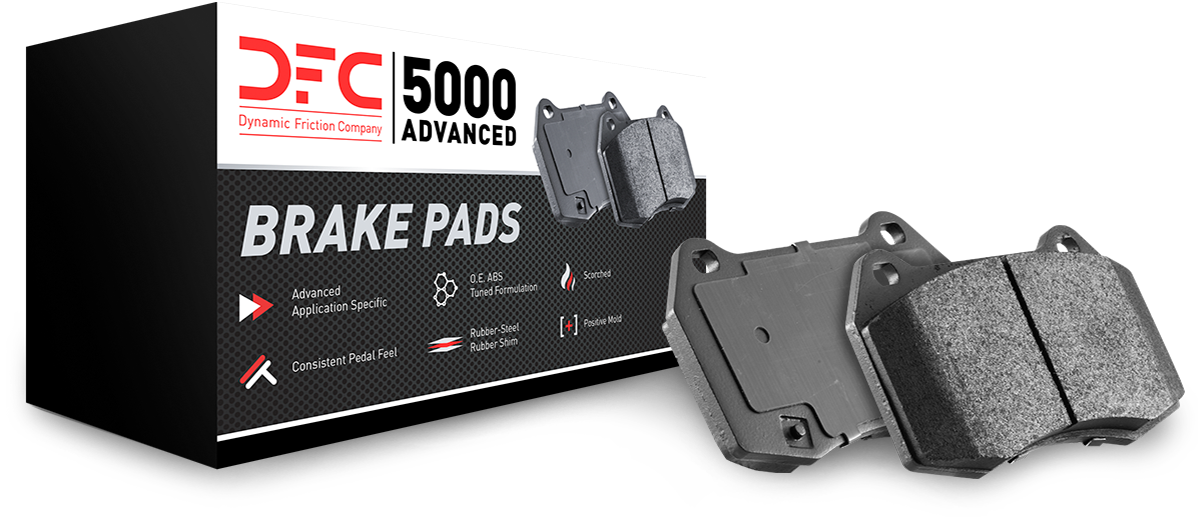
DFC Blog

Electric brakes are a smart choice for many reasons, including the adoption of premium brake components that enhance performance and sustainability. Electric car brake parts are designed to handle the unique demands of regenerative braking systems, which result in less wear and tear compared to traditional brakes. They’re also built with advanced materials that enhance performance and are environmentally friendly. These innovations contribute to longer-lasting brake components and more efficient vehicles.

The DFC 5000 Advanced brake pads exemplify the innovation in electric vehicle brake technology. Designed with advanced friction formulas, these pads offer enhanced stopping power, quieter operation, and minimal dust production. Their rotor-friendly design is particularly suited to the heavier electric vehicles that depend on regenerative braking, extending the life of both pads and rotors. In addition to their performance benefits, these brake pads are eco-conscious, made without copper to meet future environmental standards. By marrying performance with sustainability, the DFC 5000 Advanced brake pads represent a leap forward in electric vehicle safety and efficiency.

Exploring the Diversity of Electric Braking Systems

The world of electric brakes is diverse, with innovations like electromagnetic brakes that stop vehicles without touching them, which means no wear and tear. Continental’s Future Brake System is an exciting development that works without hydraulic parts.

It’s exciting to think about what new electric brake technologies might be coming. The automotive industry is always moving forward, offering different braking systems for different cars and drivers, making future vehicles even better at braking efficiently.

Electric Brakes in Electric vs. Hybrid Cars

Both battery electric vehicles (BEVs) and hybrids use regenerative braking to turn motion into electricity when slowing down. Here’s what’s different:

  • Hybrids combine this with traditional brakes, giving a feeling similar to engine braking.
  • When hybrids slow down for a long time and the battery is full, they use the engine to manage the extra energy. BEVs don’t do this because they only use electricity.
  • BEVs have unique electric brakes without the usual hydraulic parts, giving a different feel from hybrids.

Electric Brakes for Trailers

Electric brakes are also used in trailers towed by electric vehicles. These trailers have brakes that work with electromagnets to slow down. Elecbrakes is a product that lets drivers control these brakes wirelessly, making it easy to install and use.

The Elecbrakes EB2 is designed for electric vehicles and is simple to set up with wireless technology. It can be installed quickly without changing the vehicle.

Safety rules say that trailers with a heavy load must have electric brakes that stay on even if the trailer disconnects from the car. This shows how important reliable electric brakes are for towing safely.

Electric Brakes in Traditional Cars

Electric brakes are now being used in regular cars, not just electric ones. They offer better safety and can even save fuel. As technology gets better, more cars are using electric brakes.

Simple Safety with Electric Brakes

Electric brakes are very safe. They have extra ways to check things like pedal position and wheel speed to keep you safe. If the electric system fails, there’s a backup manual system to stop the car.

These brakes also have smart features that can brake for you to avoid accidents.

Reliable Braking, Even During Failures

Car makers add extra safety to electric brakes. If the electric part fails, the car can still brake using a manual brake or electric parking brake. This means you can always stop safely, even if there’s an electrical problem.

Summary

As we’ve journeyed through the intricate world of electric braking systems, it’s clear that this technology is not just an alternative to traditional brakes, but a revolutionary step forward in automotive design. From the enhanced stopping power and efficiency gains to the diversity of systems and their applications across different vehicles, electric brakes are reshaping our expectations of vehicle safety and performance.

Embrace the change, for the future of braking is electric. With continuous advancements, increased adoption, and a focus on sustainability, electric braking systems stand as a testament to human ingenuity and a beacon for the evolution of transportation technology.

Frequently Asked Questions

How do electric brakes differ from traditional hydraulic brakes?

Electric brakes differ from traditional hydraulic brakes by using electrical signals and magnetism instead of hydraulic pressure to engage the brake pads, providing a cleaner, more responsive, and efficient braking process.

What is regenerative braking and how does it work?

Regenerative braking harnesses the electric motor to convert kinetic energy into electrical energy, storing it in the battery for later use, which improves efficiency and reduces brake wear.

This system helps slow down the vehicle by utilizing the generator aspect of the electric motor.

Are electric brakes more reliable than traditional brakes?

Yes, electric brakes are often considered more reliable than traditional brakes due to their reduction of friction-based components, which enhances reliability and lifespan.

Can electric braking systems be used on gasoline-powered cars?

Certainly, gasoline-powered cars can be equipped with electric braking systems, which enhance safety measures and fuel efficiency while representing progress in the realm of automotive technology.

What safety measures are in place for electric braking systems?

Advanced safety mechanisms such as automatic emergency braking are integrated into electric braking systems, which also incorporate manual hydraulic linkages and multiple sensors to maintain the vehicle’s safety.

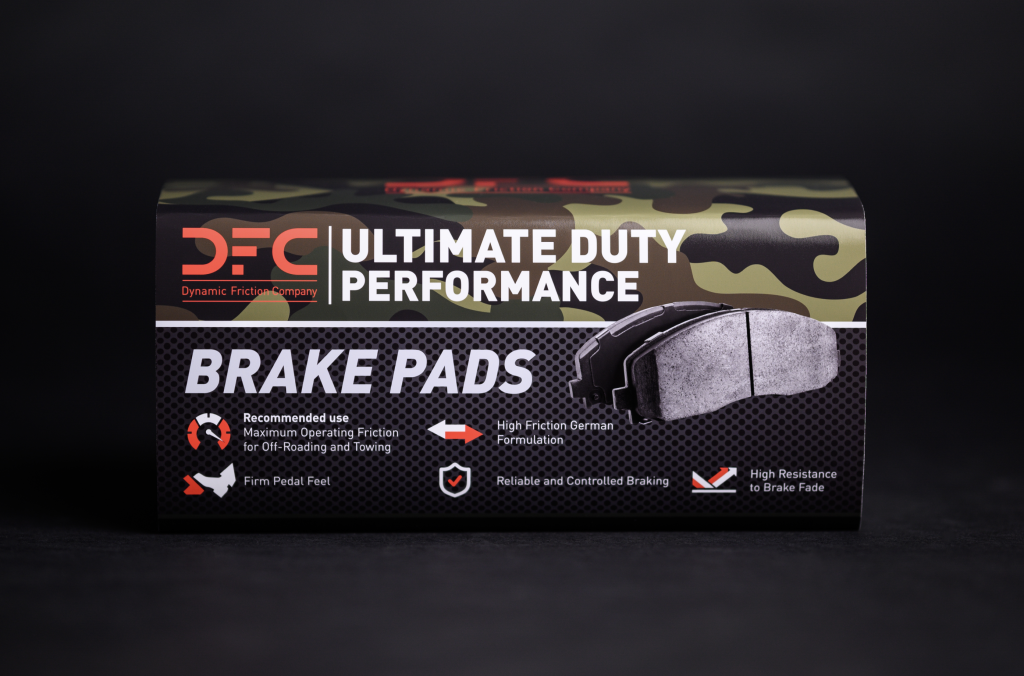
DFC Presents: Dino Puts the Ultimate Duty Performance Pads (aka MOFO) to the Test

DFC Friction Friday

DFC Presents: Dino Puts the Ultimate Duty Performance Pads to the Test

Those with lifted trucks, trucks with large tires (35’s or 38’s), or off-road vehicles will understand: you sometimes lose performance and sensitivity because there is added pressure on the braking system. 

DFC Ultimate Duty Performance Brake Pads solve this challenge in a number of ways:

• They provide high performance braking at low speeds (like when you’re rock crawling)

• They have a high coefficient of friction from dead cold, all the way to the highest of temperatures

• They provide better brake balance and feel

These are only a few of the reasons that make the Ultimate Duty Performance Brake Pads a baaaaaad MOFO (Maximum Operating Friction for Off-Roading). Click the video above to see how these Pads perform on a Jeep Gladiator!

DFC Blog
DFC Blog
DFC Blog

DFC logo

DFC 5000 Brake Pads Provide Top Performance to the GMC 2500

Friction Friday

DFC 5000 Brake Pads Provide Top Performance to the GMC 2500

After testing hundreds of brake pad materials and evaluating detailed test results (including different outputs under different conditions, different pressures and speeds, and fluid displacement) DFC designed the 5000 Brake Pad Series.

The DFC 5000 Brake Pad Series is a vehicle-specific, application-specific, friction program developed to work perfectly as a direct replacement for your vehicle. That’s why each pad is specially formulated, taking into account the coefficient of friction and compressibility (which gives you brake feel), and engineered to have no noise and extended wear. 

Click the video above and watch Co-Founder Dino Crescentini personally install DFC 5000 Brake Pads on the GMC 2500 and take it for a spin!


DFC logo