 UNITED STATES
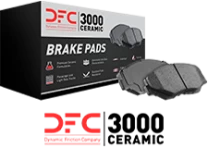
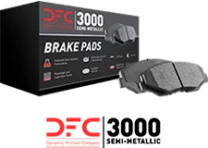















There’s a conversation that happens at the parts counter every day. Customer comes in for brake pads, and the counterperson asks the question: “Ceramic or semi-metallic?”
Most of the time, the answer comes down to price or whatever the customer had last time. Nobody explains the why behind the recommendation.
That’s a missed opportunity. Because when you understand friction at the formulation level, you can make better recommendations, charge appropriately for premium parts, and dramatically reduce the noise and vibration comebacks that eat into your shop’s profitability.
How Brake Pads Actually Stop a Vehicle
Before we get into the three main formulation types, you need to understand the two fundamental friction mechanisms that brake pads use.
Abrasive Friction
Think of this like sandpaper on wood. The pad and rotor surfaces physically grind against each other, breaking molecular bonds in both materials. Material gets removed from both the pad and the rotor with every stop.
Semi-metallic pads and some NAO formulations primarily use abrasive friction. That’s why semi-metallic pads tend to wear rotors faster and produce more dark, metallic brake dust.
Adherent Friction (Transfer Film)
This works completely differently. During the first few hundred miles of use, the pad transfers a microscopic layer of friction material onto the rotor surface. Once that transfer film is established, braking happens as pad material contacts pad material.
Ceramic pads and some premium NAO formulations use this adherent mechanism. That’s why ceramic pads produce lighter-colored dust and are generally easier on rotors.
Why this matters to your shop: If a customer comes back with dark spots on their rotors after a ceramic pad install, it usually means the proper break-in wasn’t done properly and the transfer film is uneven. That’s not a defective pad. That’s a bedding issue.
The Three Main Formulation Types
Semi-Metallic
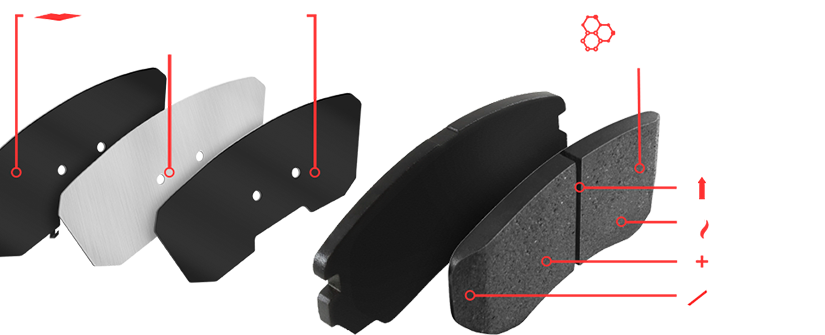
What’s in them: 30-65% metal content by weight. Steel fibers, iron powder, graphite, and various friction modifiers held together with phenolic resin binders.
How they perform:
- Strong initial bite, especially when cold
- Excellent heat handling under sustained high temperatures
- Predictable pedal feel under heavy, repeated braking
- Higher rotor wear rate due to abrasive friction mechanism
- More noise-prone than ceramic, especially in cold weather
- Produce heavy, dark metallic dust
Where they make sense: Heavy trucks and SUVs with towing or payload. Performance applications. Fleet vehicles in stop-and-go duty cycles.
Ceramic
What’s in them: Ceramic fibers, various fillers, aramid fibers for structural integrity, and resin binders. Modern ceramics are copper-free to meet EPA regulations.
How they perform:
- Quiet operation across a wide temperature range
- Consistent, linear pedal feel
- Light-colored dust that doesn’t adhere to wheels
- Lower rotor wear
- Slightly less initial bite when stone cold
- Can fade under extreme, sustained heat
Where they make sense: Daily drivers, commuter vehicles, sedans, crossovers. European applications. Any customer who complains about brake dust.
NAO (Non-Asbestos Organic)
What’s in them: Glass fiber, rubber, carbon compounds, Kevlar or other aramid fibers, and resin.
How they perform:
- Soft pedal feel with gentle initial engagement
- Very quiet, especially at low speeds
- Lowest dust production
- Fastest wear rate, especially under heat
- Not suitable for high-performance or heavy-duty applications
The Part Nobody Talks About: Vehicle-Specific Formulations
Here’s where the real quality difference shows up between brake pad brands. A cheap ceramic pad might use a single friction compound across 200 different applications. A premium one uses a formulation tested and tuned for the specific vehicle.
That difference shows up as noise on some applications, uneven wear, inconsistent pedal feel, or longer stopping distances.
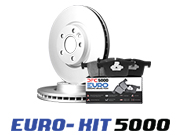
DFC engineers vehicle-specific friction formulations. A DFC 5000 Advanced pad for a Toyota Camry has a different friction compound than one for a Ford F-150. Same product line, same quality standards, but the chemistry is matched to the application.
Post-Curing: The Manufacturing Step That Changes Everything
Most brake pads go through pressing and initial curing during manufacturing. What not every manufacturer does is post-cure the finished pad.
Post-curing is an additional heat treatment step that stabilizes the resin binders and burns off volatile compounds in the friction material.
Without post-curing: The first few hundred miles on the vehicle become the final curing stage. This causes inconsistent friction, more noise during break-in, and a longer period before the pad reaches optimal performance.
With post-curing: The pad arrives with a fully stabilized friction surface. Break-in is shorter and more predictable. The transfer film develops more evenly.
DFC post-cures 100% of its brake pads.
What This Means for Your Parts Counter
Match the formulation to the application, not the customer’s budget.
Don’t upsell by scaring people. Upsell by educating. Instead of “you need the more expensive pads,” explain why the heavy-duty formulation gives better heat management for their specific use case.
Ask about driving habits before recommending a pad type. Five questions that should be standard:
- What kind of driving do you mostly do?
- Do you tow anything regularly?
- Do you notice a lot of brake dust on your wheels?
- Any noise or vibration complaints?
- How long do you plan to keep the vehicle?
Choosing the Right Pad Line for Your Shop
| Application | Recommended Formulation | DFC Product Line |
|---|---|---|
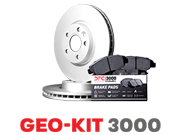
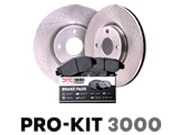
| Daily driver, sedan, crossover | Ceramic | DFC 3000 Ceramic |
| Daily driver, value option | Semi-metallic | DFC 3000 Semi-Metallic |
| Mixed driving, moderate performance | Hybrid ceramic | DFC 4000 HybriDynamic |
| Premium daily, extended pad life | Advanced ceramic | DFC 5000 Advanced |
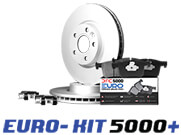
| European applications | Euro-specific ceramic | DFC 5000 Euro Ceramic |
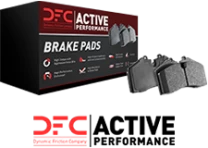
| Performance vehicles | Performance ceramic | DFC Active Performance |
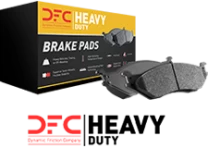
| Trucks, towing, heavy payload | Heavy-duty semi-metallic | DFC Heavy Duty |
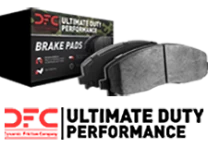
| Work trucks, extreme duty | Maximum duty semi-metallic | DFC Ultimate Duty Performance |
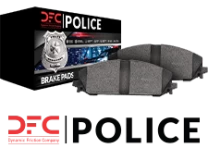
| Police and pursuit vehicles | AMECA-certified high heat | DFC Police |
Find the right pad for your application at dynamicfriction.com.
Understanding friction formulations isn’t just academic. It’s the foundation of making better recommendations, reducing comebacks, and building the kind of brake service reputation that keeps customers coming back for the right reasons.
Related: Brake pad break-in guide | The true cost of cheap brake pads