Why DFC Newly Manufactured Brake Calipers Are Built to Last

DFC Blog

Understanding Brake Caliper Functionality

Brake calipers are integral to a vehicle’s braking system, housing the brake pads and pistons that clamp onto the brake rotors when the brakes are applied. This clamping action is crucial for safe and efficient braking performance. When the brake pedal is pressed, the master cylinder sends brake fluid through hoses and tubes to the caliper. The caliper then applies pressure to the brake pads, causing them to grip the rotor. This pressure is evenly distributed across the rotor, allowing the vehicle to come to a smooth and controlled stop. The caliper’s ability to apply consistent pressure ensures that the brake pads and rotors work together effectively, providing reliable braking performance.

Engineered for Longevity: DFC’s Brake Calipers

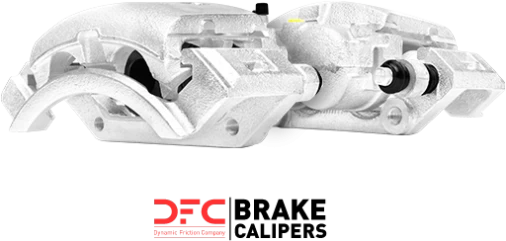
Your customers depend on high-quality brake components to keep their vehicles safe and reliable. With DFC newly manufactured brake calipers, you can deliver unmatched durability and performance that outlasts remanufactured alternatives. Additionally, DFC’s brake calipers come with all necessary hardware for easy installation.

1. All-New Brake Calipers for Reliable Performance

DFC Blog

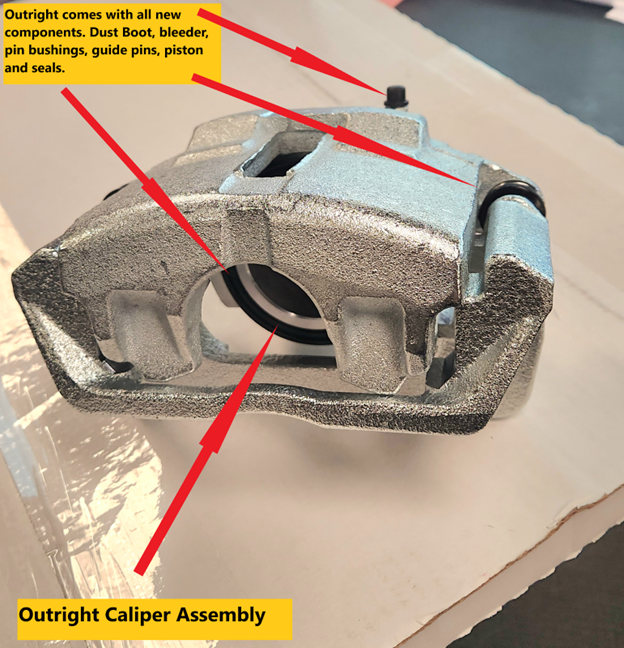
Every DFC brake caliper is built entirely from new materials, including pistons, seals, guide pins, and bleeder screws. This ensures a perfect fit and consistent operation without the wear and tear of reused parts.

Additionally, these all-new components help reduce noise, ensuring a quieter braking experience.

2. Superior Corrosion Resistance

DFC calipers are coated with a premium silver zinc finish that provides long-lasting protection against rust and corrosion. Whether your customers drive in snowy conditions or humid climates, DFC calipers are designed to withstand the elements. Additionally, DFC calipers are compatible with various types of brake discs, ensuring optimal performance and longevity.

3. Proven Design for Long-Term Value

With advanced materials and precision engineering, DFC brake calipers require fewer replacements over time, saving money for your shop and ensuring satisfied customers. Additionally, DFC brake calipers are designed to handle the weight of various vehicles, ensuring consistent performance and durability.

Discover the Benefits of DFC Calipers

Design and Manufacturing Process

DFC Blog
DFC Blog

The design and manufacturing process of brake calipers involves meticulous attention to detail, ensuring that each component meets high standards of durability and performance. Modern brake calipers are typically crafted from high-strength materials like aluminum or steel, which offer excellent resistance to corrosion and wear. The manufacturing process includes precision machining and assembly of the caliper components, such as the piston, cylinder, and mounting brackets. To achieve optimal performance, brake calipers are designed to work in harmony with specific brake pads and rotors, considering factors like friction, pressure, and wear. This careful design and manufacturing process ensures that the calipers can withstand the demands of everyday driving and provide consistent braking performance.

Maintenance and Repair Considerations

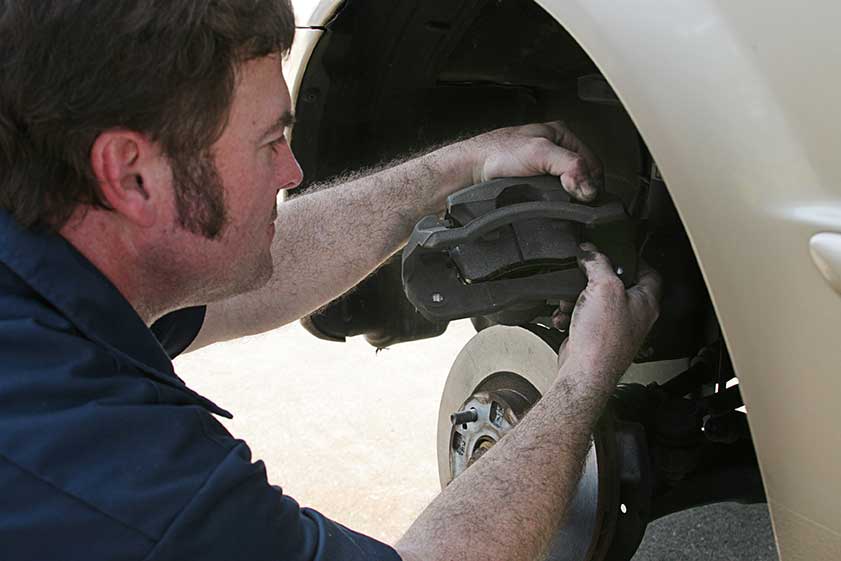
Regular maintenance and repair of brake calipers are essential to ensure optimal braking performance and prevent premature wear. Calipers should be inspected regularly for signs of wear, such as corrosion, leaks, or uneven brake pad wear. Cleaning and greasing the calipers with high-temperature brake grease can help maintain their performance and extend their lifespan. In the event of a caliper failure, it is crucial to replace the faulty component with a high-quality, OEM-grade replacement part to ensure safe and reliable braking performance. By staying proactive with maintenance, vehicle owners can avoid costly repairs and ensure their brakes function effectively.

Conclusion

In conclusion, brake calipers play a vital role in a vehicle’s braking system, and their functionality, design, and manufacturing process are critical in ensuring safe and efficient braking performance. Regular maintenance and repair of brake calipers are essential to prevent premature wear and ensure optimal performance. By understanding the importance of brake calipers and taking steps to maintain and repair them, vehicle owners can enjoy safe and reliable braking performance, while also extending the lifespan of their brake components. Investing in high-quality brake calipers, like those newly manufactured by DFC, ensures long-term value and peace of mind on the road.

The True Cost of Using Remanufactured Brake Calipers in Your Shop

DFC Blog

The Hidden Costs of Remanufactured Brake Calipers

When managing an auto shop or distributing brake parts, the goal is to provide reliable, cost-effective solutions for your customers. At first glance, remanufactured brake calipers may seem like the most economical choice. They’re readily available and often offer lower upfront costs. However, these perceived savings can quickly disappear when you account for hidden costs related to performance, durability, and installation challenges.

At Dynamic Friction Company (DFC), we believe there’s a better way. Our newly manufactured brake calipers offer a competitive price while delivering superior quality and reliability, making remanufacturing no longer the go-to solution. Here’s why it’s time to rethink your options.


1. Reused Components Lead to Higher Failure Rates

Remanufactured calipers are built using previously used components like pistons, seals, and caliper bodies. Even with cleaning and refurbishment, these parts often retain the wear and tear from their previous use. This can result in:

  • Inconsistent braking performance.
  • Increased risk of premature failure.
  • Higher warranty claim rates that erode customer trust.

Newly manufactured DFC calipers use 100% brand-new components, reducing these risks. Each unit is rigorously tested for pressure, performance, and durability, ensuring reliable braking and fewer returns.


2. Poor Coating Equals Faster Corrosion

Many remanufactured calipers are not treated with high-quality protective coatings, leaving them vulnerable to rust and corrosion—especially in regions with harsh weather or high humidity. Once corrosion sets in, caliper performance deteriorates, reducing both lifespan and safety.

DFC calipers are protected by a premium silver zinc coating that offers superior resistance to corrosion, enhancing durability and long-term reliability.


3. Installation Frustrations Add Costs

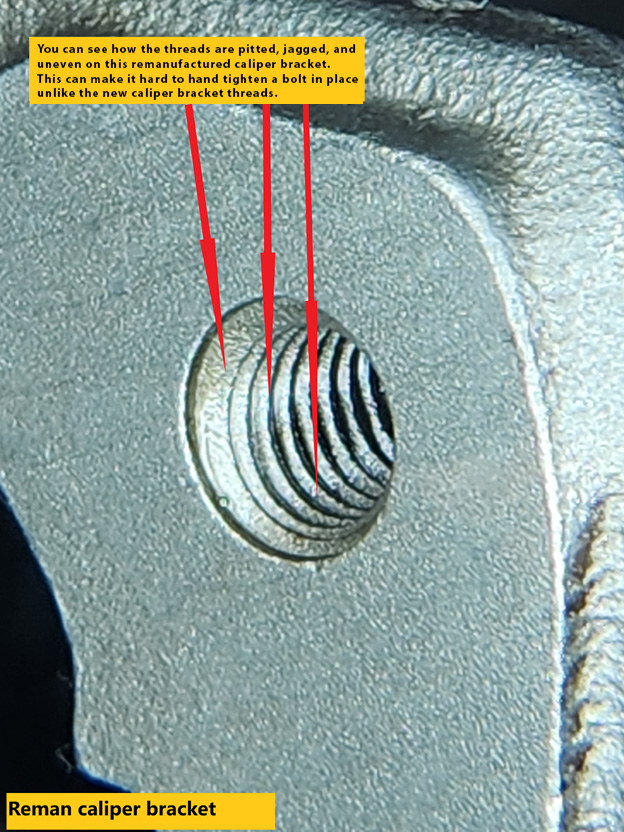
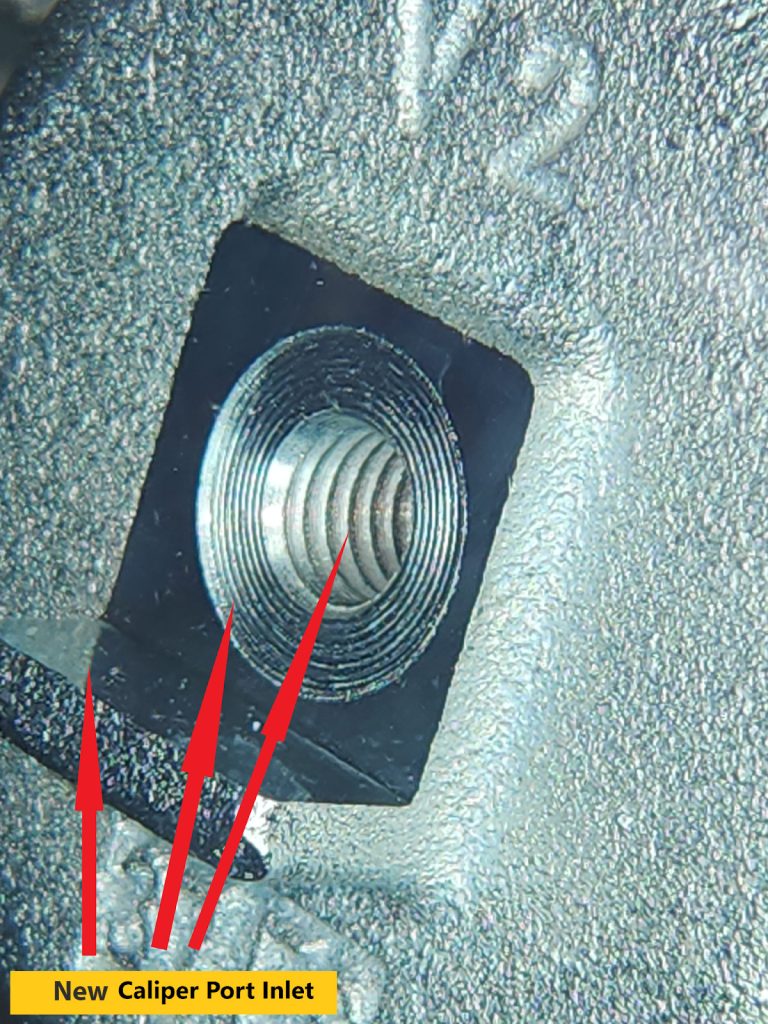
Remanufactured calipers often present installation challenges. Common issues like uneven or pitted threads in the caliper port inlets can cause leaks and require additional labor time for technicians. This not only increases costs for your shop but also reduces efficiency, cutting into your bottom line.

DFC’s calipers are built to OEM specifications, ensuring precise fitment and smooth installation. This eliminates time-consuming rework, saving your shop time and money.


4. Warranty and Liability Considerations

Warranty coverage is another key factor to evaluate. Many remanufactured calipers come with limited warranties, and issues related to improper installation or corrosion may not be covered. This can leave shops liable for repairs or replacements.

DFC stands behind our products with comprehensive warranty coverage, giving you and your customers confidence in their performance. By minimizing failure risks, we help protect your reputation and reduce liability concerns.


5. Long-term Expenses of Premature Wear

Choosing cheap or remanufactured calipers can lead to premature wear on other brake components, including pads and rotors. Brake noise, uneven wear, and shortened service life can result, leading to costly repairs and increased maintenance frequency.

DFC calipers are designed to provide consistent braking performance, reducing stress on other components. This means fewer callbacks, improved vehicle safety, and long-term savings for both shops and customers.


Why Choose DFC Brake Calipers?

DFC newly manufactured calipers eliminate the hidden costs and risks associated with remanufactured options. Our calipers are:

  • Made with all-new components for reliability and performance.
  • Coated with premium silver zinc to resist corrosion.
  • Built to OEM standards to ensure proper fit and performance.
  • Extensively tested to deliver smooth and quiet braking with fewer warranty claims.

By investing in DFC calipers, you can boost customer satisfaction, reduce labor costs, and protect your bottom line with high-quality products designed to last.


Upgrade to DFC Brake Calipers Today

It’s time to move beyond outdated remanufactured solutions. With DFC’s newly manufactured brake calipers, you can provide your customers with superior performance, reduced failure rates, and peace of mind—all at a competitive price.

Reach out to DFC today to learn more about how we’re setting the new standard in brake caliper quality.

Upgrade to DFC Brake Calipers Today

Premium Materials in DFC Brake Pads: What Sets Us Apart

DFC Blog

In the automotive brake industry, materials matter. From friction stability to noise reduction and durability, the quality of the materials used in brake pads directly impacts performance. At Dynamic Friction Company (DFC), we are committed to using only the highest-quality, premium materials in our brake parts, including brake pads, rotors, and kits, ensuring they meet the demands of today’s vehicles and provide optimal safety and reliability.

In this post, we’ll explore the specific materials that make DFC brake pads stand out, along with the unique benefits these components bring to your braking experience.

1. The Importance of High-Quality Brake Pads

High-quality brake pads are essential for ensuring the safety and reliability of a vehicle’s braking system. Brake pads are a critical component of a vehicle’s brake system, and their performance can significantly impact the overall braking performance of the vehicle. High-quality brake pads are designed to provide stable friction performance, excellent fade resistance, and low dust, making them ideal for various driving conditions.

Using high-quality brake pads can also help to reduce brake noise, which is a common issue with lower-quality brake pads. Brake noise can be caused by a variety of factors, including worn-out brake pads, misaligned brake rotors, and loose brake components. High-quality brake pads are designed to minimize brake noise and provide a smoother braking experience.

In addition to their performance benefits, high-quality brake pads are also designed to meet or exceed OEM standards. This means that they are designed to provide the same level of performance and reliability as the original equipment brake pads that came with the vehicle. By using high-quality brake pads, vehicle owners can ensure that their brake system is functioning at its best and that they are getting the most out of their vehicle.

High-Quality Friction Materials for Reliable Brake Pads

The heart of any brake pad lies in its friction material. High-quality brake pads, including performance brake pads, are essential for ensuring the safety and reliability of a vehicle’s braking system. DFC’s brake pads are crafted using advanced formulations tailored to deliver consistent friction performance. These include:

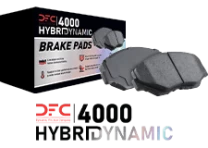
  • HybriDynamic Formulations for everyday drivers seeking smooth, reliable stops.
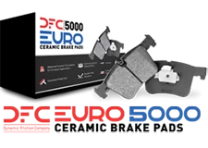
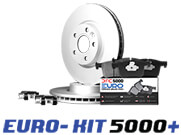
  • Ceramic Formulations like those in our EURO 5000 series, designed for high performance with minimal dust and noise.
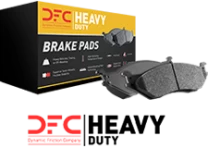
  • Specialized Police and Heavy-Duty Formulations to handle extreme demands, with stability under high-temperature braking.

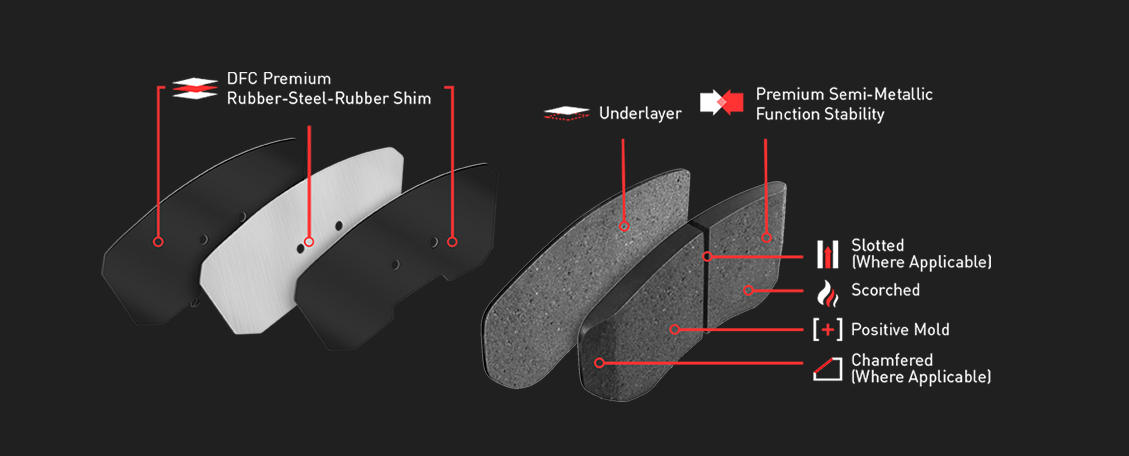
Each DFC pad is carefully post-cured and scorched to stabilize the friction material, increasing initial stopping power and ensuring consistent braking performance right from installation.

3. Advanced Materials and Manufacturing Process

Dynamic Friction Company uses advanced materials and manufacturing processes to produce high-quality brake pads that meet the demands of modern vehicles. The company’s brake pads are formulated to provide optimal and reliable stopping performance, excellent fade resistance, low dust, and stable friction performance across a wide temperature range.

One of the key materials used in Dynamic Friction Company’s brake pads is ceramic. Ceramic pads are made with a denser version of material used in pottery or plates and are designed to provide excellent fade resistance, low dust, and stable friction performance. Ceramic pads are also designed to reduce brake noise and provide a longer service life compared to traditional brake pads.

In addition to ceramic, Dynamic Friction Company also uses semi-metallic materials in some of its brake pads. Semi-metallic pads combine metal and organic materials to provide a balance of performance and durability. These pads are designed to provide excellent stopping power and are ideal for vehicles that require high-performance braking.

Dynamic Friction Company’s brake pads are also designed to withstand extreme heat, heavy-duty operation, and frequent stopping. The company’s brake pads are engineered to meet the demands of various driving conditions, including spirited street driving, off-roading, and towing. By using advanced materials and manufacturing processes, Dynamic Friction Company is able to produce brake pads that provide exceptional braking performance and reliability.

The company’s manufacturing process involves a submerged coating process that ensures 100% coating coverage of the inner vanes and all exposed non-braking surfaces. This process provides superior corrosion resistance and durability, making Dynamic Friction Company’s brake pads ideal for vehicles that are exposed to harsh weather conditions.

Overall, Dynamic Friction Company’s advanced materials and manufacturing processes make its brake pads some of the best in the industry. By using high-quality materials and advanced manufacturing techniques, the company is able to produce brake pads that provide exceptional braking performance, reliability, and durability.

DFC Premium Rubber-Steel-Rubber Shims for Brake Noise Reduction

DFC Blog

DFC brake pads incorporate advanced noise-reducing technology with Premium Rubber-Steel-Rubber (RSR) shims. These shims help absorb and dampen noise, reducing vibration and harshness (NVH) commonly associated with braking. The RSR design effectively minimizes braking noise, ensuring a quiet, comfortable ride while also promoting durability.

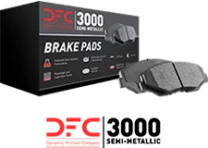
This multilayered shim technology is used across DFC’s product lines, from our DFC 3000 Brake Pads for daily driving to our police and heavy-duty pads, all providing drivers with a premium, noise-free experience.


3. Superior Corrosion Resistance with High-Carbon Content and Protective Coatings

Corrosion is one of the biggest threats to brake components, potentially reducing both lifespan and performance. DFC combats this issue with two essential components:

  • High-Carbon Content Rotors: Available with DFC brake pads for enhanced noise reduction, stability, and resilience to high-temperature stress.
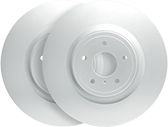
  • GeoSpec Coating Technology: This patented silver-gray coating is applied to rotors to resist rust and corrosion, delivering extended durability without compromising performance.

DFC brake pads are engineered to perform under extreme conditions, such as track use and heavy-duty scenarios.

By pairing our brake pads with high-quality, corrosion-resistant rotors, DFC provides an added layer of protection that helps keep brake systems functioning smoothly and safely.

Chamfered and Slotted Design for Enhanced Braking Performance

DFC brake pads feature chamfered and slotted designs to optimize braking performance. These design features also contribute to improved pedal response, ensuring quick and effective braking. These design features reduce edge lift, which helps prevent irregular pad wear and minimizes the chance of brake noise. Slotted pads also promote heat dissipation and debris clearing, keeping your brake pads clean and effective over time.

Chamfering and slotting are premium design choices that align with original equipment manufacturer (OEM) standards, providing a smoother and more stable braking experience. This approach is part of DFC’s dedication to maintaining the highest standards in product engineering and design.

5. Environmentally Responsible, 100% Copper-Free and Asbestos-Free

At DFC, we prioritize both performance and environmental responsibility. All of our brake pads are 100% copper-free and asbestos-free, complying with California and Washington’s low-copper requirements well ahead of regulatory deadlines. By eliminating these harmful materials, DFC reduces environmental impact and enhances driver safety.


Why DFC’s Use of Premium Materials Matters

From advanced friction materials to high-quality shims and coatings, DFC’s dedication to using only premium materials ensures that our brake pads provide:

  • Consistent Performance: Reliable braking power, fade resistance, and long-lasting friction stability.
  • Durability: Materials and designs that withstand high temperatures, harsh conditions, and extended use.
  • Noise Reduction: Enhanced shims and construction techniques for a quieter ride.
  • Environmental Compliance: Sustainable and eco-friendly materials that meet industry regulations.

Choose DFC for Your Braking Needs

DFC’s commitment to quality materials is a commitment to the safety, satisfaction, and peace of mind of every driver. When you choose DFC brake pads, you’re choosing high performance, reliability, and braking components crafted to exceed expectations. For anyone who values top-quality materials in their brake system, DFC brake pads are the clear choice.

Upgrade to DFC today and experience the difference premium materials make. Visit DFC’s website to explore our full range of premium brake products.

Matching OEM Specs: Is It Important?

DFC Blog

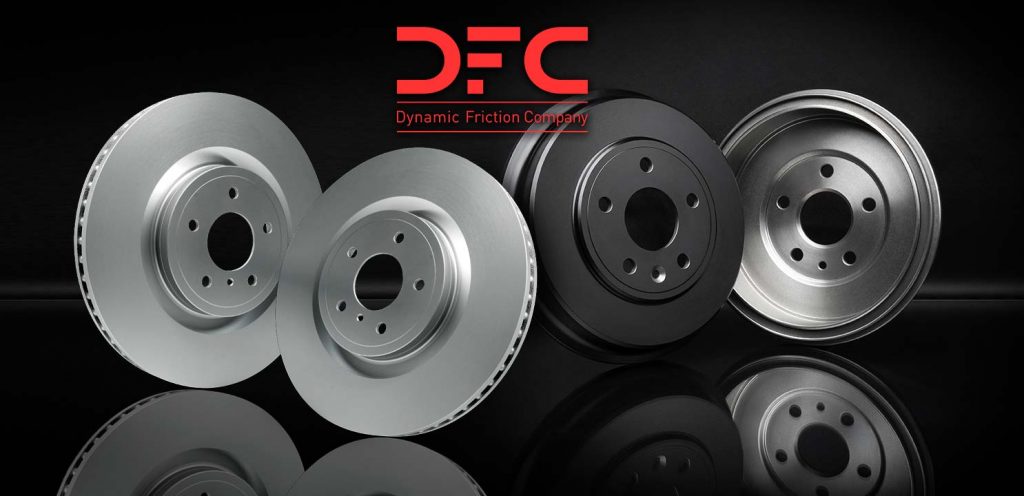
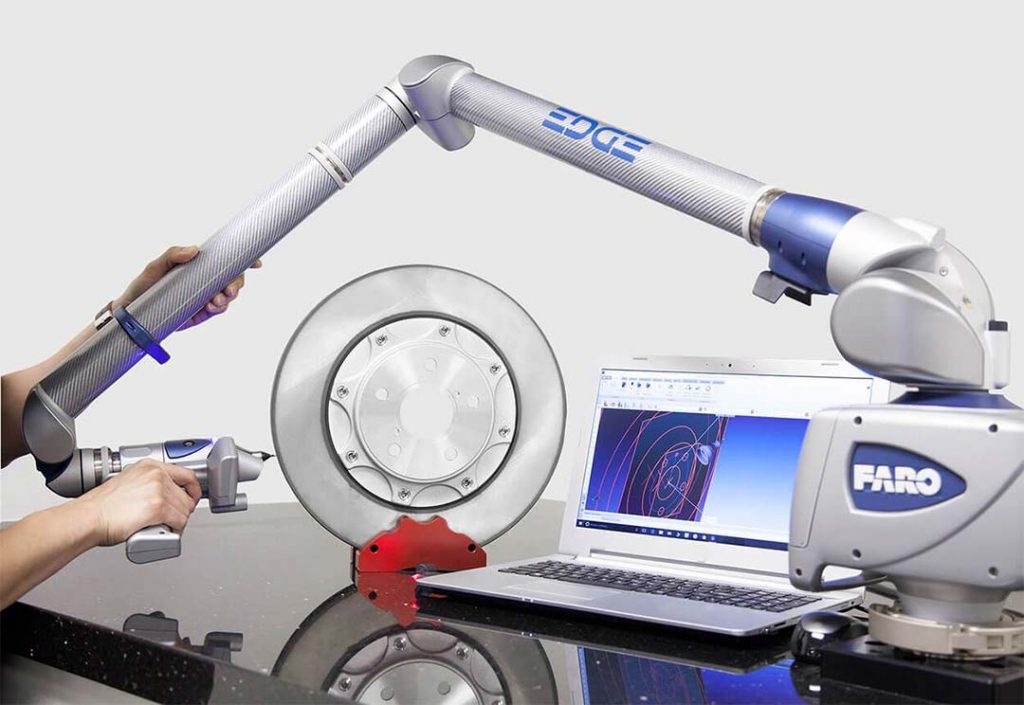
All DFC rotors and drums are based on OEM fit, form, and function. Our benchmark for design is OEM. This means that we have to capture all the dimensions of the design, including cooling veins to ensure proper performance for all usage conditions. Some of you are probably wondering…what does OEM mean? OEM stands for Original Equipment Manufacturer. This ultimately means that the parts we build are based on an organization’s specific OEM.

DFC Blog

DFC capture all the specific dimensions using a FaroArm CMM

We catch all the specific dimensions of a design through the use of a FaroArm CMM (coordinate measuring machine), which allows us to capture every last detail of the design with great precision. Our capabilities include (but are not limited to):

• probe data measuring for most machine surfaces
• laser scanning for complex surfaces
• OES methods to analyze metallurgy and match high-carbon content iron
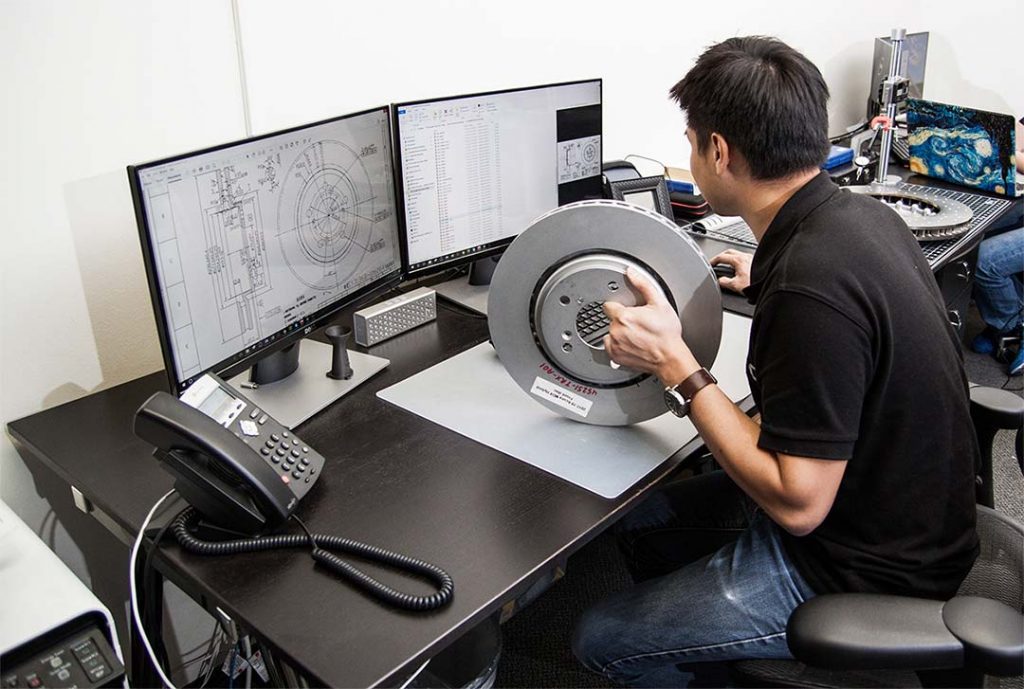
• designing CAD Models

Of course, these tools and methods are performed in conjunction with one another. This ensures that we get the most accurate data available.

Many part manufacturers only focus on production and revenue. Here at DFC, however, we prioritize your safety and the performance of every single product we release. We want you to feel safe on the road and also want for our products to contribute to that safety. To achieve that, all braking system parts require a lot of research, calculation, and measurement to work properly and perform at their best. 

DFC Blog

OES Methods & CAD Models
OES methods are key to ensuring that modern performance applications have the correct material and characteristics required for higher demand, automated braking systems. CAD models, on the other hand, are created in order to optimize performance and ensure that all DFC parts perform at their absolute best. 

Using analysis methods, we determine how our parts will act and react during certain conditions. These tools also allow us to make data-driven decisions when consolidating OEM part numbers. These all ultimately result in us being able to offer you and our partners the best-performing parts in the market. 

DFC Matching OEM Specs Video

Ready for your new brakes?
Click here to see our latest deals

DFC Blog